- Plantas
- ›Plantas vasculares
- ›Plantas con flores
- ›Magnolias, margaritas y parientes (dicotiledóneas)
- ›Leguminosas, hierbas lecheras y afines
- ›Leguminosas
- ›Habas, frijoles, tréboles y parientes
- ›Hiniestas, lupinos y parientes
- ›Lupinus
- ›Lupinus albifrons
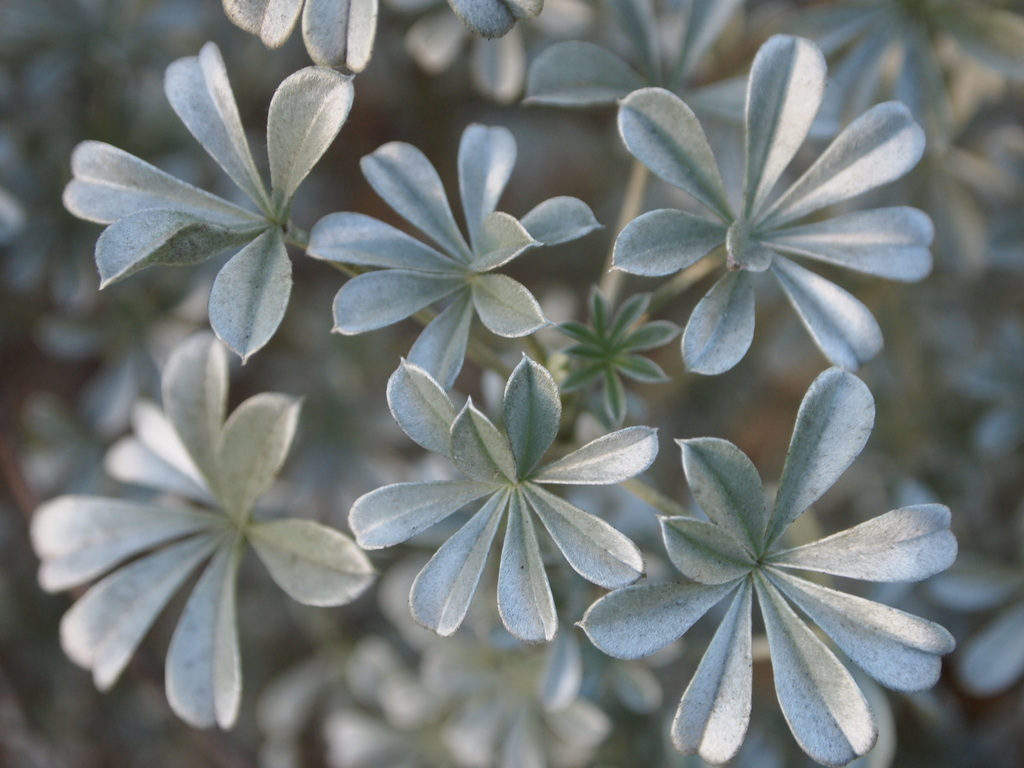
Garbancillo de chaparral
Lupinus albifrons
Lupinus albifrons, silver lupine, white-leaf bush lupine, or evergreen lupine, is a species of lupine (lupin). It is native to California and Oregon, where it grows along the coast and in dry and open meadows, prairies and forest clearings. It is a member of several plant communities, including coastal sage scrub, chaparral, northern coastal scrub, foothill woodland, and yellow pine forest. Silver lupine is an important species for several animals throughout these ranges and shows high genetic and morphological diversity within these ranges.
Del artículo Lupinus albifrons de Wikipedia (CC BY-SA), citado sección por sección
Descripción
Lupinus albifrons is a perennial shrub, quickly growing anywhere from 2 ft (0.61 m) to 5 ft (1.5 m) tall and wide. It has a light blue to violet flower on 3–12 inches (7.6–30.5 cm) stalks. The leaves are silver with a feathery texture. It grows in sandy to rocky places below 5,000 feet (1,500 m).
Wikipedia: «Description»
Lo que hace
Pollination of Lupinus albifrons is primarily done through various species in the genus Bombus. To deter pollinators from visiting flowers that have already been pollinated, the plant produces ethylene to change the spot on its banner petals from white/pale yellow to pink and then magenta as anthocyanins accumulate.
Wikipedia: «Pollination»
Toxicidad
The plant is deer-resistant due to the presence of the bitter-tasting alkaloid toxins anagyrine and lupinine. These toxins can negatively affect livestock, causing birth defects and weight loss, especially in young, inexperienced cattle. When cows are under stress from lactating, especially in times of low forage availability, they will consume more lupine than usual.
Wikipedia: «Toxicity to livestock»
Cómo se cultiva
This plant grows as a wildflower in the hills and valleys of California. It requires good drainage and needs little water once the roots are established. When grown with tall fescue, a common grass used in California/Western Coast lawns, L. albifrons was shown to have decreased above-ground growth due to competition with the grass for soil space. Conversely, it was shown that the presence of the lupine could aid the growth of the tall fescue. Fresh seed of L. albifrons var. flumineus is said to need no stratification in order to germinate, while stored seed germination is aided by physical scarification or a hot-water treatment typical of many other leguminous plants. While a relatively easy to grow plant, L. albifrons can be relatively short lived for a perennial. Pruning in late winter can help rejuvenate old wood, and the plant may readily re-seed.
Wikipedia: «Cultivation»
Dónde vive
Avistamientos registrados
—
registros georreferenciados en GBIF, de museos, herbarios y observadores de campo.
Arrastra el globo para girarlo. Los puntos marcan dónde hay registros, no un mapa de distribución; más oscuro significa más registros.
En los depósitos
Buscando en los depósitos…
Todas las páginas que nombran Lupinus albifrons en la Biodiversity Heritage Library →
Esta página se compone en directo a partir de iNaturalist, GBIF, Wikipedia, la Source Library y el Internet Archive. Aún no forma parte del códice editado a mano. Taxón 51691 de iNaturalist.