- Animales
- ›Insectos, arácnidos y crustáceos
- ›Hexápodos
- ›Insectos
- ›Insectos alados
- ›Mariposas y polillas
- ›Hepialoidea
- ›Hepialidae
- ›Abantiades
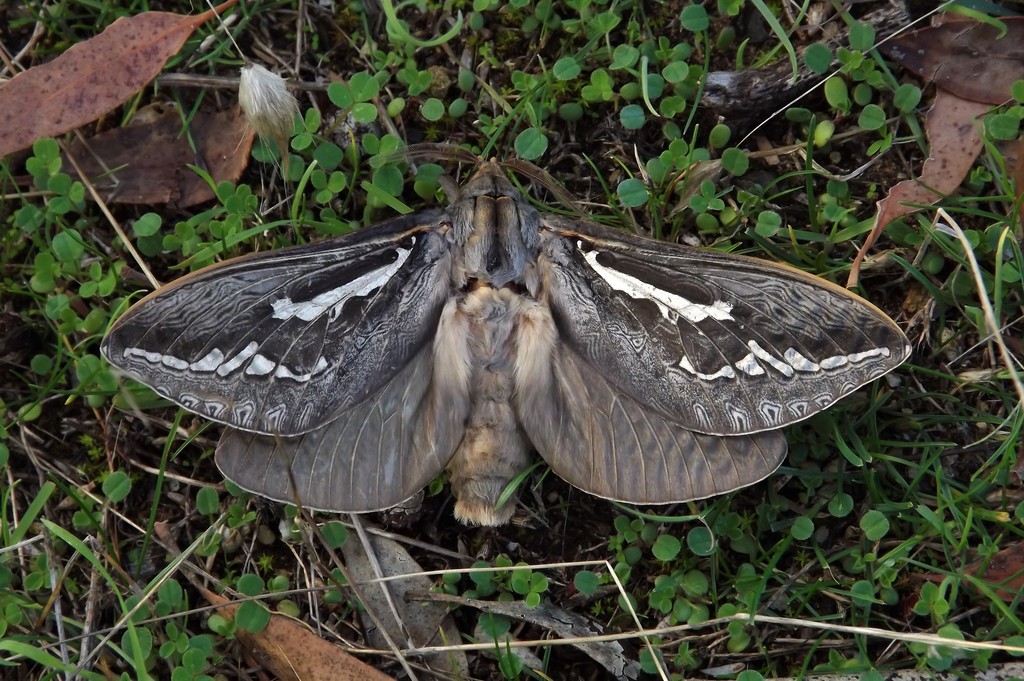
Abantiades atripalpis
Abantiades atripalpis, previously known as Trictena atripalpis, also known as rain moth, waikerie, and bardi (and variant spellings), is a moth of the family Hepialidae. It is one of the largest moths in Australia, and is found in the whole southern half of the country. The moths provide a food source for nocturnal animals, and the larval stage grubs are used as bait in fishing.
Del artículo Abantiades atripalpis de Wikipedia (CC BY-SA), citado sección por sección
Distribución y hábitat
The rain moth is found right across southern Australia, including Tasmania, in woodland areas alongside creeks and gullies, especially near eucalyptus trees.
Wikipedia: «Habitat»
Lo que hace
The moths only live for one day, and are unable to feed. Their sole purpose is to breed. The adult females produce a great number (up to 40,000) of eggs, which are scattered while flying, aimed towards the roots of gum trees. Their flight months are in the southern hemisphere's autumn season (March to June).
Wikipedia: «Life cycle»
En la mesa
They play an environmental role by aerating the soil as caterpillars, and as adults, they are a eaten by bats, owls, and tawny frogmouths. Some Aboriginal peoples, notably the Nyoongar of Western Australia, included the grubs in their diet. The caterpillar is used by fishers as bait.
Wikipedia: «Environmental impact and uses»
Escuchar
Buscando grabaciones de campo…
Dónde vive
Avistamientos registrados
—
registros georreferenciados en GBIF, de museos, herbarios y observadores de campo.
Arrastra el globo para girarlo. Los puntos marcan dónde hay registros, no un mapa de distribución; más oscuro significa más registros.
En los depósitos
Buscando en los depósitos…
Todas las páginas que nombran Abantiades atripalpis en la Biodiversity Heritage Library →
Esta página se compone en directo a partir de iNaturalist, GBIF, Wikipedia, la Source Library y el Internet Archive. Aún no forma parte del códice editado a mano. Taxón 705335 de iNaturalist.