- Animals
- ›Chordates
- ›Vertebrates
- ›Reptiles
- ›Snakes and Lizards
- ›Lizards
- ›Wall lizards, amphisbaenians, and allies
- ›Whiptails and Tegus
- ›Whiptails and Ameivas
- ›Pholidoscelis
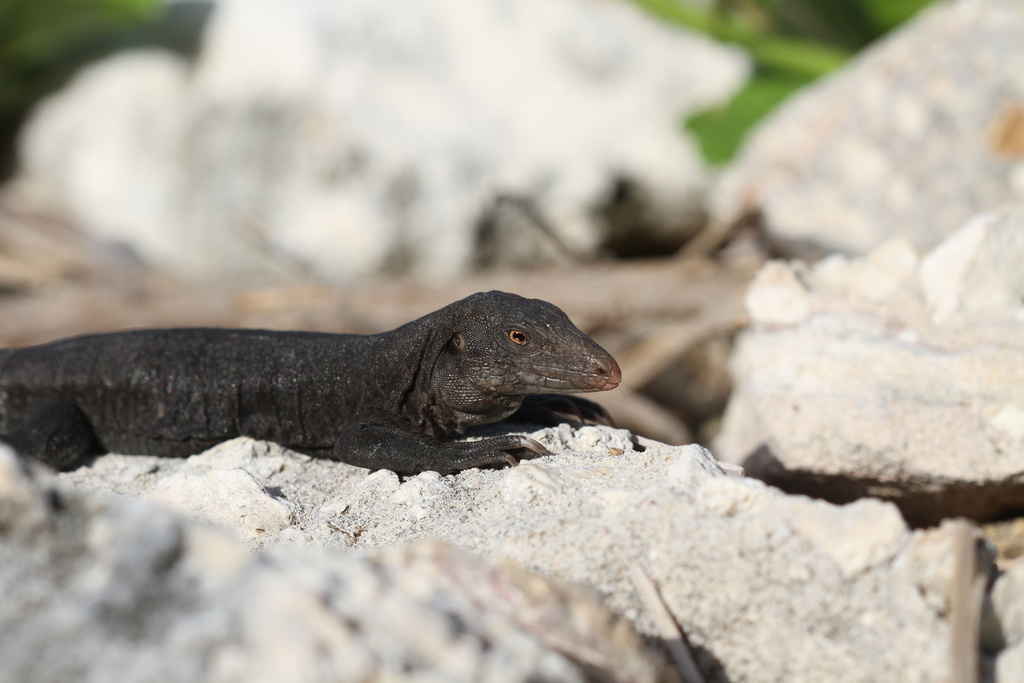
Sombrero Ameiva
Pholidoscelis corvinus
The Sombrero ameiva (Pholidoscelis corvinus), also known commonly as the Sombrero groundlizard, is a species of lizard in the family Teiidae. The species is endemic to Sombrero, a small, uninhabited island in the Lesser Antilles under the jurisdiction of Anguilla. The species was originally described in the genus Ameiva.
From the article Sombrero ameiva on Wikipedia (CC BY-SA), quoted section by section
Description
Adults of P. corvinus are melanistic, appearing plain brown to slate black, with a dark green to black ventral surface mottled with light blue. The tail is sometimes spotted green. Males have brown flecks on the dorsal surface and browner heads. Males grow to 133 mm (5.2 in) snout-to-vent length (SVL), with females being considerably smaller. It is superficially similar in coloration and scalation to P. atratus and P. corax, two other melanistic species also found on small, barren islands in the Caribbean. As the islands have similar habitats, this is likely the result of independent adaptation.
Where it lives
Recorded sightings
—
geo-referenced records in GBIF, from museums, herbaria and field observers.
Drag the globe to turn it. Dots are where records exist, not a range map; darker means more records.
In the stacks
Searching the stacks…
Every page naming Pholidoscelis corvinus in the Biodiversity Heritage Library →
This page is assembled live from iNaturalist, GBIF, Wikipedia, the Source Library and the Internet Archive. It is not yet part of the hand-edited codex. iNaturalist taxon 606389.