- Animals
- ›Chordates
- ›Vertebrates
- ›Ray-finned Fishes
- ›Spiny-rayed fishes
- ›Perches, Scorpionfishes, Sticklebacks, and Allies
- ›Sculpins and Allies
- ›Typical Sculpins
- ›Cottus
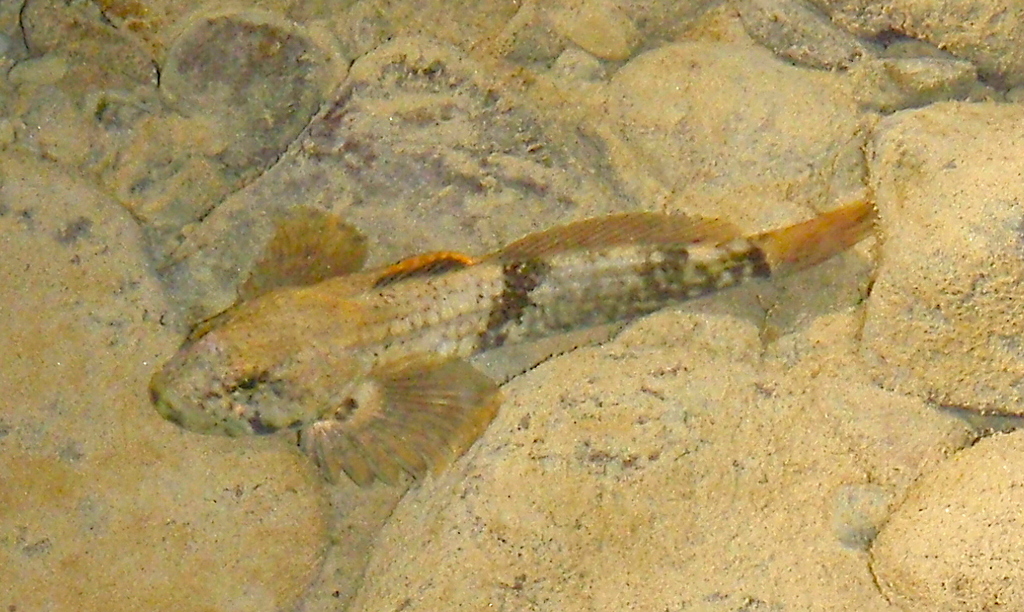
Slimy Sculpin
Cottus cognatus
The slimy sculpin (Cottus cognatus) is a freshwater species of fish belonging to the family Cottidae, the largest family of the sculpin. They tend to occupy colder streams and lakes across much of the Northern United States and also parts of Siberia, Russia. The slimy sculpin are nocturnal fish that spend majority of their lives on the bottoms of water bodies, amongst rocks and sediment. Additionally, the slimy sculpin can be mistaken for the close relatives the mottled sculpin which are all species of freshwater fish. The main differentiation of the slimy sculpin is the mottled coloration, the specific microhabitats they occupy, and the appearance of hopping, due to their inefficient swim pattern. The slimy sculpin feeds primarily on aquatic invertebrates and insect larva and nymphs, thus serving as a predator of smaller organisms and prey for larger fish.
Furthermore, the species is of interest to scientific studies, due to their lack of movement, which makes them ideal candidates for studies involving environmental impacts. The fish has been studied in waters where there is current freshwater acidification. Sculpin were found to be less active and have lower rates of reproduction when found in these waters. For these reasons, slimy sculpin have been identified as a good indicator species for changes in acidification among lakes, ponds, and streams.
From the article Slimy sculpin on Wikipedia (CC BY-SA), quoted section by section
Range & habitat
Slimy sculpin is a native species to much of the United States, Canada, and parts of Russia. The greatest quantity of slimy sculpin in North America resides primarily within Lake Superior and Lake Michigan, as well as subgroups within the tributaries. Additionally, the species can be located within much of the Northern United States, including Alaska, and almost the entirety of Canada and eastern parts of Siberia, Russia. Additionally, in larger bodies of water such as the Great Lakes, as they are deeper, the slimy sculpins are found in much deeper depths than their close competitor, the round goby. By shifting their specific depth in deeper regions, they avoided competition and competitive exclusion.
Wikipedia: “Distribution”
What it does
In order for the slimy sculpin to reproduce, they need conditions such as water to be a specific temperature range from 45-55 degrees Fahrenheit. During breeding season (April-May) the male slimy sculpins tend to get more distinguished darkness along their sides, as well as a more noticeably orange first dorsal fin. This display of sexual dimorphism amongst the species causes the males to no longer camouflage into their environments as well and causes a higher mortality rate for the males. Additionally, the males must find a proper nesting site for their mate or mates to build their nest. Often times this location will be underneath a ledge, rocks, or even under submerged roots. Once the location is prepared, the males will then mate with one or more female, which will produce up to 1,400 adhesive, pink or yellow eggs in the nest. The male is then also in charge of protecting the nest from predation and from any other males, as they undergo intrasexual competition amongst each other in order to reproduce with the most females. The males must fan debris and keep the eggs clean in order for them to hatch. The males will continue to guard the nest for around 4 weeks, or until the eggs hatch, yet they will still protect the young until they are able to feed for themselves. …
Wikipedia: “Reproduction”
Where it lives
Recorded sightings
—
geo-referenced records in GBIF, from museums, herbaria and field observers.
Drag the globe to turn it. Dots are where records exist, not a range map; darker means more records.
In the stacks
Searching the stacks…
Every page naming Cottus cognatus in the Biodiversity Heritage Library →
This page is assembled live from iNaturalist, GBIF, Wikipedia, the Source Library and the Internet Archive. It is not yet part of the hand-edited codex. iNaturalist taxon 98563.