- Animals
- ›Chordates
- ›Vertebrates
- ›Ray-finned Fishes
- ›Spiny-rayed fishes
- ›Perches, Scorpionfishes, Sticklebacks, and Allies
- ›Sculpins and Allies
- ›Typical Sculpins
- ›Paracottus
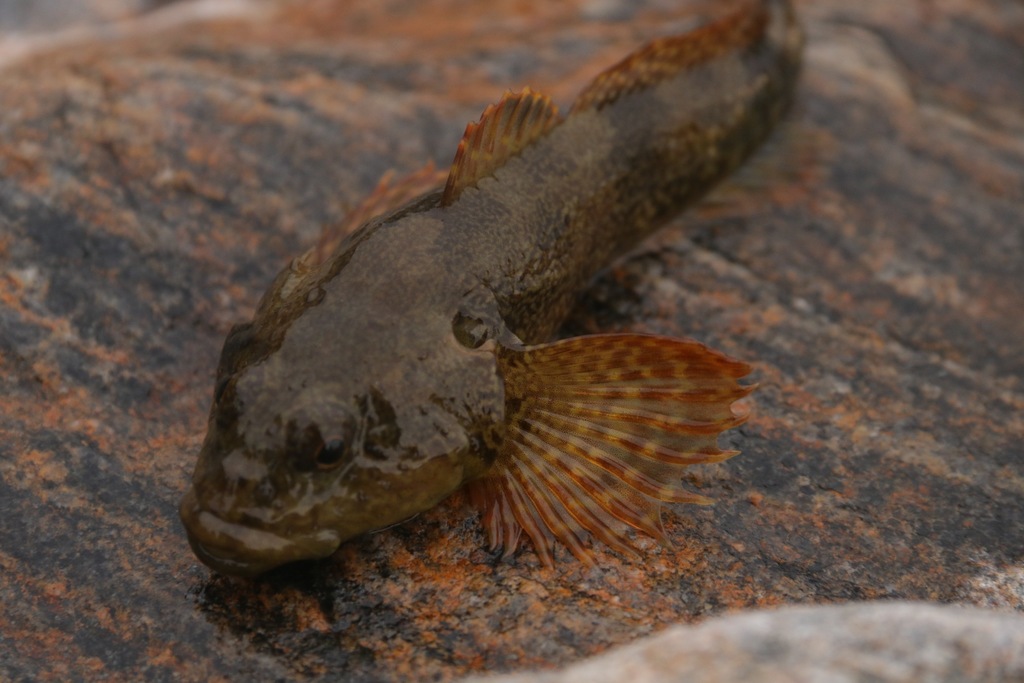
Stone Sculpin
Paracottus knerii
The stone sculpin (Paracottus knerii) is a species of cottoid fish. It is endemic to Russia, where it is found in Lake Baikal and surrounding tributaries as well as the Gramninskie Lakes, Lake Verkhnaya Agata and the Enisei River and various lakes in Tuva. The stone sculpin is the only recognised species in the monotypic genus Paracottus .
It is often eaten by the Baikal seal, especially in the autumn.
From the article Stone sculpin on Wikipedia (CC BY-SA), quoted section by section
Description
Maximum total length of the stone sculpin is 14.4 cm (5.7 in), but most are 7–9 cm (2.8–3.5 in). Its colour varies from olive to brown or grey, and it has several dark spots and bands.
Wikipedia: “Appearance”
Range & habitat
The stone sculpin is most common in the southern part of Lake Baikal and prefers areas with a stony bottom, but may also occur over sand. It is typically found from shallow water to a depth of 50 m (160 ft), but can occur to 100 m (330 ft).
Wikipedia: “Habitat”
What it does
The stone sculpin breeds in the late spring and summer in water that is 6–10 °C (43–50 °F), and up to 1.5 m (5 ft) deep. The female lays 200–700 eggs in a crevice under a stone, which are guarded by the male and hatch after about one month. This sculpin feeds on small animals such as copepods and amphipods.
== References ==
Wikipedia: “Behavior”
Where it lives
Recorded sightings
—
geo-referenced records in GBIF, from museums, herbaria and field observers.
Drag the globe to turn it. Dots are where records exist, not a range map; darker means more records.
In the stacks
Searching the stacks…
Every page naming Paracottus knerii in the Biodiversity Heritage Library →
This page is assembled live from iNaturalist, GBIF, Wikipedia, the Source Library and the Internet Archive. It is not yet part of the hand-edited codex. iNaturalist taxon 612161.