- Animals
- ›Chordates
- ›Vertebrates
- ›Ray-finned Fishes
- ›Spiny-rayed fishes
- ›Perches, Scorpionfishes, Sticklebacks, and Allies
- ›Scorpionfishes and Allies
- ›Racehorses
- ›Congiopodus
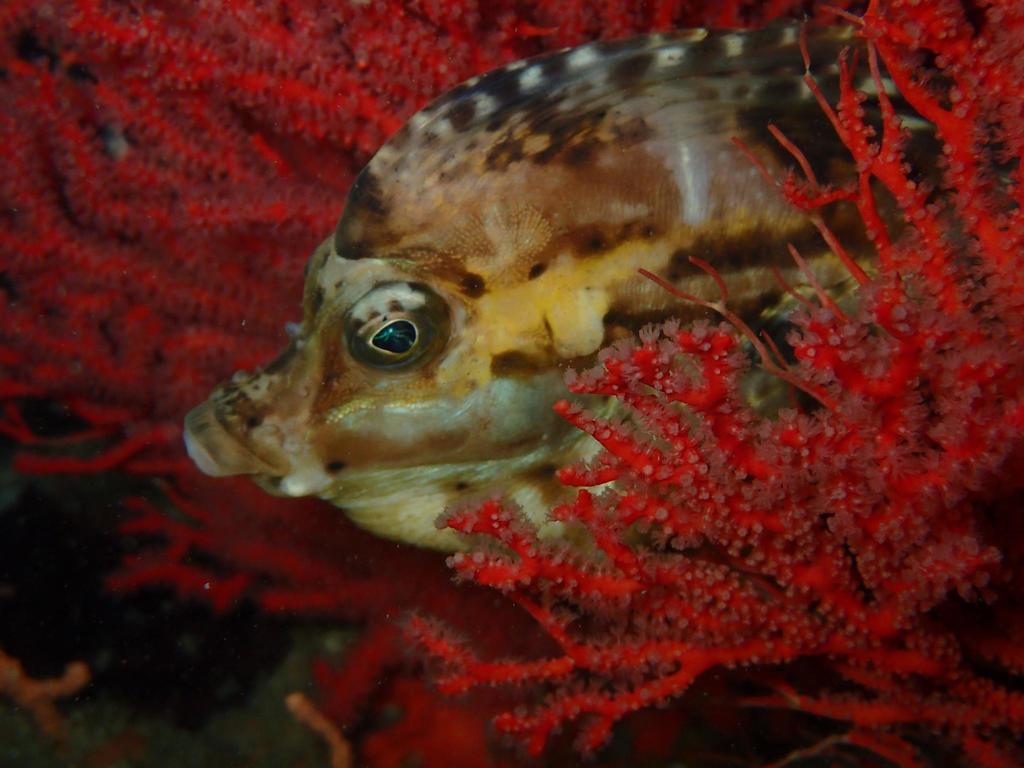
Spine-nose Horsefish
Congiopodus spinifer
Congiopodus, commonly known as pigfishes, horsefishes and racehorses, is a genus of marine ray-finned fishes, the only genus in the family Congiopodidae. These fishes are found in the southern Atlantic and Pacific oceans.
From the article Congiopodus on Wikipedia (CC BY-SA), quoted section by section
Description
Congiopodus pigfishes have a compressed body with a prominent snout, a terminal mouth and a single nostril on each side. It has small gill openings over the pectoral fins. They sometimes have no scales and, if they are present, they are tiny and spiny. The pelvic and pectoral fins have narrow bases and few unbranched fin rays. There are no sharp spines in the anal fin while the dorsal fin has between 14 and 21 spines and 11 and 14 soft rays. These are medium sized fishes with the largest species being C. torvus which has a maximum published total length of 76 cm (30 in).
Wikipedia: “Characteristics”
Range & habitat
Congiopodus pigfishes are found in the southern Pacific and southern Atlantic Oceans. They are demersal fishes with some species in shallow coastal waters and others living in deeper waters.
Wikipedia: “Distribution and habitat”
Where it lives
Recorded sightings
—
geo-referenced records in GBIF, from museums, herbaria and field observers.
Drag the globe to turn it. Dots are where records exist, not a range map; darker means more records.
In the stacks
Searching the stacks…
Every page naming Congiopodus spinifer in the Biodiversity Heritage Library →
This page is assembled live from iNaturalist, GBIF, Wikipedia, the Source Library and the Internet Archive. It is not yet part of the hand-edited codex. iNaturalist taxon 611933.