- Animals
- ›Chordates
- ›Vertebrates
- ›Ray-finned Fishes
- ›Carps, Characins, Catfishes and Allies
- ›Characins
- ›Characoidei
- ›Bryconid Characins
- ›Brycons and Allies
- ›Brycon
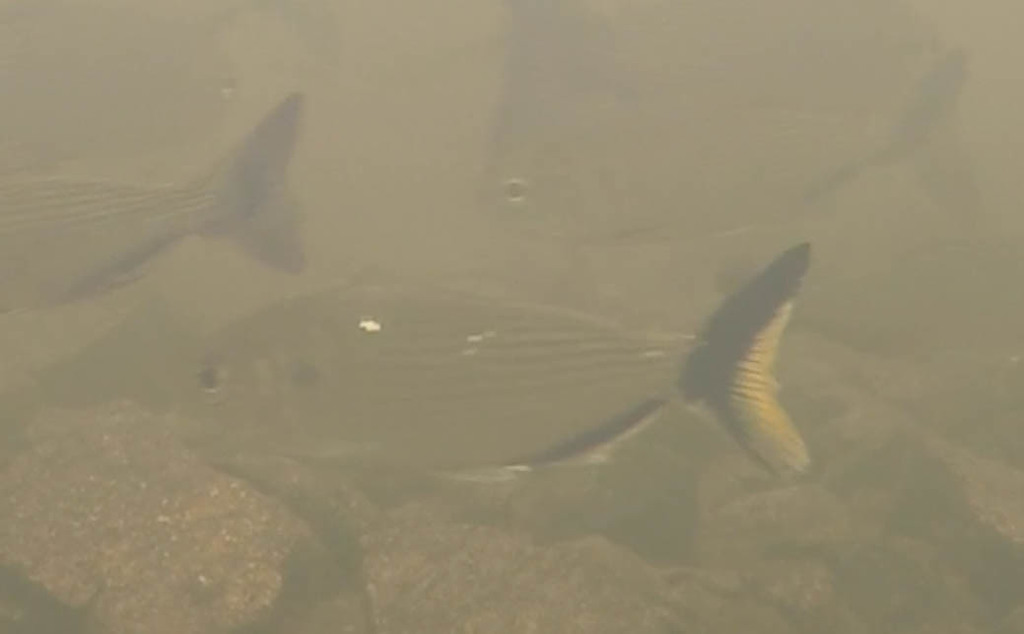
Blacktail Brycon
Brycon falcatus
Brycon falcatus, the blacktail brycon, is a species of freshwater ray-finned fish belonging to the family Bryconidae, the doradas and jaw characins. This species is found in northern South America.
From the article Brycon falcatus on Wikipedia (CC BY-SA), quoted section by section
Description
Brycon falcatus has a maximum standard length of 48.9 cm (19.3 in) for males and 49.5 cm (19.5 in) for females, and a maximum published weight of 2.7 kg (6.0 lb).
Range & habitat
Brycon falcatus is widespread in rivers draining the Brazilian and Guiana Shields in the Amazon, Orinoco, and Guyanese river systems. It is also found in some scattered localities in the western part of the Amazon drainage basin. It is found in larger streams and rivers, where it is a long-distance migrant. The length and duration of the migration of this fish varies geographically. In the Orinoco it moves from blackwater, where they spend the dry season, into flooded forest in the wet season. In the Amazon it shows a preference for whitewater areas.
== References ==
Wikipedia: “Distribution and habitat”
In human culture
Brycon falcatus is the type species of the genus Brycon. This name is derived from the Greek brýchō (βρύχω), which means "to bite", "gnash teeth" or "eat greedily", thought to be an allusion to the fully toothed maxillae of this species. The specific name, falcatus, means "sickle-shaped" in Latin, an allusion to the sickle-shaped black marking on the caudal fin.
Wikipedia: “Etymology”
Where it lives
Recorded sightings
—
geo-referenced records in GBIF, from museums, herbaria and field observers.
Drag the globe to turn it. Dots are where records exist, not a range map; darker means more records.
In the stacks
Searching the stacks…
Every page naming Brycon falcatus in the Biodiversity Heritage Library →
This page is assembled live from iNaturalist, GBIF, Wikipedia, the Source Library and the Internet Archive. It is not yet part of the hand-edited codex. iNaturalist taxon 609413.