- Animals
- ›Chordates
- ›Vertebrates
- ›Ray-finned Fishes
- ›Carps, Characins, Catfishes and Allies
- ›Minnows, Suckers, Carps, and Loaches
- ›Carps and Minnows
- ›Cyprinids
- ›Barbs
- ›Luciobarbus
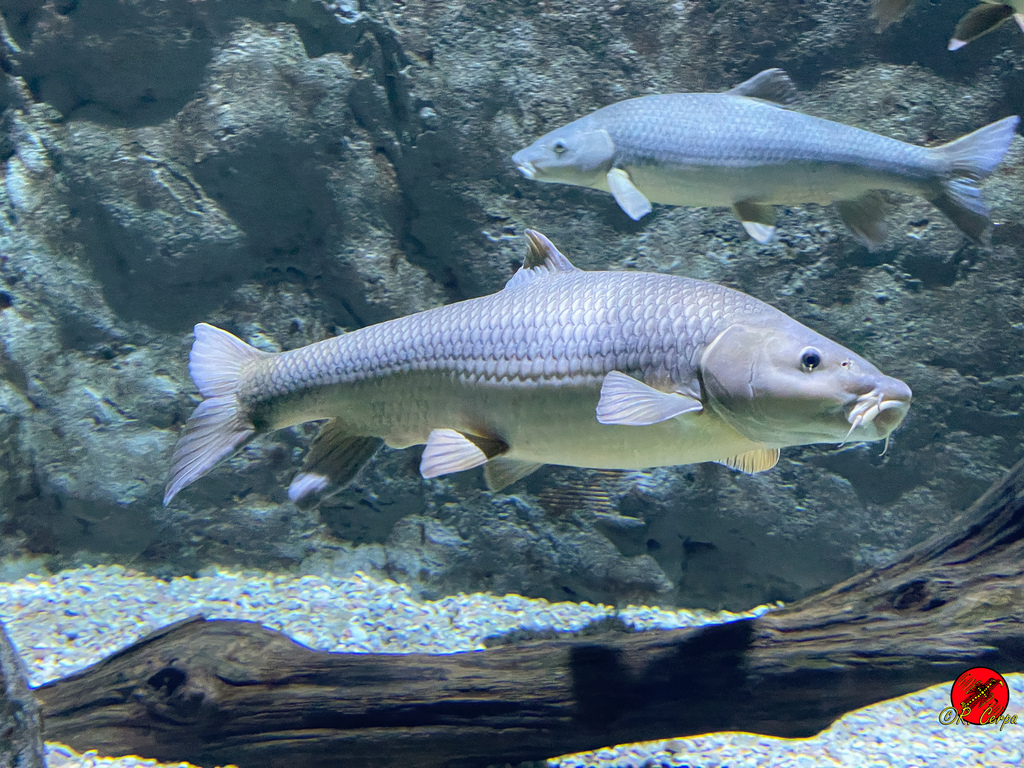
Andalusian Barbel
Luciobarbus sclateri
The Andalusian barbel (Luciobarbus sclateri), also called gypsy barbel (which is a direct translation of Spanish: Barbo gitano), is a freshwater fish species in the family Cyprinidae. It is here placed in Luciobarbus following the IUCN, but that genus is very closely related to the other typical barbels and perhaps better considered a mere subgenus of Barbus. The Andalusian barbel was formerly included in L. bocagei as a subspecies.
L. sclateri is endemic to the southern part Iberian Peninsula, where it occurs in both Portugal and Spain. It inhabits the middle and lower parts of rivers, between the Segura's and the Mira Rivers' drainage basins. It is not very particular as regards its habitat choice, and will use anything except small cool torrential mountain streams. They spawn at the beginning of summer, between May and June. The males reach sexual maturity at 2 to 4 years of age and around 8 cm (3.1 in), while females only reach maturity in their sixth or seventh year and at 11 to 16 cm (4.3 to 6.3 in) in length. They grow to a maximum length of about 50 cm (20 in). It is a long-lived species, with a maximum age of 18 years having been recorded.
Where it lives
Recorded sightings
—
geo-referenced records in GBIF, from museums, herbaria and field observers.
Drag the globe to turn it. Dots are where records exist, not a range map; darker means more records.
In the stacks
Searching the stacks…
Every page naming Luciobarbus sclateri in the Biodiversity Heritage Library →
This page is assembled live from iNaturalist, GBIF, Wikipedia, the Source Library and the Internet Archive. It is not yet part of the hand-edited codex. iNaturalist taxon 104842.