- Animals
- ›Chordates
- ›Vertebrates
- ›Ray-finned Fishes
- ›Carps, Characins, Catfishes and Allies
- ›Minnows, Suckers, Carps, and Loaches
- ›Loaches
- ›Botias
- ›Botiinae
- ›Botia
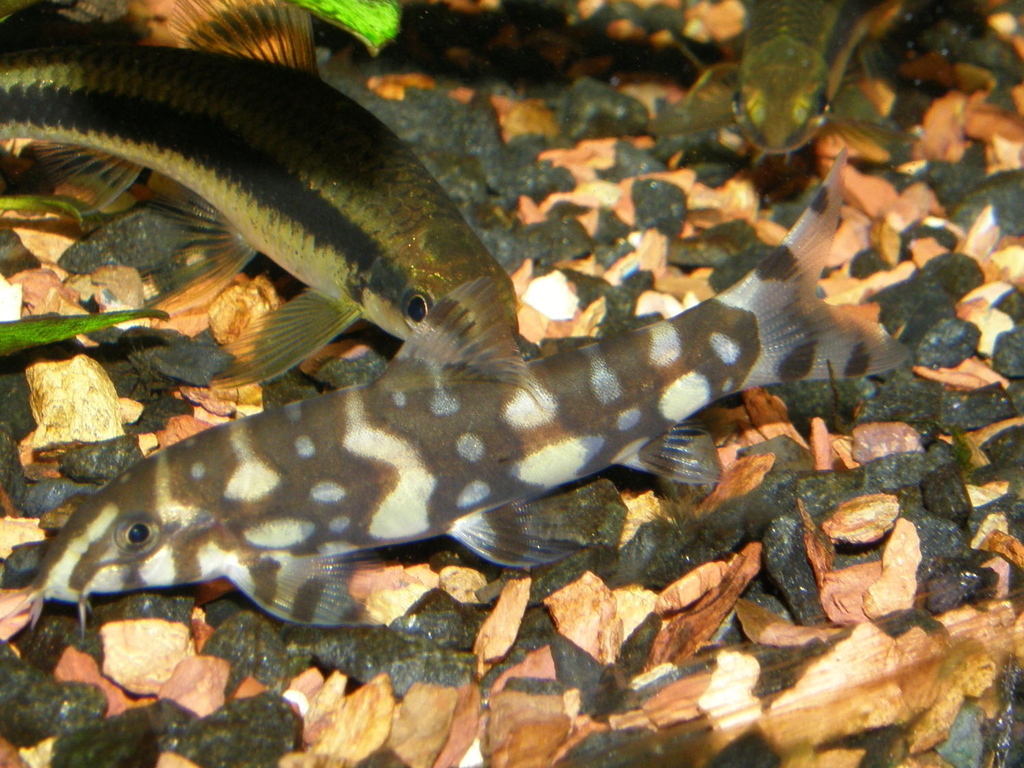
Burmese Border Loach
Botia kubotai
The Burmese Border loach, angelicus loach or polka dot loach, Botia kubotai, is a recently described species that has quickly become a popular tropical fish for freshwater aquariums. In 2002, fish collectors working in western Thailand began to expand their search into Myanmar (Burma) area from the Three Pagodas Pass Thai-Myanmar border to look for new fish for the aquarium trade. This is one of several species discovered and explains the origin of the fish's common name: Burmese Border Loach. Its specific epithet honors Katsuma Kubota of an aquarium export company in Thailand who first purchased the catch and sent them out for identification.
From the article Burmese border loach on Wikipedia (CC BY-SA), quoted section by section
Range & habitat
The fish, a bottom feeder, is found in the Salween River system which is mostly in Myanmar. It was first discovered in Ataran River (known in Thailand as Kasat River), a tributary of Salween River. A population in Thailand was discovered in early 2006 in another tributary of Salween River, Suriya River in Thungyai Naresuan Wildlife Sanctuary. It grows as large as 15 cm in length, but most tend to be smaller at around 10 cm. It has gold, black, and grey colors arranged in a pattern that varies greatly depending on the age of the fish. Juvenile fish at about 2.5 cm are very similar to Botia histrionica. It has yellow body with only black vertical bands. Typically around this size grey dots on the black bands together with a middle horizontal bar joining the bands begin to appear. At about 5 cm, the top and bottom part of the vertical bands start to merge, producing a pattern of big yellow ovals along the body. More grey dots continue to appear as fish grows.
Wikipedia: “Habitat and appearance”
Where it lives
Recorded sightings
—
geo-referenced records in GBIF, from museums, herbaria and field observers.
Drag the globe to turn it. Dots are where records exist, not a range map; darker means more records.
In the stacks
Searching the stacks…
Every page naming Botia kubotai in the Biodiversity Heritage Library →
This page is assembled live from iNaturalist, GBIF, Wikipedia, the Source Library and the Internet Archive. It is not yet part of the hand-edited codex. iNaturalist taxon 187178.