- Animals
- ›Chordates
- ›Vertebrates
- ›Ray-finned Fishes
- ›Spiny-rayed fishes
- ›Blennies, Damselfishes and Allies
- ›Blennies
- ›Combtooth Blennies
- ›Typical Blennies
- ›Plagiotremus
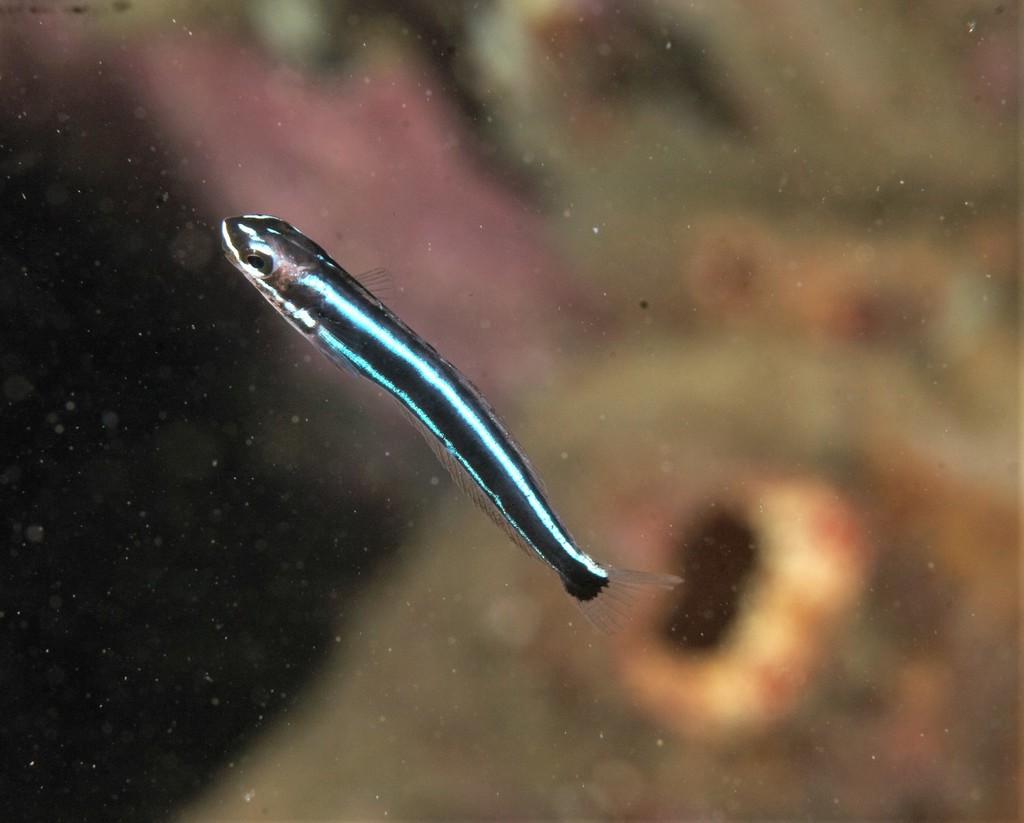
Bluestriped Fangblenny
Plagiotremus rhinorhynchos
Plagiotremus rhinorhynchos, commonly called the bluestriped fangblenny, is a species of combtooth blenny found in coral reefs in the Pacific and Indian Ocean. This species reaches a length of 12 centimetres (4.7 in) SL. It is also known as the bluestriped blenny, bluestriped sabretooth blenny, blunt-nose blenny, cleaner mimic, tube-worm blenny or the two-stripe blenny. They hide in deserted worm tubes or other small holes.
The fangblenny is a specialised mimic of juvenile bluestreak cleaner wrasse. Those fish serve as cleaners to larger host fish, which attend to have ectoparasites removed. The fangblenny does no cleaning, but bites the host fish and leaves.
From the article Bluestriped fangblenny on Wikipedia (CC BY-SA), quoted section by section
Description
From before birth, their eggs are demersal and adhesive and attach to substrates via a filamentous adhesive pad or pedestal. The bluestriped fangblenny can attain around 90mm in length. Two distinct colour phases of this fish are present; blue with a black stripe from snout to tail, or orange with two narrow blue lines from snout to tail. Unlike most blennies, the bluestriped fangblenny is free swimming. Adults inhabit clear, coral-rich areas of lagoon and seaward reefs and it is fairly common on both coral and rocky reefs, usually occurring singly or in pairs. They are known for being aggressive and feed on skin, mucus and sometimes other fish scales. They bite divers when alarmed.
Where it lives
Recorded sightings
—
geo-referenced records in GBIF, from museums, herbaria and field observers.
Drag the globe to turn it. Dots are where records exist, not a range map; darker means more records.
In the stacks
Searching the stacks…
Every page naming Plagiotremus rhinorhynchos in the Biodiversity Heritage Library →
This page is assembled live from iNaturalist, GBIF, Wikipedia, the Source Library and the Internet Archive. It is not yet part of the hand-edited codex. iNaturalist taxon 196710.