- Animals
- ›Chordates
- ›Vertebrates
- ›Ray-finned Fishes
- ›Spiny-rayed fishes
- ›Mackerels, Tunas, Butterfishes, and Allies
- ›Scombroidei
- ›Escolars
- ›Lepidocybium
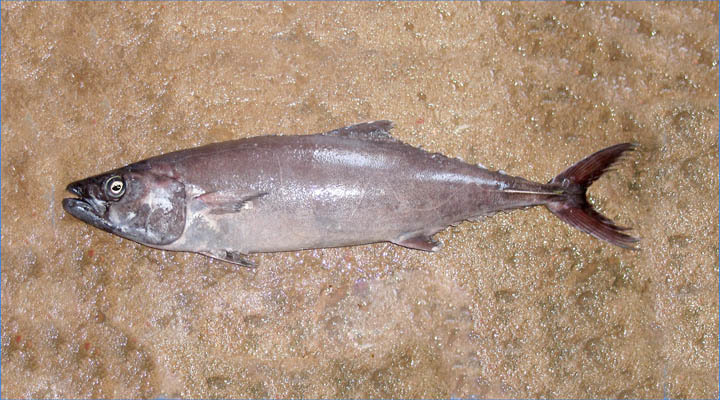
Escolar
Lepidocybium flavobrunneum
The escolar, Lepidocybium flavobrunneum, a species of fish in the family Gempylidae, is found in deep (200–885 metres (656–2,904 ft)) tropical and temperate waters around the world. It is also known as snake mackerel, walu walu (Hawaiian, also seen written waloo), and is sometimes fraudulently sold as "butterfish" or "white tuna", a matter aggravated by potential health problems related to consumption of escolar.
From the article Escolar on Wikipedia (CC BY-SA), quoted section by section
Description
The escolar is dark brown, growing darker with age until it is quite black. It is a fast-swimming fish with a prominent lateral keel and four to six finlets after the anal and second dorsal fins. Escolar can grow to over 2 metres (7 ft) in length, but are on average around 1.5 metres (4.9 ft). Like its relative the oilfish (Ruvettus pretiosus), escolar cannot metabolize the wax esters naturally found in its diet, instead distributing the undigestible oil throughout their bodies. As a result, around 20% of the escolar's body weight is oil.
Range & habitat
Escolar are widely distributed throughout coastal and temperate waters. They are typically found on the edges of continental slopes below 200 meters and exhibit a benthopelagic lifestyle by floating in the water column over the sea floor. Migrating upwards at night, Escolar prey on a variety of squid, crustaceans, and other fish.
Wikipedia: “Habitat and ecology”
Where it lives
Recorded sightings
—
geo-referenced records in GBIF, from museums, herbaria and field observers.
Drag the globe to turn it. Dots are where records exist, not a range map; darker means more records.
In the stacks
Searching the stacks…
Every page naming Lepidocybium flavobrunneum in the Biodiversity Heritage Library →
This page is assembled live from iNaturalist, GBIF, Wikipedia, the Source Library and the Internet Archive. It is not yet part of the hand-edited codex. iNaturalist taxon 194677.