- Animals
- ›Chordates
- ›Vertebrates
- ›Ray-finned Fishes
- ›Spiny-rayed fishes
- ›Jacks, Flounders, Barracudas, and Allies
- ›Flatfishes
- ›Righteye Flounders
- ›Atheresthinae
- ›Atheresthes
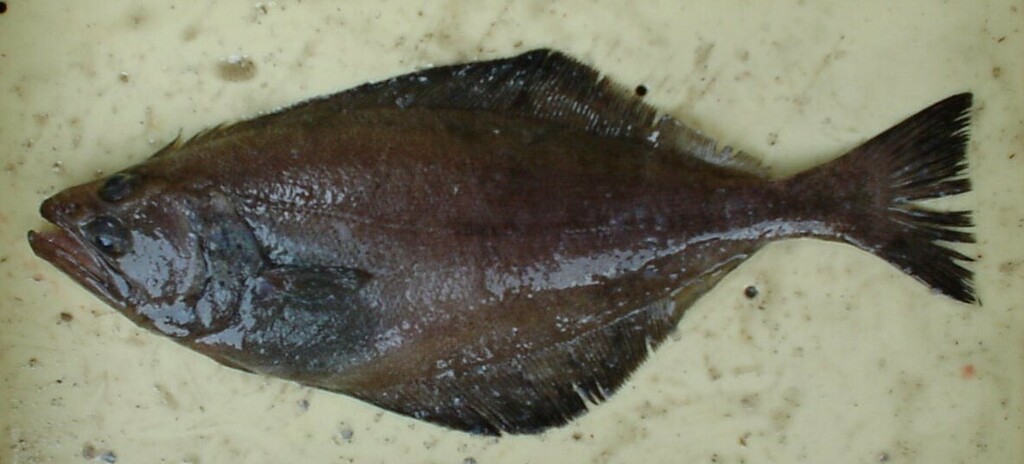
Kamchatka Flounder
Atheresthes evermanni
The Kamchatka flounder, Atheresthes evermanni, is a flatfish of the family Pleuronectidae. It is a demersal fish that lives at depths of between 20 metres (66 ft) and 1,200 metres (3,900 ft). Its native habitat is the temperate waters of the northern Pacific. It can grow as long as 100 centimetres (39 in) in length, and can weigh up to 8.5 kilograms (19 lb).
From the article Kamchatka flounder on Wikipedia (CC BY-SA), quoted section by section
Range & habitat
The native habitat of the Kamchatka flounder ranges from the Shelikof Strait and the Aleutian Islands in Alaska, across the Bering Sea, to the Gulf of Anadyr, Kamchatka Peninsula and the seas of Okhotsk and Japan. In the east of its range the Kamchatka flounder overlaps with the range of the arrowtooth flounder, and similarities in appearance between the two species mean that they were not distinguished in commercial fishing until 2007.
Wikipedia: “Range”
What it does
The Kamchatka flounder's diet consists of fish and zoobenthos organisms such as squid, cuttlefish, shrimps, prawns, amphipods, mysids, mollusks and marine worms, though the most important prey item is the walleye pollock, which accounted for 56-86% of stomach contents by weight in one study.
Wikipedia: “Diet”
Where it lives
Recorded sightings
—
geo-referenced records in GBIF, from museums, herbaria and field observers.
Drag the globe to turn it. Dots are where records exist, not a range map; darker means more records.
In the stacks
Searching the stacks…
Every page naming Atheresthes evermanni in the Biodiversity Heritage Library →
This page is assembled live from iNaturalist, GBIF, Wikipedia, the Source Library and the Internet Archive. It is not yet part of the hand-edited codex. iNaturalist taxon 619363.