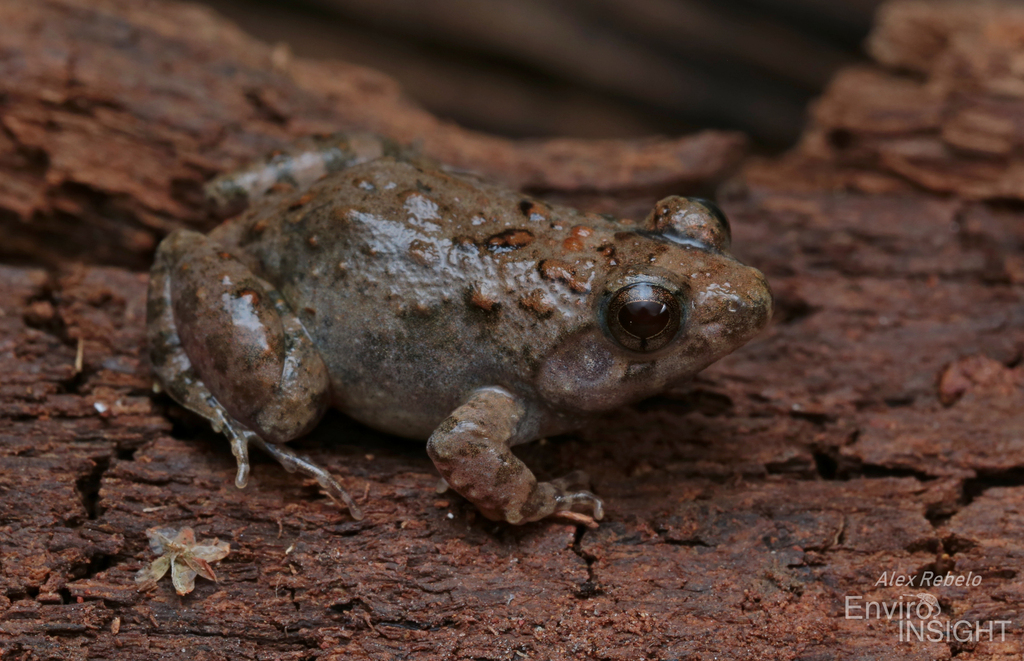
Phrynobatrachus francisci
Phrynobatrachus francisci is a species of frog in the Phrynobatrachidae family. It is found in Burkina Faso, Ivory Coast, Gambia, Ghana, Mali, Nigeria, Senegal, possibly Benin, possibly Guinea, possibly Guinea-Bissau, possibly Mauritania, possibly Niger, possibly Sierra Leone, and possibly Togo. Its natural habitats are dry savanna, moist savanna, subtropical or tropical dry shrubland, subtropical or tropical moist shrubland, swamps, intermittent freshwater marshes, arable land, pastureland, rural gardens, urban areas, ponds, and canals and ditches.
From the article Phrynobatrachus francisci on Wikipedia (CC BY-SA), quoted section by section
Description
Adult males measure 15–23 mm (0.6–0.9 in) and adult females 19–28 mm (0.7–1.1 in) in snout–vent length. The body is stocky. The snout is short and pointed. The tympanum is reduced but the supratympanic fold is distinct. The toes have some webbing. The dorsum has very prominent warts whereas the flanks have small glandular warts. The dorsal colouration is brown, with some specimens having dark, light, irregularly shaped spots. The dorsal parts of the limbs have dark and light transverse bars; the back of the thigh has light brown longitudinal bands. The throat, chest, belly, and underside of the thigh are whitish; some females and juveniles have brown spots in their throat. Males have a subgular vocal sac and are darker than females.
Range & habitat
Phrynobatrachus francisci is a very common species that inhabits both humid and dry savanna. It also lives in altered habitats including agricultural areas and villages. Breeding takes place in a range of temporary water habitats, including small temporary ponds and puddles and ditches. Phrynobatrachus francisci are parasitized by intradermal larvae of the chigger mite Endotrombicula pillersi (family Trombiculidae). In the Comoé National Park (Ivory Coast), more than half of the Phrynobatrachus francisci individuals were infected, whereas other amphibians were not infected – except for a single Sclerophrys maculata. Only the most heavily infested frogs showed pathological effects of mites.
== References ==
Wikipedia: “Habitat and ecology”
Listen
Looking for field recordings…
Where it lives
Recorded sightings
—
geo-referenced records in GBIF, from museums, herbaria and field observers.
Drag the globe to turn it. Dots are where records exist, not a range map; darker means more records.
In the stacks
Searching the stacks…
Every page naming Phrynobatrachus francisci in the Biodiversity Heritage Library →
This page is assembled live from iNaturalist, GBIF, Wikipedia, the Source Library and the Internet Archive. It is not yet part of the hand-edited codex. iNaturalist taxon 25359.