- Animals
- ›Chordates
- ›Vertebrates
- ›Reptiles
- ›Snakes and Lizards
- ›Lizards
- ›Glass, alligator, monitor lizards and allies
- ›Crocodile Lizards
- ›Shinisaurus
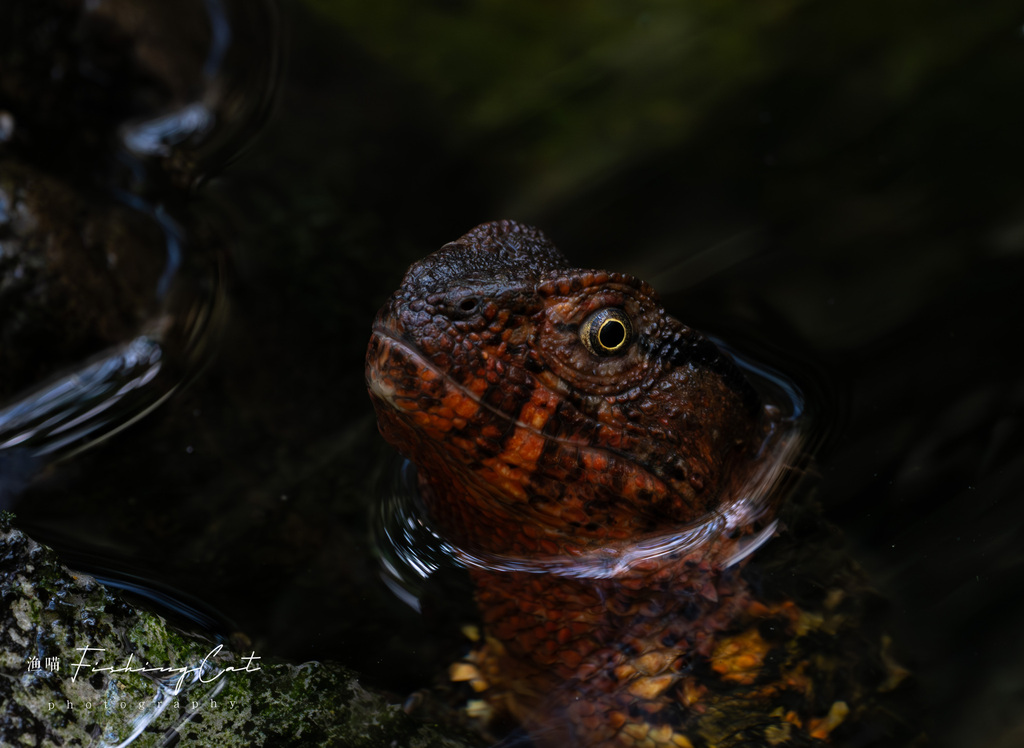
Chinese Crocodile Lizard
Shinisaurus crocodilurus
The Chinese crocodile lizard (Shinisaurus crocodilurus) is a semiaquatic anguimorph lizard found only in cool forests in southeastern China and northeastern Vietnam. The Chinese crocodile lizard spends much of its time in shallow water or in overhanging branches and vegetation, where it hunts its prey of insects, snails, tadpoles, and worms. Individuals in captivity may be fed baby mice. A rare and little-studied lizard, it is listed in CITES Appendix II, which regulates international trade of specimens. This is the only species in the monotypic genus Shinisaurus. It is the only living member of Shinisauria, a clade of lizards whose fossil record extends back to the Early Cretaceous, over 120 million years ago.
From the article Chinese crocodile lizard on Wikipedia (CC BY-SA), quoted section by section
Description
Chinese crocodile lizards are characterized by their green, colored with reddish necks. They often have alternating bands of light and dark patterns. Male Chinese crocodile lizards are more common than females, especially during the breeding season. On average, these lizards are 40–46 cm (16–18 in) long. Perhaps the lizards' most distinctive features are the rows of bony scales down its back and muscular tail, imitating those of a crocodile. Additionally, Chinese crocodile lizards are sexually dimorphic and can be distinguished visually. Adult males are larger and more colorful than females, with their color intensifying during the breeding season.
Wikipedia: “Anatomy”
Range & habitat
Surviving subpopulations of Chinese crocodile lizards primarily occupy isolated fragments of land in Guangxi and Guangdong provinces of southeastern China. The Vietnamese subspecies is only found on Yên Tử Mountain in Quảng Ninh and Bac Giang provinces of northeastern Vietnam. Shinisaurus crocodilurus live alongside clear streams within subtropical broadleaf evergreen forests. They have a habitual preference for remote streams in undisturbed areas such as mountain ridges and dense forests. The species lives in a relatively cool, monsoonal climate at moderately high elevations, 200–1,500 meters (660–4,920 ft) above sea level. Their preference to occupy less dense habitat is in-line with their antipredator trajectory towards flight rather than fight. Shinisaurus crocodilurus utilize tree holes, rocks, vegetated perches as shelter and are rarely found exposed on the forest floor.
Wikipedia: “Distribution and habitat”
What it does
In China, Shinisaurus crocodilurus is known to feed on both vertebrates and invertebrates. They are "sit-and-wait" predators, perched on branches near streams until prey items are sighted. Invertebrates include both terrestrial groups (worms, spiders, katydids, etc.) and aquatic shrimp. Vertebrate prey includes tadpoles, small fish, and occasionally frogs and lizards. The Vietnamese subspecies prefers terrestrial invertebrates, such as cockroaches, crickets, and particularly earthworms. Vertebrates are not known to be part of their diet.
Wikipedia: “Diet”
Where it lives
Recorded sightings
—
geo-referenced records in GBIF, from museums, herbaria and field observers.
Drag the globe to turn it. Dots are where records exist, not a range map; darker means more records.
In the stacks
Searching the stacks…
Every page naming Shinisaurus crocodilurus in the Biodiversity Heritage Library →
This page is assembled live from iNaturalist, GBIF, Wikipedia, the Source Library and the Internet Archive. It is not yet part of the hand-edited codex. iNaturalist taxon 39531.