- Animals
- ›Chordates
- ›Vertebrates
- ›Reptiles
- ›Snakes and Lizards
- ›Snakes
- ›Madagascar Brook Snakes
- ›Amplorhininae
- ›Duberria
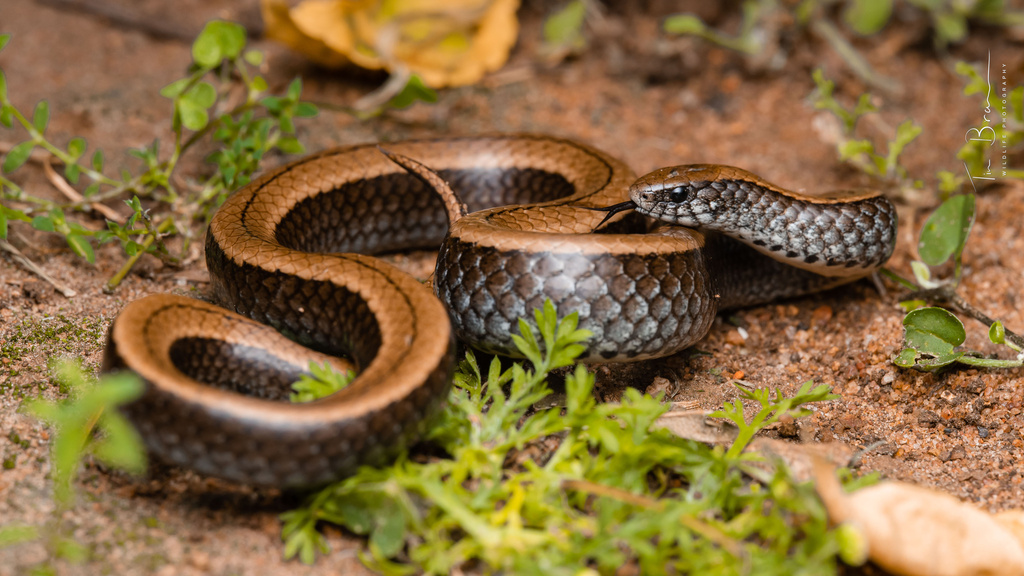
Common Slug-eater
Duberria lutrix
Duberria lutrix, or the common slug eater, is a small, ovoviviparous, molluscivorous, non-venomous snake, which is endemic to Africa.
From the article Duberria lutrix on Wikipedia (CC BY-SA), quoted section by section
Description
Adults can be up to thirty to forty cm (approximately twelve to sixteen inches). The common slug eater's colour can vary, but they typically have an olive green to brown or russet back, grey flanks, a yellowish or cream belly, and a black, more or less complete, vertebral stripe.
Range & habitat
This species is found in Burundi, Democratic Republic of the Congo, Eswatini, Ethiopia, Kenya, Mozambique, Rwanda, South Africa, Tanzania, Uganda, and Zimbabwe.
Wikipedia: “Geographic range”
What it does
As the name implies, the common slug eater is a specialised predator and feeds on snails and slugs, mostly finding its prey through chemoreception, using its tongue. It swallows its prey quickly before too much defensive mucus is produced, extracting snails from their shells through the shell opening, or by smashing the shell against a rock while grasping the soft body in its jaws.
Wikipedia: “Diet”
Where it lives
Recorded sightings
—
geo-referenced records in GBIF, from museums, herbaria and field observers.
Drag the globe to turn it. Dots are where records exist, not a range map; darker means more records.
In the stacks
Searching the stacks…
Every page naming Duberria lutrix in the Biodiversity Heritage Library →
This page is assembled live from iNaturalist, GBIF, Wikipedia, the Source Library and the Internet Archive. It is not yet part of the hand-edited codex. iNaturalist taxon 30326.