- Animals
- ›Chordates
- ›Vertebrates
- ›Reptiles
- ›Snakes and Lizards
- ›Snakes
- ›Colubrid Snakes
- ›Colubrine Snakes
- ›Thelotornis
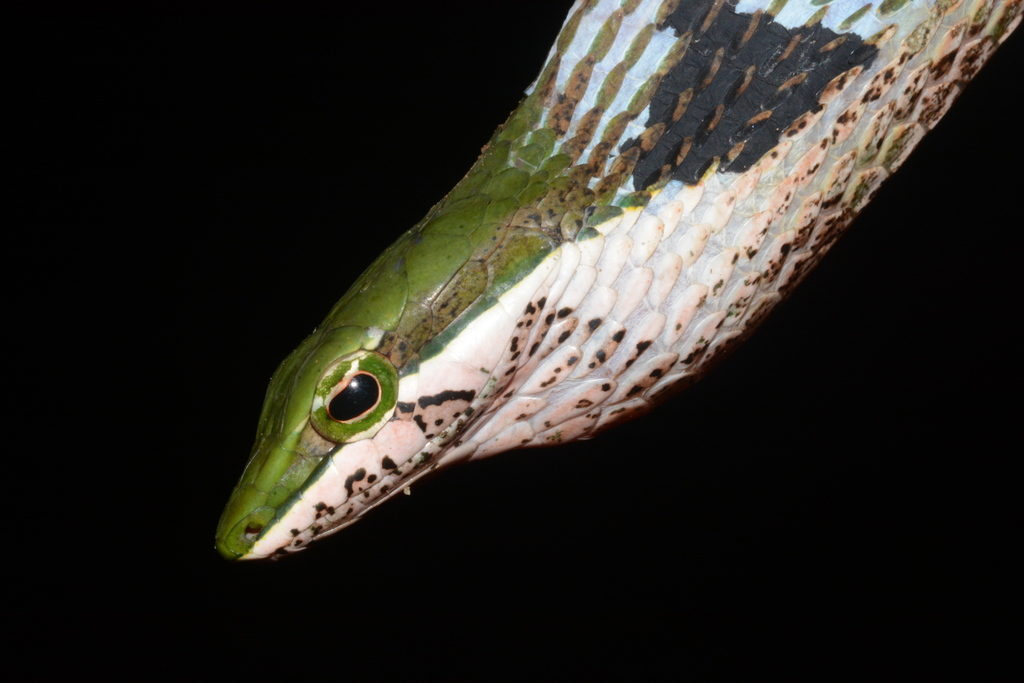
Usambara Vine Snake
Thelotornis usambaricus
The twig snakes (genus Thelotornis), also commonly known as bird snakes or vine snakes, are a genus of rear-fanged venomous snakes in the family Colubridae. The genus is native to Africa. All species in the genus have a slender and elongated profile, a long tail, a narrow head and a pointed snout. The eye of all species has a horizontal pupil, shaped like a keyhole, which gives twig snakes binocular vision. Twig snakes are greyish-brown with faint light and dark markings. When threatened, they inflate the throat to display bold black markings between the scales. Twig snake bites are potentially deadly: the venom is hemotoxic, affecting the blood clotting mechanism and causing uncontrolled bleeding and internal hemorrhaging. Bites by twig snakes have caused death in humans; famous herpetologist Robert Mertens died after being bitten by his pet savanna vine snake (Thelotornis capensis). However, envenomed bites are extremely rare when not handling the snake, as the fangs can't breach the skin except in a few places like the web between the thumb and fingers.
From the article Twig snake on Wikipedia (CC BY-SA), quoted section by section
Description
Twig snakes are among the few rear-fanged colubrids whose bite is highly venomous and potentially fatal. The venom is hemotoxic, and although its effects are very slow and bites are rare, no antivenom has been developed and few fatalities (such as Robert Mertens) have occurred. They prey on birds, lizards and frogs, and conceal themselves in trees, though often at a low enough level to be able to also strike at terrestrial prey, which they may swallow upwards after killing. Their cryptic coloration and apparent ability to freeze or sway gently, as chameleons do, like a twig on a tree (hence the name), makes them hard to spot. Indeed, they may be more abundant in areas than is immediately obvious.
Wikipedia: “Anatomy and behaviour”
Where it lives
Recorded sightings
—
geo-referenced records in GBIF, from museums, herbaria and field observers.
Drag the globe to turn it. Dots are where records exist, not a range map; darker means more records.
In the stacks
Searching the stacks…
Every page naming Thelotornis usambaricus in the Biodiversity Heritage Library →
This page is assembled live from iNaturalist, GBIF, Wikipedia, the Source Library and the Internet Archive. It is not yet part of the hand-edited codex. iNaturalist taxon 28333.