 NL·0456
Herbarium of the Nature Library
- Name
- Fregata magnificens
- Family
- Fregatidae
- Native to
- Tropical Atlantic and eastern Pacific coasts
- Habitat
- Coastal, Island, Marine
On eBird ↗
Magnificent Frigatebird
Live sightings near you, the range map, bar charts of when it is seen, and Macaulay Library photos and recordings.
Magnificent frigatebird
Fregata magnificens
Also calledRabihorcado magno (Spanish) · Frégate superbe (French) · Man-o'-war bird (English)
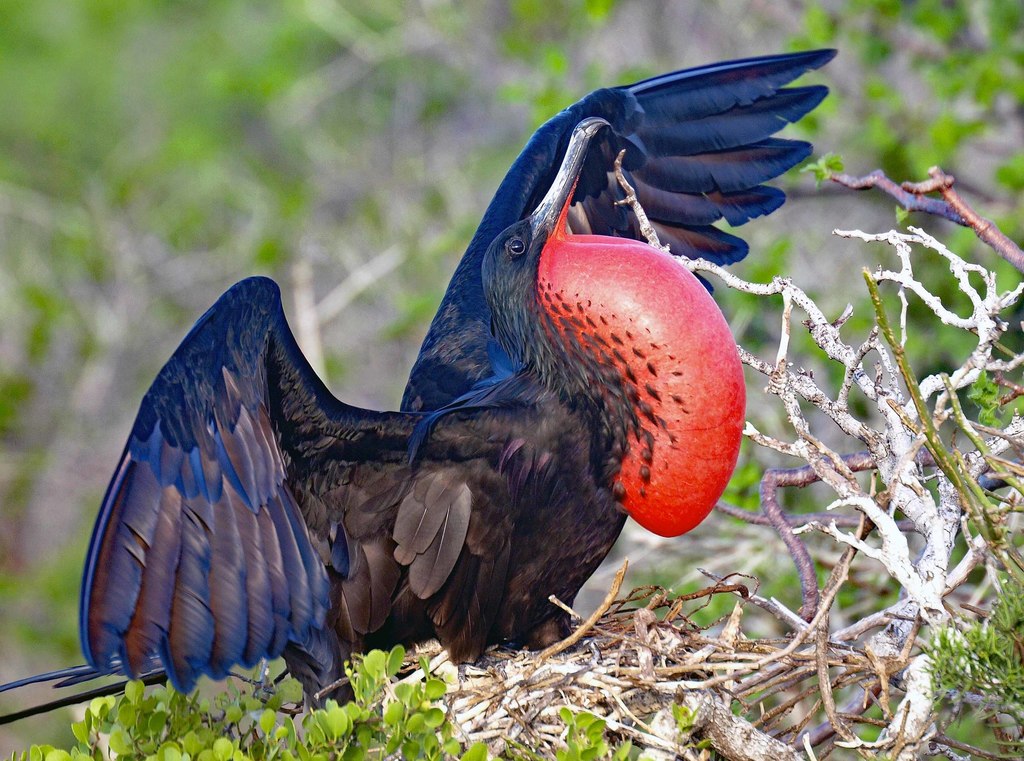
A pirate of tropical seas with a huge red throat pouch in breeding males. It can stay aloft for days and steals fish from other seabirds.
The magnificent frigatebird, frigate petrel or man o' war is a seabird of the frigatebird family Fregatidae. With a length of 89–114 centimetres and wingspan of 2.17–2.44 m, it is the largest species of frigatebird. It occurs over tropical and subtropical waters off America, between northern Mexico and Peru on the Pacific coast and between Florida and southern Brazil along the Atlantic coast. There are also populations on the Galápagos Islands in the Pacific and the Cape Verde islands in the Atlantic. It is one of the fastest birds in the world, flying at speeds of up to 153 kilometres (95 mi) per hour. Wikipedia
What it can do
- iLowest wing-loading of any bird, allowing effortless soaring
- iiSteals fish from boobies and other seabirds
- iiiCan stay aloft for days at a time, even sleeping in flight
- ivMales inflate a red throat pouch to attract females
In the field
Field marks
- aLong, angular wings
- bDeeply forked tail
- cMales black with a red throat pouch
- dFemales with a white breast
- Voice
- Silent at sea; drumming and rattling at colonies.
- Not to be confused with
- Great frigatebird males have a green rather than purple gloss on the back and a pale wing bar; females have a red eye-ring and a pale grey throat. Lesser frigatebird is smaller, with white 'armpit' spurs. At distance the shape, long forked tail and angular wings separate frigatebirds from all other seabirds.
- Where to see it
- Codrington Lagoon (Barbuda), North Seymour (Galápagos), Isla Contoy and Isla Isabel (Mexico), Florida Keys
- When
- Resident
Listen
Looking for field recordings…
Life & habits
- Diet
- Fish, squid, stolen prey
- Habitat
- Tropical coasts and islands
- Size
- 89–114 cm; wingspan 2.2–2.4 m
- Lifespan
- Up to 30 years
It chases other seabirds until they drop their catch, snatching it in mid-air.
Where it lives
Recorded sightings
—
geo-referenced records in GBIF, from museums, herbaria and field observers.
Native range
Tropical Atlantic and eastern Pacific coasts
Drag the globe to turn it. Dots are where records exist, not a range map; darker means more records.
In the stacks
Searching the stacks…
Every page naming Fregata magnificens in the Biodiversity Heritage Library →
Marginalia
Sailors called it the man-o'-war bird for its piratical habits.
Curiosity
Its plumage is not fully waterproof, so it avoids landing on the sea and feeds by snatching prey from the surface or from other birds.
Kinship





Photographs: iNaturalist contributors under the licences shown. Records: GBIF.org. Historical plates: Source Library (CC BY-SA 4.0; originals public domain). Summary text: Nature Library editors and Wikipedia (CC BY-SA). Medicinal and edibility notes are historical and educational, not advice. iNaturalist taxon 4631.