On eBird ↗
Golden-crowned Warbler
Live sightings near you, the range map, bar charts of when it is seen, and Macaulay Library photos and recordings.
Golden-crowned Warbler
Basileuterus culicivorus
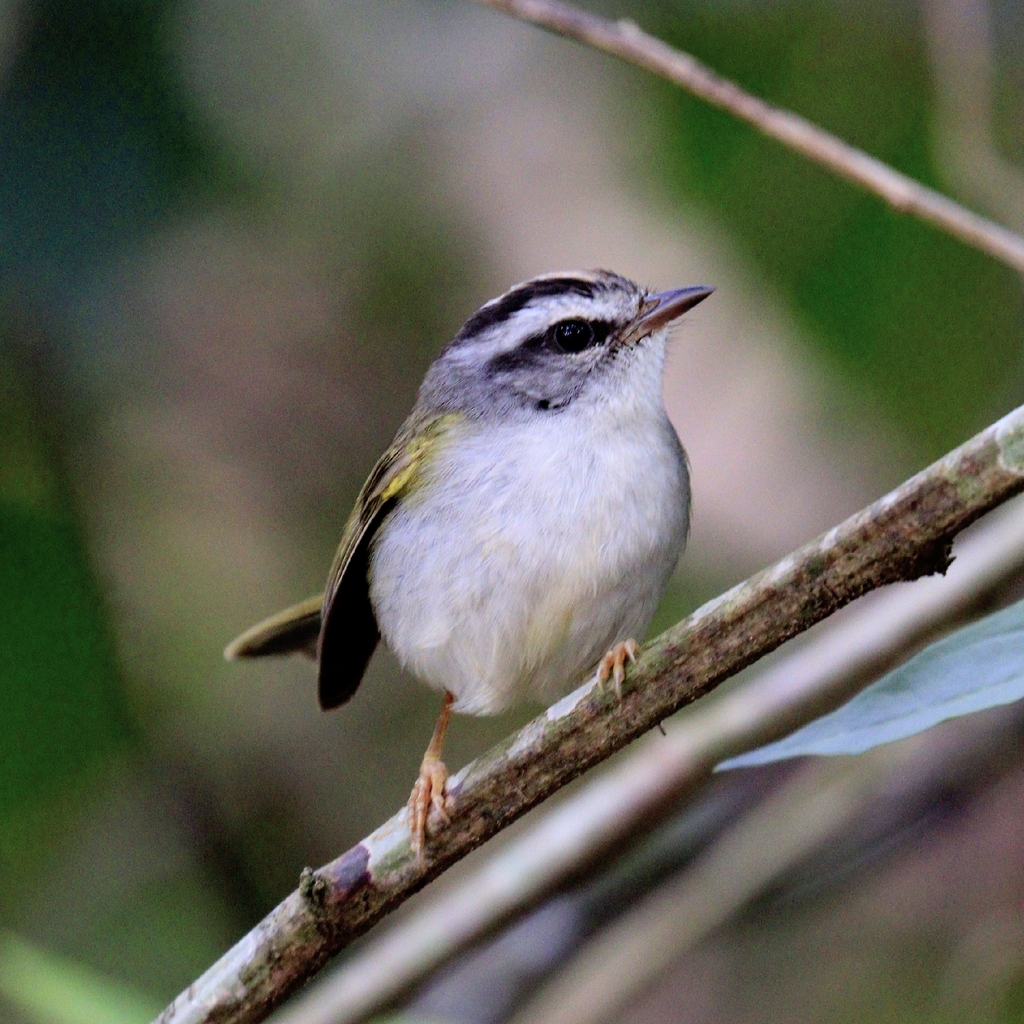
The golden-crowned warbler (Basileuterus culicivorus) is a small insectivorous bird in the New World warbler family Parulidae. It has a large geographic range that extends from northeastern Mexico south to northern Argentina. The white-bellied warbler was formerly treated as a separate species but is now considered to be conspecific with the golden-crowned warbler.
From the article Golden-crowned warbler on Wikipedia (CC BY-SA), quoted section by section
Description
The golden-crowned warbler is 12.0–13.5 cm (4.7–5.3 in) in overall length. It has grey-green upperparts and bright yellow underparts. The head is grey with a black-bordered yellow crown stripe, a yellow or white supercilium and a black eyestripe. Sexes are similar, but the immature golden-crowned warbler is duller, browner and lacks the head pattern other than the eyestripe. The subspecies fall into four groups. The Central American culicivorus group (known as the stripe-crowned warbler) is essentially as the nominate described above, the southwestern cabanisi group (known as Cabanis's warbler) has grey upperparts and a white supercilium, the aureocapillus group (known as the golden-crowned warbler) of the southeast, has a white supercilium and orange-rufous crown stripe, and the single subspecies in the hypoleucus group (known as the white-bellied warbler) with white, not yellow, underparts that occurs in south central Brazil.
Range & habitat
It breeds from Mexico and south through Central America to northeastern Argentina and Uruguay, and on Trinidad. It is mainly a species of lowland forests.
Wikipedia: “Distribution and habitat”
What it does
The golden-crowned warbler feeds on arthropods, especially insects and spiders. Their song is a high thin pit-seet-seet-seet-seet, and the call is a sharp tsip. It lays two to four rufous-spotted white eggs in a domed nest in a bank or under leaves on the forest floor. The eggs are incubated by the female for 10 to 12 days. Parent birds will feign injury to distract potential nest predators.
Wikipedia: “Behaviour”
Listen
Looking for field recordings…
Where it lives
Recorded sightings
—
geo-referenced records in GBIF, from museums, herbaria and field observers.
Drag the globe to turn it. Dots are where records exist, not a range map; darker means more records.
In the stacks
Searching the stacks…
Every page naming Basileuterus culicivorus in the Biodiversity Heritage Library →
This page is assembled live from iNaturalist, GBIF, Wikipedia, the Source Library and the Internet Archive. It is not yet part of the hand-edited codex. iNaturalist taxon 10023.