On eBird ↗
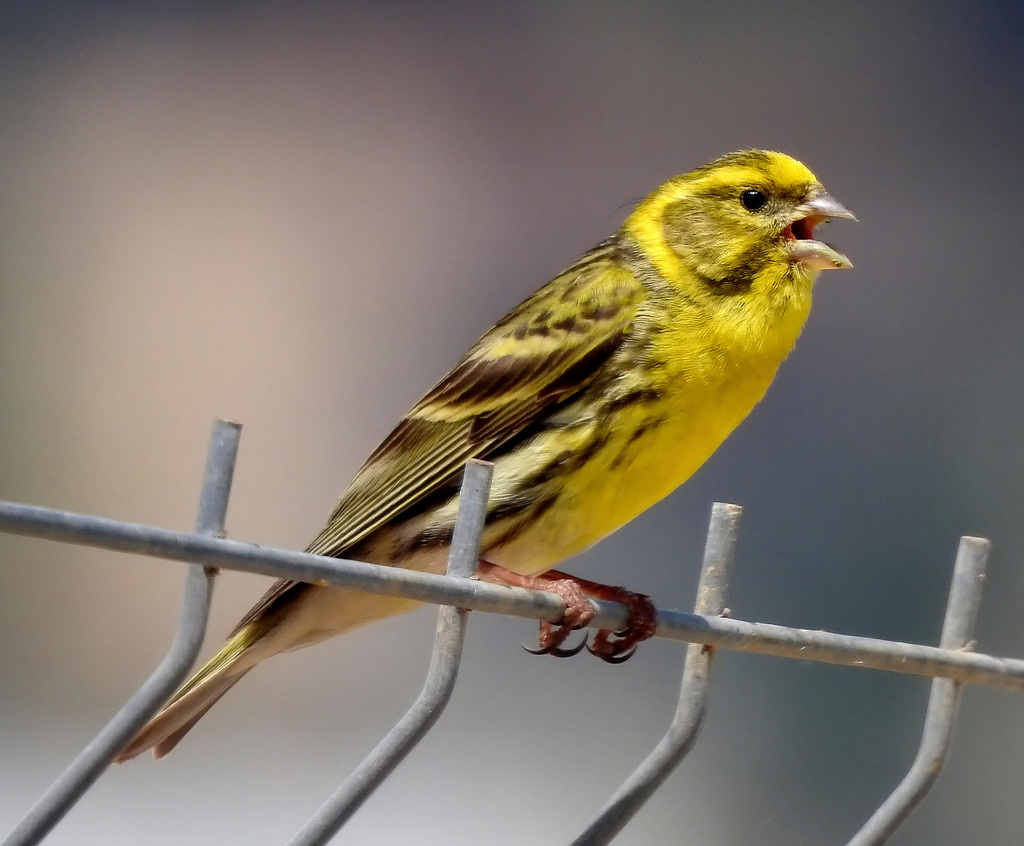
European Serin
Live sightings near you, the range map, bar charts of when it is seen, and Macaulay Library photos and recordings.
European Serin
Serinus serinus
The European serin, or simply the serin (Serinus serinus), is the smallest species of the family of finches (Fringillidae) and is closely related to the Atlantic canary. Its diet consists mainly of a combination of buds and seeds.
From the article European serin on Wikipedia (CC BY-SA), quoted section by section
Description
The European serin is a small short-tailed bird, 11–12 cm in length. The upper parts are dark-streaked greyish green, with a yellow rump. The yellow breast and white belly are also heavily streaked. The male has a brighter yellow face and breast, yellow wing bars and yellow tail sides. The song of this bird is a buzzing trill, very familiar in Mediterranean countries. It breeds across southern and central Europe and North Africa. Southern and Atlantic coast populations are largely resident, but the northern breeders migrate further south in Europe for the winter. Open woodland and cultivation, often with some conifers, is favoured for breeding. It builds its nest in a shrub or tree, laying 3–5 eggs. It forms flocks outside the breeding season, sometimes mixed with other finches. The food is mainly seeds, and, in the breeding season, insects. This small serin is an active and often conspicuous bird.
Listen
Looking for field recordings…
Where it lives
Recorded sightings
—
geo-referenced records in GBIF, from museums, herbaria and field observers.
Drag the globe to turn it. Dots are where records exist, not a range map; darker means more records.
In the stacks
Searching the stacks…
Every page naming Serinus serinus in the Biodiversity Heritage Library →
This page is assembled live from iNaturalist, GBIF, Wikipedia, the Source Library and the Internet Archive. It is not yet part of the hand-edited codex. iNaturalist taxon 9236.