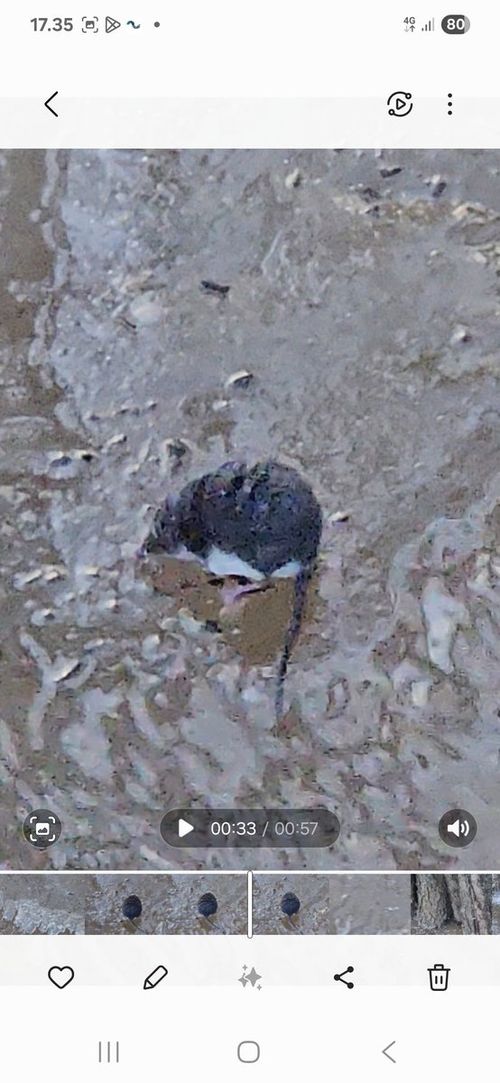

Images attached to GBIF records (field photographs), from . Open licences; click for the record.
Mammals
Mammalia
Also calledMammifères (fra) · Pattedyr (dan) · Säuger (deu) · mamífero (por) · nisäkkäät (fin) · zoogdieren (nld) · Ссавці (ukr) · däggdjur (swe) · njiččehasat (sme) · pattedyr (nno) · pattedyr (nob) · sogdyr (nno) · spendyr (nno) · 哺乳綱 (jpn)
A mammal (from Latin mamma 'breast') is a vertebrate animal of the class Mammalia (). Mammals are characterized by the presence of milk-producing mammary glands for feeding their young, a broad neocortex region of the brain, fur or hair, and three middle ear bones. These characteristics distinguish them from reptiles and birds, from which their ancestors diverged in the Carboniferous period over 300 million years ago. Around 6,640 extant species of mammals have been described and divided into 27 orders. The study of mammals is called mammalogy.
The largest orders of mammals, by number of species, are the rodents, bats, and eulipotyphlans (including hedgehogs, moles and shrews). The next three are the primates (including humans, monkeys and lemurs), the even-toed ungulates (including pigs, bovids and whales), and the Carnivora (including cats, dogs, and seals).
47,184 names below this class · direct branches, page 1
- Afrosoricidaorder
- Artiodactylaorder
- Carnivoraorder
- Cetaceaorder
- Chiropteraorder
- Cingulataorder
- Dasyuromorphiaorder
- Dermopteraorder
- Didelphimorphiaorder
- Diprotodontiaorder
- Erinaceomorphaorder
- Hyracoideaorder
- Lagomorphaorder
- Macroscelideaorder
- Microbiotheriaorder
- Monotremataorder
- Notoryctemorphiaorder
- Paucituberculataorder
- Peramelemorphiaorder
- Perissodactylaorder
- Pholidotaorder
- Pilosaorder
- Primatesorder
- Proboscideaorder
- Rodentiaorder
- Scandentiaorder
- Sireniaorder
- Soricomorphaorder
- Tubulidentataorder
- Aculeatafamily
- Adalatheriidaefamily
- Adianthidaefamily
- Aegialodontidaefamily
- Agiliafamily
- Albertogaudryidaefamily
- Albionbaataridaefamily
- Alcidedorbignyidaefamily
- Allodontidaefamily
- Alphadontidaefamily
- Ambloctonidaefamily
- Amblyctonidaefamily
- Amblytheriidaefamily
- Ameghinichnidaefamily
- Amilnedwardsiidaefamily
- Amphidontidaefamily
- Amphilestidaefamily
- Amphitheriidaefamily
- Anatoliadelphyidaefamily
- Anchitheridaefamily
- Andegamerycidaefamily
- Anoplotheriadaefamily
- Apatemyidaefamily
- Aquiladelphidaefamily
- Arboroharamiyidaefamily
- Archaeohyracidaefamily
- Archaeolambdidaefamily
- Archaeomerycidaefamily
- Archaeopithecidaefamily
- Arctocyonidaefamily
- Arctomydaefamily
- Arctostylopidaefamily
- Arginbaataridaefamily
- Arguimuridaefamily
- Arguitheriidaefamily
- Argyrolagidaefamily
- Arsinoitheriidaefamily
- Asiatheriidaefamily
- Asioryctidaefamily
- Astigalidaefamily
- Astrapotheriidaefamily
- Atryptheridaefamily
- Ausktribosphenidaefamily
- Austrotriconodontidaefamily
- Barbereniidaefamily
- Barylambdidaefamily
- Bemalambdidaefamily
- Bienotheriidaefamily
- Bishopidaefamily
- Bobolestidaefamily
- Boffiidaefamily
- Bolodontidaefamily
- Bonapartheriidaefamily
- Bondesiidaefamily
- Borhyaenidaefamily
- Brandoniidaefamily
- Breviodontidaefamily
- Brontotheridaefamily
- Caenopidaefamily
- Caenotheriidaefamily
- Camelopardalidaefamily
- Campanorcidaefamily
- Capridaefamily
- Carodniidaefamily
- Casamiquelidaefamily
- Casamiqueliidaefamily
- Centetidaefamily
- Chriacidaefamily
- Chronoperatidaefamily
- Cimolestidaefamily
- Cimolodontidaefamily
Where it has been recorded
Recorded sightings
—
geo-referenced records in GBIF, from museums, herbaria and field observers.
Drag the globe to turn it. Dots are where records exist, not a range map; darker means more records.
In the stacks
Searching the stacks…
Every page naming Mammalia in the Biodiversity Heritage Library →
From the GBIF Backbone Taxonomy and occurrence records (GBIF.org), with Wikipedia and the Source Library. GBIF species 359.