- Animals
- ›Chordates
- ›Vertebrates
- ›Mammals
- ›Therians
- ›Placental Mammals
- ›Primates, Rodents, and Allies
- ›Primates
- ›Monkeys, Apes, and Tarsiers
- ›Monkeys and Apes
- ›Apes and Old World Monkeys
- ›Old World Monkeys
- ›Cercopithecines
- ›Guenons, Vervet Monkeys, and Talapoins
- ›Chlorocebus
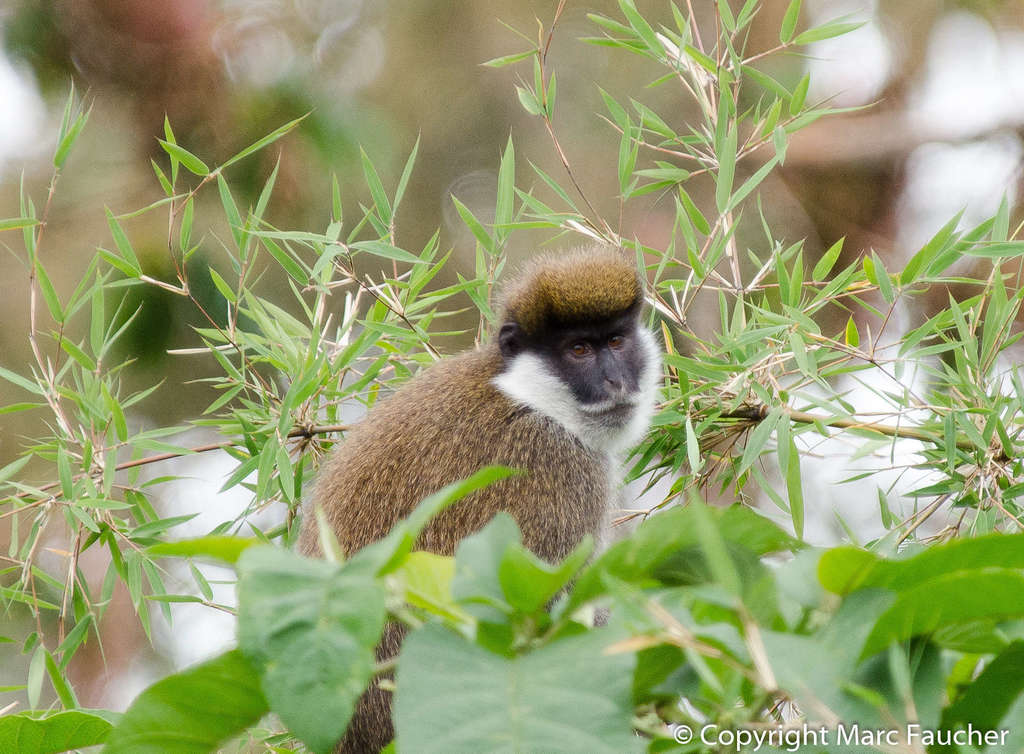
Bale Mountains Monkey
Chlorocebus djamdjamensis
The Bale Mountains vervet (Chlorocebus djamdjamensis) is a terrestrial Old World monkey endemic to Ethiopia, found in the bamboo forests of the Bale Mountains. All species in Chlorocebus were formerly in the genus Cercopithecus. The Bale Mountains vervet is one of the least-known primates in Africa. They avoid tree-dominated and bushland areas as their habitat. These monkeys mainly reside in the bamboo forest (Odubullu Forest) of the Bale Mountains due their dietary specialization on bamboo, but other factors, such as climate, forest history, soil quality, and disease, are likely to play a role in their choice to inhabit this area. The Bale Mountains vervet have a very quiet behavior and tend to flee when encountering a human being. It is also known as the Bale monkey and Bale Mountain grivet.
From the article Bale Mountains vervet on Wikipedia (CC BY-SA), quoted section by section
What it does
The Bale Mountains vervet monkey is a dietary specialist with African alpine bamboo (Yushania alpina) making up as much as 77% of its diet. This makes the species unique in the genus Chlorocebus as the other five species are dietary generalist species. The diets of Bale monkeys in continuous forests are made up of approximately 10 species of plants; however, populations in fragmented forests have considerably higher dietary diversity and consume up to five times more species. For those populations, bamboo makes up as little as 2% of their diet. It is unclear if this dietary flexibility is due to hybridization from grivet and vervet monkeys or if the species adapts in the absence of bamboo. This dietary flexibility makes the Bale monkey less dependent on its main food source than other dietary specialist species like the koala or giant panda. In areas where Bale monkeys and human settlements co-occur, the monkeys often raid crops for food which can spark retaliatory hunting.
Wikipedia: “Ecology”
Listen
Looking for field recordings…
Where it lives
Recorded sightings
—
geo-referenced records in GBIF, from museums, herbaria and field observers.
Drag the globe to turn it. Dots are where records exist, not a range map; darker means more records.
In the stacks
Searching the stacks…
Every page naming Chlorocebus djamdjamensis in the Biodiversity Heritage Library →
This page is assembled live from iNaturalist, GBIF, Wikipedia, the Source Library and the Internet Archive. It is not yet part of the hand-edited codex. iNaturalist taxon 74189.