- Animals
- ›Chordates
- ›Vertebrates
- ›Ray-finned Fishes
- ›Carps, Characins, Catfishes and Allies
- ›Characins
- ›Characoidei
- ›American tetras
- ›Acestrorhamphinae
- ›Astyanax
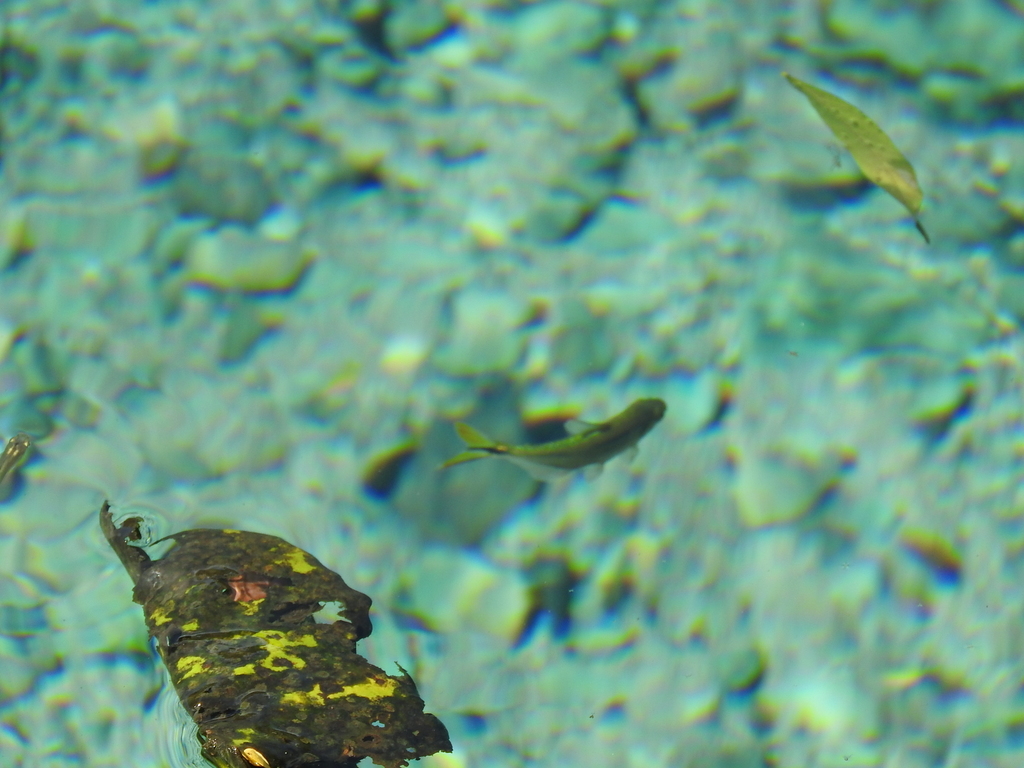
Yucatán Tetra
Astyanax altior
Astyanax altior, the Yucatán tetra, is a species of freshwater ray-finned fish belonging to the family Acestrorhamphidae, the American characins. This fish is endemic to the Yucatán Peninsula of Mexico. It largely inhabits the cenotes (water-filled sinkholes) of the region, and can tolerate water of limited salinity, though it largely prefers freshwater. Its diet includes plant matter and invertebrates, and there may be an element of cannibalism involved.
It bears a genetic and morphological resemblance to congener Astyanax aeneus, with which it was once considered synonymous; however, more recent ecobiological assessment has determined that the two are separate.
From the article Astyanax altior on Wikipedia (CC BY-SA), quoted section by section
Description
Astyanax altior reaches a maximum length of 5.75 cm (2.26 in) standard length (SL). The body is notably deep for a member of Astyanax, within the range of 37–48% SL; other species inhabiting the Yucatán never have a body depth greater than 42% SL. A. altior has a dark patch on the caudal peduncle, a dark-gray or silvery lateral stripe, and a somewhat diffuse, oval-shaped humeral spot. The body color is most often gray or silver, but orange is not unknown; in populations living alongside congener A. aeneus, individuals of A. altior are a brighter yellow. In the original description of A. altior, its visual similarities to congener A. aeneus were remarked upon. The main differentiating factor between the two at the time was the number of anal-fin rays, which are fewer in A. altior than A. aeneus (22 to 23 vs. 24, respectively). The original description also makes note of its sharp and "unusually high (or long)" fins.
Range & habitat
Astyanax altior is endemic to the Yucatán Peninsula of Mexico, specifically to the northernmost third. It has been collected from a variety of habitats, including both freshwater and brackish conditions, but it is most commonly cited from the cenotes therein. It also seems to be abundant in karstic wetland systems. Its type locality, a site near Progreso, has been destroyed. Mangrove swamps are also a part of A. altior's habitat, though it is sensitive to the conditions therein, and mangrove swamps that have deteriorated in general health have smaller populations. Cenotes are natural sinkholes in carbonate rock that fill with water, most often referring specifically to the formations in the Yucatán Peninsula.These are either connected to an aquifer or other body of water (and thus have sufficient water cycling to maintain clear waters), or are isolated (and therefore turbid). A. altior has a preference for the cenotes with clearer waters. The anchialine cenotes located in Tulum are a specific example, but A. altior is generally easy to find within most cenotes in its range.
Wikipedia: “Distribution and habitat”
What it does
Astyanax altior is known to be omnivorous. Juveniles are more often planktivorous, and adults lean slightly towards carnivorous tendencies, though specimens will take supplemental plant materials (largely in the form of periphyton). There may be an element of cannibalism in its diet. Astyanax altior forms schools. Schooling behavior is more common in younger fish. It is also known to live syntopically with congener A. aeneus in at least one cenote; this is part of why they are recognized as different valid species. Otherwise, they would likely be considered synonymous due to considerable morphological overlap, but the fact that they remain distinct when in sympatry supports their species status. Reproduction occurs during the rainy season.
Wikipedia: “Diet and ecology”
In human culture
The genus name "Astyanax" is an allusion to Astyanax, a Trojan warrior of the same name in Homer's Iliad. While the reasoning therein was not made clear in the original text, this possibly originates in the large, armor-like scales of type species of the genus, A. argentatus, which was formerly considered a synonym of A. mexicanus by taxonomists. The specific name "altior" means "higher" (consider "altitude", which means "height"), and is likely in reference to the fins, which were described as "unusually high" by Hubbs.
Wikipedia: “Etymology”
Where it lives
Recorded sightings
—
geo-referenced records in GBIF, from museums, herbaria and field observers.
Drag the globe to turn it. Dots are where records exist, not a range map; darker means more records.
In the stacks
Searching the stacks…
Every page naming Astyanax altior in the Biodiversity Heritage Library →
This page is assembled live from iNaturalist, GBIF, Wikipedia, the Source Library and the Internet Archive. It is not yet part of the hand-edited codex. iNaturalist taxon 194208.