- Animals
- ›Chordates
- ›Vertebrates
- ›Ray-finned Fishes
- ›Spiny-rayed fishes
- ›Wrasses and allies
- ›False scorpionfishes, wrasses, and parrotfishes
- ›Wrasses and Parrotfishes
- ›Rainbow Wrasses and Allies
- ›Coris
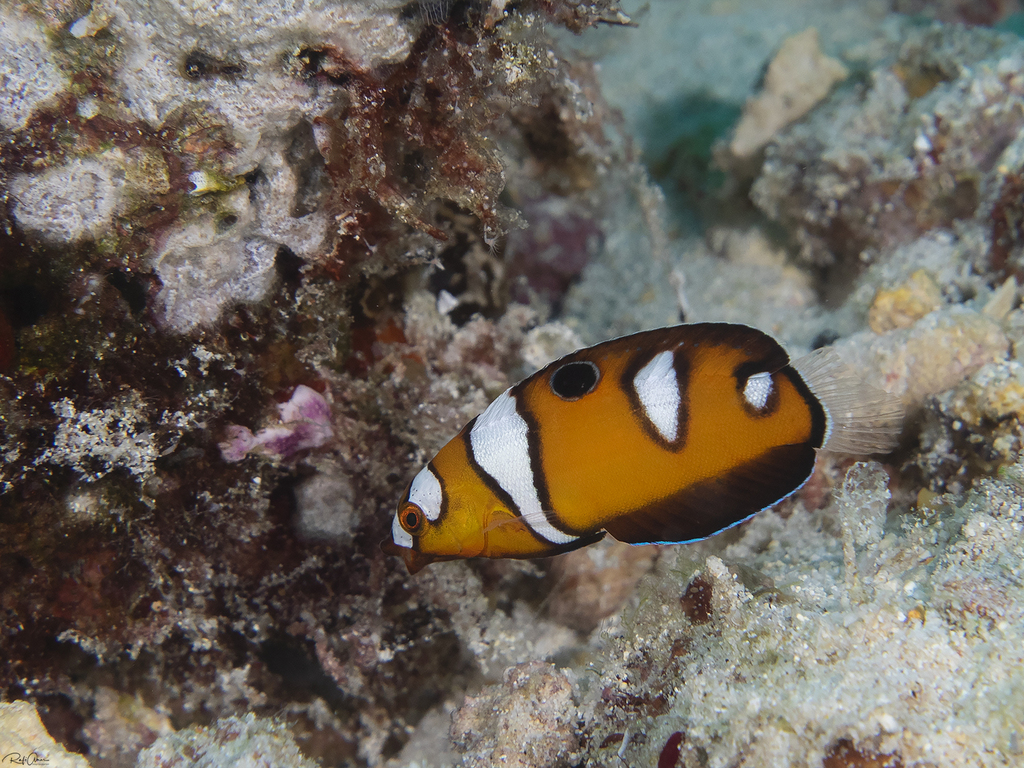
Queen Coris
Coris formosa
The queen coris (Coris formosa) is a species of wrasse native to the Indian Ocean from the Red Sea and the coast of Africa to Sri Lanka. Adults of this species are inhabitants of coral reefs and can be found at depths from 2 to 50 m (6.6 to 164.0 ft), while juveniles are commonly found in tide pools. This species can reach 60 cm (24 in) in total length. It is of minor importance to local commercial fisheries and...
From the article Queen coris on Wikipedia (CC BY-SA), quoted section by section
Description
Similar in appearance to Coris gaimard, the queen coris can measure between the range of 20 cm (7.9 in) when young, but can grow up to approximately 60 cm (24 in). Its coloration usually varies within three different patterns. Generally it tends to be reddish to lavender in vibrant, striking color. When in adulthood, the creature appears blue-greenish, with dark edges and dark blue spots, covering the body (mainly towards the tail), with a red-orange line on its posterior margin towards the tail. Towards the rostrum, the adult queen coris will also display vibrant, light blue, organic [?] lines. The fish has nine dorsal spines, twelve dorsal soft rays, and three anal spines. When young, Coris formosa are orange and brown on the bottom, with long white spots on the dorsal part of body. One can see a resemblance to a Clown Fish's color. However, vibrant, blue features develop in adulthood. It is hypothesized that their variation on color depends on the depth at which they are found, but variation mainly results from differences between juvenile and adult stages of growth. Color is a crucial feature for Coris formosa because it is for display purposes; used to attract potential mating partners, and in combative relationships between males. The fish have small protruding teeth for feeding (mostly on hard-shelled organisms).
Range & habitat
Adults of this species are inhabitants of neritic oceanic coral reefs, and can be found at depths from 2 to 50 m (6.6 to 164.0 ft); meaning they are found in tropical waters within 24 °C to 27 °C. While juveniles are commonly found in tide pools, adults can be found usually in rocky, and coral areas, sometimes in vegetation. The species is distributed along the Western Indian Ocean, Southern Red Sea, South Africa, and east to Sri Lanka.
Wikipedia: “Distribution and habitat”
What it does
Queen coris feed on hard-shell prey, such as crustaceans (shrimps, crabs, and amphipods) and echinoderms (sea urchin, and small molluscs). As their teeth develop in adulthood, they are very efficient in predating hard shells, and can become very aggressive and destructive. The young feed mainly on other smaller organisms, such as krill until they grow able to prey on hard-shelled organisms.
Wikipedia: “Diet”
Where it lives
Recorded sightings
—
geo-referenced records in GBIF, from museums, herbaria and field observers.
Drag the globe to turn it. Dots are where records exist, not a range map; darker means more records.
In the stacks
Searching the stacks…
Every page naming Coris formosa in the Biodiversity Heritage Library →
This page is assembled live from iNaturalist, GBIF, Wikipedia, the Source Library and the Internet Archive. It is not yet part of the hand-edited codex. iNaturalist taxon 98511.