- Animals
- ›Chordates
- ›Vertebrates
- ›Ray-finned Fishes
- ›Tarpons, Eels, and Allies
- ›True Eels
- ›Congroidei
- ›Snake Eels
- ›Snake Eels
- ›Ophichthus
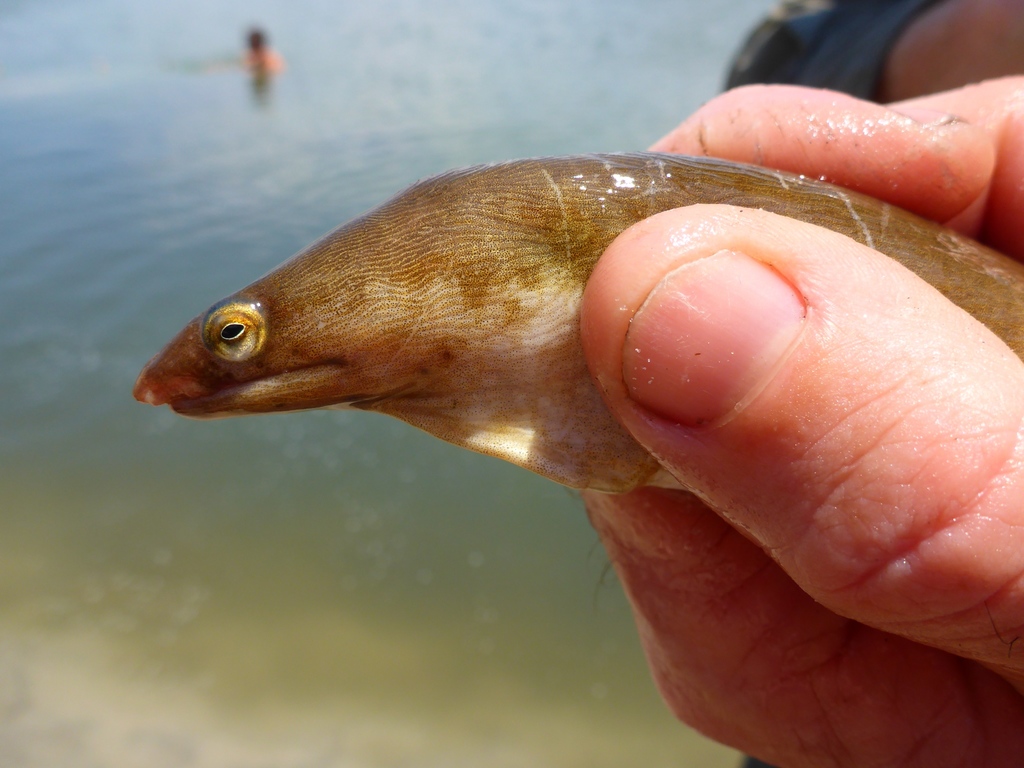
Shrimp Eel
Ophichthus gomesii
The shrimp eel (Ophichthus gomesii) is an eel in the family Ophichthidae (worm/snake eels). It was described by Francis de Laporte de Castelnau in 1855. It is a common inshore species of eel usually found in the shallow Gulf of Mexico and the high-salinity bays where it inhabits muddy habitats.
From the article Shrimp eel on Wikipedia (CC BY-SA), quoted section by section
Description
The shrimp eel has an elongate body and snake-like shape characteristic of the eels. Individuals are colored brown to gray on their dorsal side with lighter coloration below. Their branchial region (ventral side behind the head) is swollen with a basket-like structure of over-lapping free rays (jugostegalia) underneath the skin but they are often visible through the skin. The tail is fleshy with no caudal or pelvic fins. The common length of an adult is 50 centimeters. The maximum length collected is 91.4 centimeters. Shrimp eels can be distinguished from other eels by their lack of a caudal fin and external jugostegalia (basket-like structure of over-lapping free rays). It can also be distinguished from other snake eels by its lack of markings, well-developed pectoral fin, and dorsal fin originating behind the gill slit.
Wikipedia: “Characteristics”
Range & habitat
Shrimp eels are distributed along the Western Atlantic from Canada to Massachusetts and the northern Gulf of Mexico to southern Brazil. They are absent in the Bahamas and most of the Caribbean islands.
Wikipedia: “Distribution”
Where it lives
Recorded sightings
—
geo-referenced records in GBIF, from museums, herbaria and field observers.
Drag the globe to turn it. Dots are where records exist, not a range map; darker means more records.
In the stacks
Searching the stacks…
Every page naming Ophichthus gomesii in the Biodiversity Heritage Library →
This page is assembled live from iNaturalist, GBIF, Wikipedia, the Source Library and the Internet Archive. It is not yet part of the hand-edited codex. iNaturalist taxon 84530.