- Animals
- ›Chordates
- ›Vertebrates
- ›Cartilaginous Fishes
- ›Sharks and Rays
- ›Sharks
- ›Squalean Sharks
- ›Squaliform Sharks
- ›Dogfish Sharks
- ›Squalus
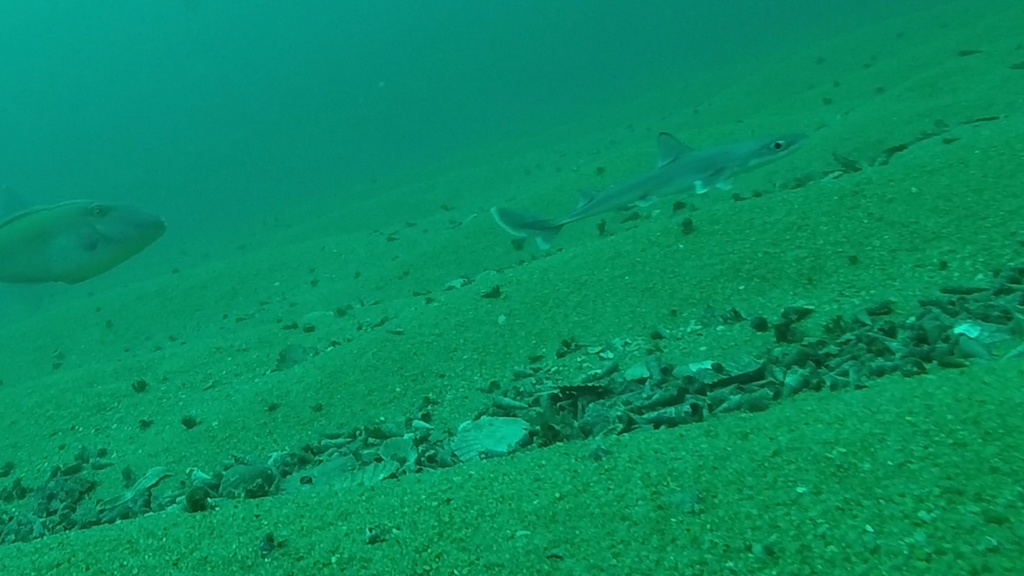
Spikey Dogfish
Squalus megalops
The shortnose spurdog (Squalus megalops) also known as the piked spurdog is a small shark located primarily off the coast of Southern Australia and South Africa. The shortnose spurdog's size is dependent on the sex of the animal. The female shortnose spurdog is consistently larger than the male shortnose spurdog and will typically measure out to about 56.41 cm (1.85 ft) while the male shortnose spurdog will typically only measure out to about 44.36 cm in length (1.46 ft) which means the female shortnose spurdog is over 10 cm longer than the male shortnose spurdog. Some females can even measure up to 78 cm which is over 2.5 feet long. The life span of spurdog's can be quite long with females typically living longer than males. The average life span of a female shortnose spurdog is 0–29 years old while the male life span is 0–26 though it is estimated that a female can live up to 46 years while a male can only live up to 33. Females also take longer to reach sexual maturity than males and on average are not fertile until they are over 15 years of age. 7 years longer than the 8 years it takes males to reach maturity. The shortnose spurdog's eat a variety of items but primarily favor cephalopods such as squid and octopuses for their meals. Other organisms that have been found in their stomachs include fish, hermit crabs, sponges, brittle stars, the remains of sea lion and even primary producers such as algae.
From the article Shortnose spurdog on Wikipedia (CC BY-SA), quoted section by section
Range & habitat
The shortnose spurdog's primary populations are off the coasts of southern Africa and Australia. It is possible that the shortnose spurdog may also live in the eastern Atlantic, southern Indian Ocean and western North Pacific but there has been no data to support these populations so far. It was recently confirmed however that there are shortnose spurdogs in the Mediterranean Sea.
Wikipedia: “Habitat”
What it does
Shortnose spurdog carry their eggs in utero and typically carry their eggs for 2 years. Reproduction is perhaps the answer to why females are so much larger than males since larger female sharks are more likely to have a larger litter size. This is because larger females produce larger embryos that therefore have a higher survival rate. The average litter size is only 2–4 and only 50% of sexually mature females reach recruitment, meaning have offspring that will settle and grow into maturity and become part of the population. This means that a simple measurement of reproduction is not an accurate method at predicting the population of this creature that possesses such a large maturation cycle.
Wikipedia: “Reproduction”
Where it lives
Recorded sightings
—
geo-referenced records in GBIF, from museums, herbaria and field observers.
Drag the globe to turn it. Dots are where records exist, not a range map; darker means more records.
In the stacks
Searching the stacks…
Every page naming Squalus megalops in the Biodiversity Heritage Library →
This page is assembled live from iNaturalist, GBIF, Wikipedia, the Source Library and the Internet Archive. It is not yet part of the hand-edited codex. iNaturalist taxon 52307.