 NL·0381
Herbarium of the Nature Library
- Name
- Pica pica
- Family
- Corvidae
- Native to
- Europe, Turkey, the Middle East and Central Asia to Siberia; birds of North Africa, southwest Arabia and East Asia are now often treated as separate species
- Habitat
- Farmland, Woodland, Gardens and parks, Urban
On eBird ↗
Eurasian Magpie
Live sightings near you, the range map, bar charts of when it is seen, and Macaulay Library photos and recordings.
Eurasian magpie
Pica pica
Also calledAqaq (Arabic) · Saksağan (Turkish) · Elster (German) · Pie bavarde (French) · Urraca (Spanish) · Soroka (Russian)
A bold, long-tailed black-and-white crow with iridescent blue and green gloss. Clever and adaptable, it is a familiar bird of farmland and towns, surrounded by centuries of superstition.
The Eurasian magpie or common magpie is a resident breeding bird throughout the northern part of the Eurasian continent. It is one of several birds in the crow family (corvids) that are designated as magpies, and it belongs to the Holarctic radiation of "monochrome" magpies. In Europe, the term "magpie" is used by English speakers as a synonym for the Eurasian magpie; the only other species of magpie in Europe being the Iberian magpie, which is restricted to the Iberian Peninsula. Despite sharing a name and similar colouration, they are not closely related to the Australian magpie, which is an artamid, only sharing the same clade (Corvides). Wikipedia
What it can do
- iIn 2008 it became the first non-mammal shown to recognise itself in a mirror
- iiBuilds a large domed nest of sticks with a mud-lined cup
- iiiCaches food and recaches it if watched by other magpies
- ivThrives in cities and farmland across much of Eurasia
In the field
Field marks
- aBlack head, breast and back with white belly and shoulders
- bVery long, graduated tail glossed green and purple
- cWings glossed blue with white primaries flashing in flight
- dStrong black bill and legs
- Voice
- A loud, rapid, rattling chatter, 'chak-chak-chak-chak'.
- Not to be confused with
- No other European bird has the same shape and pattern. Iberian (azure-winged) magpie is smaller with a black cap and pale-blue wings and tail. Maghreb magpie (North Africa) has bare blue skin behind the eye.
- Where to see it
- Farmland, parks and suburbs across Europe, Turkey and Central Asia.
- When
- Resident
Listen
Looking for field recordings…
Life & habits
- Diet
- Omnivorous: insects, grain, fruit, carrion, small animals, eggs and nestlings
- Habitat
- Open country with scattered trees and hedges, parks, suburbs
- Size
- 40–51 cm including tail; wingspan 52–60 cm; 160–250 g
- Lifespan
- Typically 3–5 years
Gathers in noisy groups ('parliaments') in late winter and mobs cats, foxes and owls.
Where it lives
Recorded sightings
—
geo-referenced records in GBIF, from museums, herbaria and field observers.
Native range
Europe, Turkey, the Middle East and Central Asia to Siberia; birds of North Africa, southwest Arabia and East Asia are now often treated as separate species
Drag the globe to turn it. Dots are where records exist, not a range map; darker means more records.
In the old herbals & bestiaries
Woodcuts and engravings matched from the Source Library’s scanned books by name. Plates marked “relative” show a close kin rather than this exact species. Click a plate to read the page it came from, with translation.

Ortus sanitatis
1491 · p.661

History of Animals, Book I: On Viviparous Quadrupeds
Conrad Gessner · 1554 · p.853

Historiae Animalium Liber III: De Avium Natura
Conrad Gesner · 1555 · p.708

Ornithology
Ulisse Aldrovandi · 1599 · p.822

Ornithology
Ulisse Aldrovandi · 1599 · p.824

Theater of Earthly Creatures
Anonymous · 1672 · p.238

Noah's Ark
Athanasius Kircher · 1675 · p.136

Historiae Animalium Liber III: De Avium Natura
Conrad Gesner · 1555 · p.809

History of Animals, Book I: On Viviparous Quadrupeds
Conrad Gessner · 1554 · p.954

The Natural History of Carolina, Florida and the Bahama Islands, Vol. 1
Mark Catesby · 1777 · p.62
In the stacks
Searching the stacks…
Every page naming Pica pica in the Biodiversity Heritage Library →
Marginalia
The British counting rhyme 'One for sorrow, two for joy' is first recorded in the 18th century, and Rossini's opera 'La gazza ladra' (The Thieving Magpie, 1817) cemented its reputation as a thief.
Curiosity
A 2014 Exeter study found that wild magpies are actually wary of shiny objects, contradicting the thieving-magpie myth.
Kinship
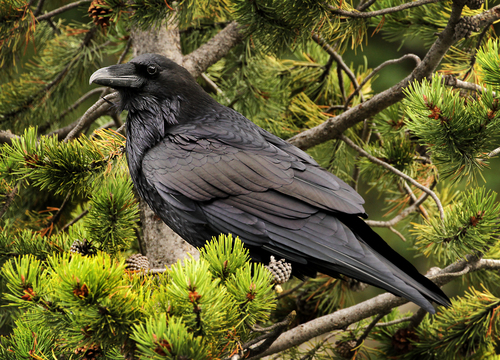

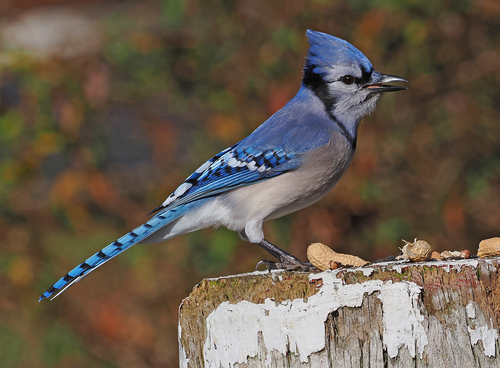
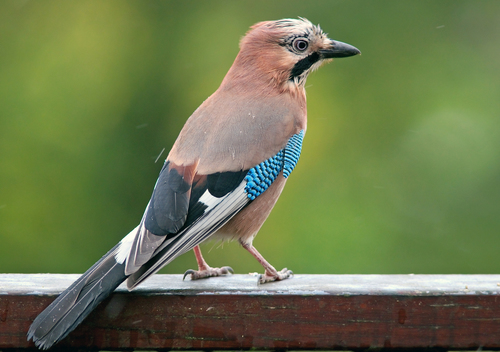
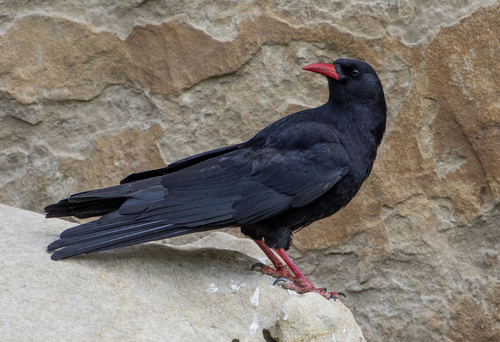
Photographs: iNaturalist contributors under the licences shown. Records: GBIF.org. Historical plates: Source Library (CC BY-SA 4.0; originals public domain). Summary text: Nature Library editors and Wikipedia (CC BY-SA). Medicinal and edibility notes are historical and educational, not advice. iNaturalist taxon 891696.