On eBird ↗
Brown Dipper
Live sightings near you, the range map, bar charts of when it is seen, and Macaulay Library photos and recordings.
Brown Dipper
Cinclus pallasii
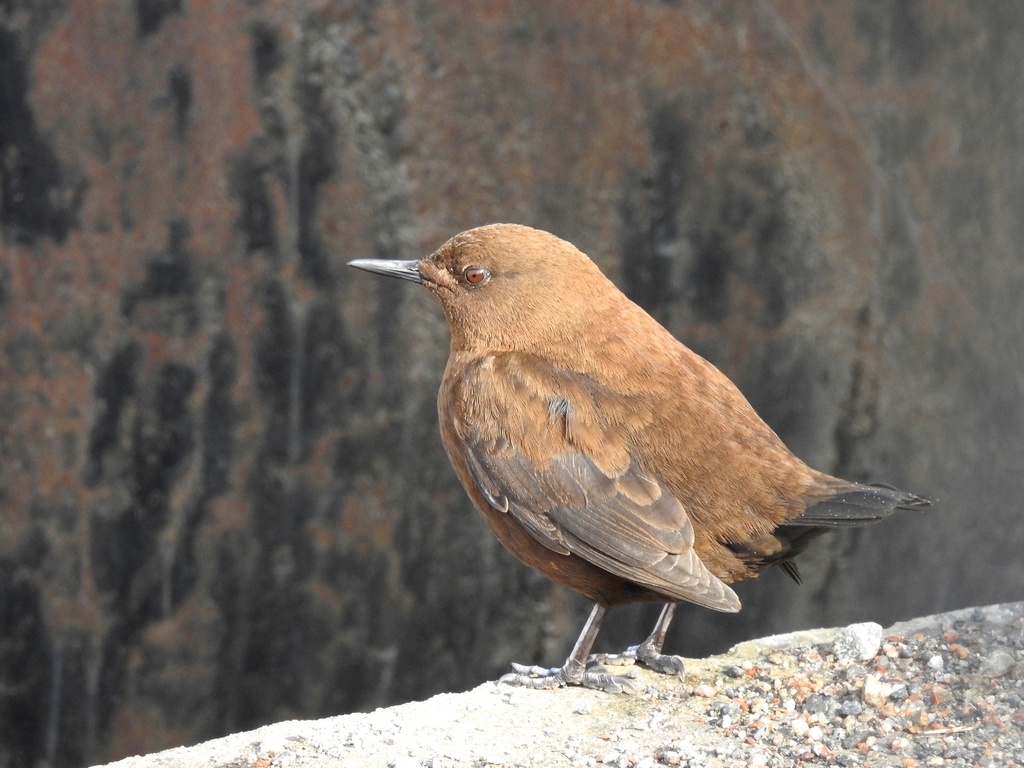
The brown dipper (Cinclus pallasii), also known as Pallas's dipper, Asian dipper or the Asiatic dipper, is an aquatic songbird found in the mountains of the east Palearctic. It is a thrush-like bird with a cocked tail. Its plumage is chocolate-brown with a slightly lighter coloured back and breast. At 22 cm (8.7 in) and 87 g (3.1 oz), it is the largest of the dippers. This species, which is not often seen, is found at medium to low elevations where mountain streams flow.
From the article Brown dipper on Wikipedia (CC BY-SA), quoted section by section
What it does
The brown dipper can either feed by diving into streams to eat larger benthic organisms, or wade in shallower parts of streams and pick smaller organisms of the bottom. The adults will dive for food from December through April, which is when there are more large benthic organisms. Since this period is also the breeding season of the brown dipper, more food is required, so diving for large food is necessary. However, the adults will forage by wading and picking at the stream bottom for the rest of the year. Brown dipper chicks and fledglings will also forage by diving. One small population wintering at a hot spring in Suntar-Khayata Mountains of Siberia feeds underwater when air temperatures drop below −55 °C. Following typhoons, brown dippers in upland Taiwanese streams are displaced by flooding into relatively poorer quality streams that likely act as an important refuge.
Wikipedia: “Diet and feeding biology”
Listen
Looking for field recordings…
Where it lives
Recorded sightings
—
geo-referenced records in GBIF, from museums, herbaria and field observers.
Drag the globe to turn it. Dots are where records exist, not a range map; darker means more records.
In the stacks
Searching the stacks…
Every page naming Cinclus pallasii in the Biodiversity Heritage Library →
This page is assembled live from iNaturalist, GBIF, Wikipedia, the Source Library and the Internet Archive. It is not yet part of the hand-edited codex. iNaturalist taxon 7642.