- Animals
- ›Chordates
- ›Vertebrates
- ›Mammals
- ›Therians
- ›Placental Mammals
- ›Primates, Rodents, and Allies
- ›Primates
- ›Monkeys, Apes, and Tarsiers
- ›Monkeys and Apes
- ›Apes and Old World Monkeys
- ›Old World Monkeys
- ›Cercopithecines
- ›Baboons, Macaques, and Mangabeys
- ›Rungwecebus
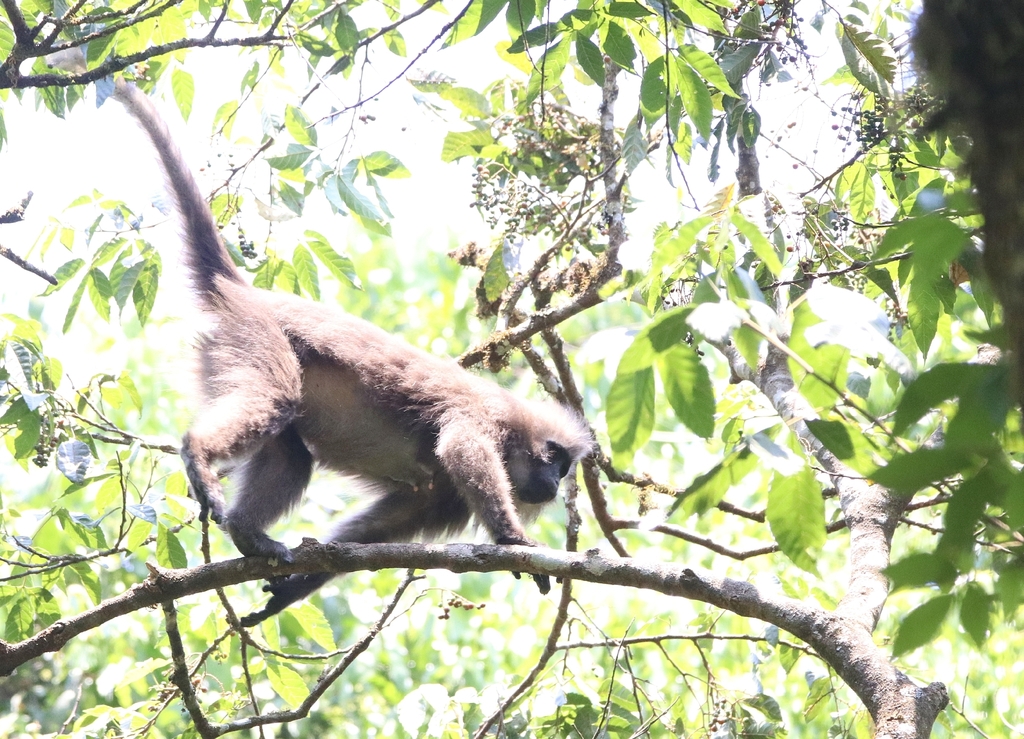
Kipunji
Rungwecebus kipunji
The kipunji (Rungwecebus kipunji), also known as the highland mangabey, is a species of Old World monkey that lives in the highland forests of Tanzania. It was independently described in December 2003 and July 2004, making it the first new African monkey species discovered since 1984. Originally assigned to the genus Lophocebus, genetic and morphological data showed that it is more closely related to the genus Papio. It was subsequently assigned to a new genus, Rungwecebus, named after Mount Rungwe. Rungwecebus is the first new monkey genus described since 1923.
From the article Kipunji on Wikipedia (CC BY-SA), quoted section by section
Description
The kipunji's relatively long pelage is light or medium brown with white on the end of the tail and the ventrum. The pelage close to the hands and feet tends to be a medium to dark brown. Its hands, feet, and face are all black. It does not appear to show any sexual dimorphism in relation to pelage coloration. Adult male kipunjis have a body length of 85–90 cm (33–35 in) and are estimated to weigh between 10 and 16 kg (22 and 35 lb). The kipunji has a distinctive territorial call — a low-pitched "honk-bark". Its nearest relatives are said to make a very different sound, "whoop-gobbles". The kipunji's pelage coloration and its broad crest of hair on the crown of its head helps to distinguish it from Cercocebus and Lophocebus.
Range & habitat
Around 1,800 individuals live in mountainside trees in Tanzania. A census published in 2022 found 59 groups in Livingstone Forest (within Kitulo National Park), Mount Rungwe Nature Reserve, and Madehani Village Forest. The forest at Rungwe is highly degraded, and fragmentation of the remaining forest threatens to split that population into three smaller populations. The Ndundulu forest is in better shape, but the population there is smaller.
Wikipedia: “Distribution and habitat”
Listen
Looking for field recordings…
Where it lives
Recorded sightings
—
geo-referenced records in GBIF, from museums, herbaria and field observers.
Drag the globe to turn it. Dots are where records exist, not a range map; darker means more records.
In the stacks
Searching the stacks…
Every page naming Rungwecebus kipunji in the Biodiversity Heritage Library →
This page is assembled live from iNaturalist, GBIF, Wikipedia, the Source Library and the Internet Archive. It is not yet part of the hand-edited codex. iNaturalist taxon 75049.