- Animals
- ›Chordates
- ›Vertebrates
- ›Cartilaginous Fishes
- ›Sharks and Rays
- ›Sharks
- ›Galean Sharks
- ›Ground Sharks
- ›Requiem Sharks
- ›Lamiopsis
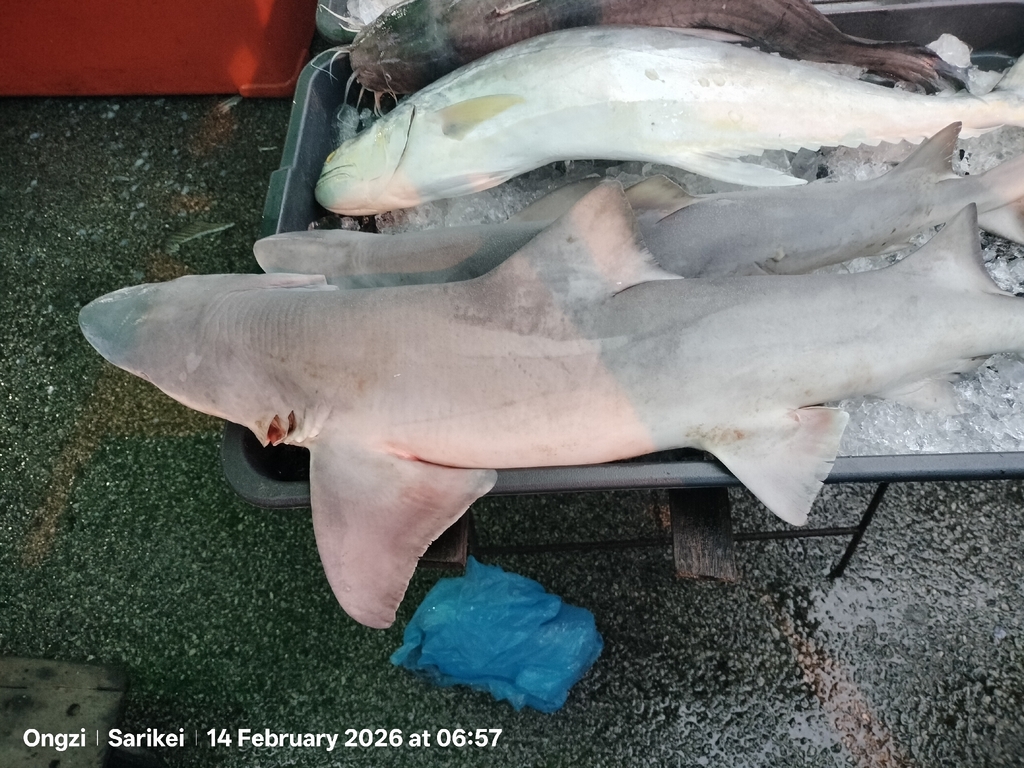
Borneo Broadfin Shark
Lamiopsis tephrodes
The Borneo broadfin shark (Lamiopsis tephrodes) is a species of ground shark in the family Carcharhinidae, occurring in inshore waters of the western central and northwestern Pacific Ocean. It is associated with turbid estuarine environments on the continental shelf at depths of less than 50 m and is taken in a variety of coastal fisheries. The species has been assessed as Endangered under criteria A2d on the IUCN Red List due to suspected population reductions driven by intensive fishing pressure across its range.
From the article Borneo broadfin shark on Wikipedia (CC BY-SA), quoted section by section
Description
The Borneo broadfin shark is a medium-sized shark reaching a maximum total length of 157 cm. Males mature at around 114 cm total length and females at 130 cm total length. Reproduction is placental viviparous, with litters typically comprising 4–8 pups (usually 8). Gestation lasts around eight months, and pups are born at 40–60 cm total length. The generation length is suspected to be approximately 6.5 years, based on similarity to the daggernose shark (Isogomphodon oxyrhynchus).
Range & habitat
The Borneo broadfin shark occurs in the Western Central and Northwest Pacific. It is reported from Thailand, Indonesia, Malaysia, and is considered to occur more widely through the Indo-Malay Archipelago to southern China, with its overall range including Cambodia, China, Indonesia, Malaysia, Thailand, and Vietnam. This species is associated with inshore habitats on the continental shelf, linked to turbid estuarine waters and presumably in depths of less than 50 m. It occurs in estuaries and over subtidal sandy, sandy–muddy, and muddy substrates.
Wikipedia: “Distribution and habitat”
What it does
The Borneo broadfin shark is a marine neritic species that occurs in estuarine and shallow coastal habitats. It inhabits turbid waters of the continental shelf, including estuaries and subtidal sandy, sandy–muddy, and muddy habitats, generally at depths shallower than 50 m. The species is placental viviparous, with litters typically consisting of 4–8 pups (usually 8) and a gestation period of around eight months. Size at birth is 40–60 cm total length. The generation length is suspected to be around 6.5 years.
Wikipedia: “Ecology and life history”
Where it lives
Recorded sightings
—
geo-referenced records in GBIF, from museums, herbaria and field observers.
Drag the globe to turn it. Dots are where records exist, not a range map; darker means more records.
In the stacks
Searching the stacks…
Every page naming Lamiopsis tephrodes in the Biodiversity Heritage Library →
This page is assembled live from iNaturalist, GBIF, Wikipedia, the Source Library and the Internet Archive. It is not yet part of the hand-edited codex. iNaturalist taxon 607431.