- Animals
- ›Chordates
- ›Vertebrates
- ›Ray-finned Fishes
- ›Spiny-rayed fishes
- ›Perches, Scorpionfishes, Sticklebacks, and Allies
- ›Perches, groupers and allies
- ›Perches, Darters, and allies
- ›Darters
- ›Percina
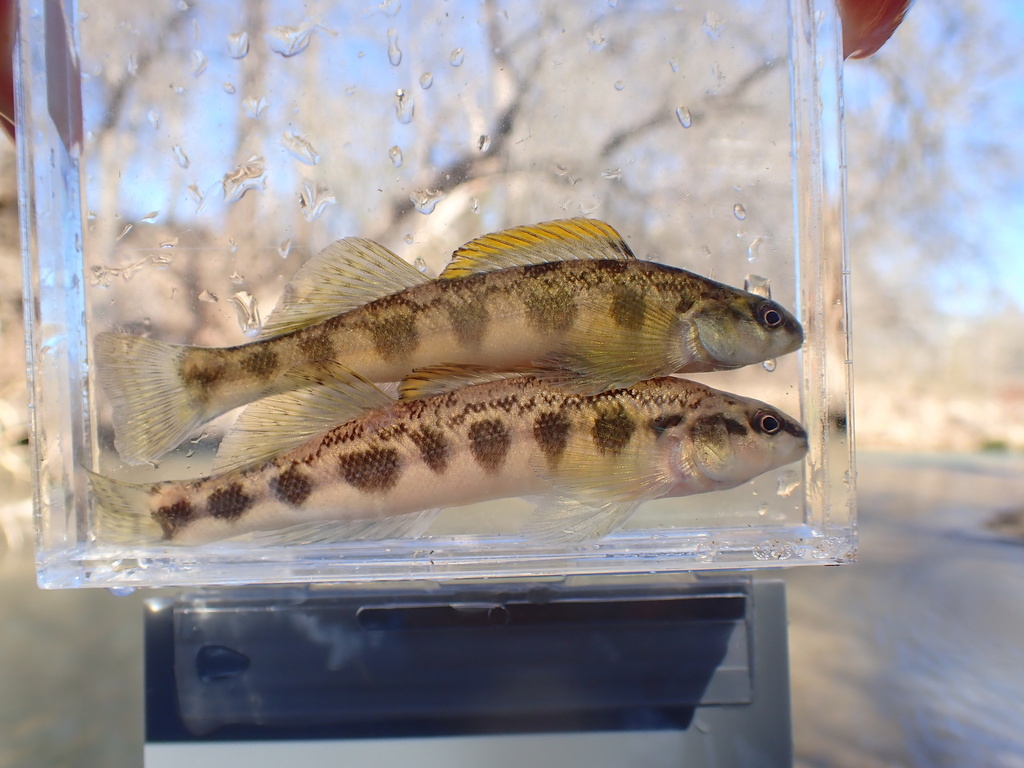
Guadalupe Darter
Percina apristis
The Guadalupe darter (Percina apristis) is a small species of freshwater ray-finned fish, a darter from the subfamily Etheostomatinae, part of the family Percidae, which also contains the perches, ruffes and pikeperches. It is found in the Guadalupe River system in Texas. The Guadalupe darter was formally a subspecies of the dusky darter, but was recognized as an independent species in 2007. It is protected by state law as a threatened species.
From the article Guadalupe darter on Wikipedia (CC BY-SA), quoted section by section
Description
The Guadalupe darter can reach up to 11 cm (4.3 in) in length. It is recognizable from its 6–8 black spots across the middle of its body. It has a tan upper half and a silver lower half. Unlike most ray-finned fishes, The Guadalupe darter does not contain a swim bladder. they move by scooting along the floor. The Guadalupe darter can live up to four years and reaches sexual maturity at one years old.
Wikipedia: “Anatomy”
Range & habitat
The Guadalupe darter prefers fast rocky runs of small to medium-sized rivers. It can also be found scavenging in the Texas wild rice. It ranges from spring lake to the southern San Marcos river, which is a part of the greater Guadalupe river basin.
Wikipedia: “Habitat”
What it does
The Guadalupe darter has a carnivorous diet that consist of small insects and arthropods including
Red swamp crayfish Mayfly Mosquito Caddisfly Black fly Midge
Wikipedia: “Diet”
Where it lives
Recorded sightings
—
geo-referenced records in GBIF, from museums, herbaria and field observers.
Drag the globe to turn it. Dots are where records exist, not a range map; darker means more records.
In the stacks
Searching the stacks…
Every page naming Percina apristis in the Biodiversity Heritage Library →
This page is assembled live from iNaturalist, GBIF, Wikipedia, the Source Library and the Internet Archive. It is not yet part of the hand-edited codex. iNaturalist taxon 179655.