- Animals
- ›Chordates
- ›Vertebrates
- ›Ray-finned Fishes
- ›Carps, Characins, Catfishes and Allies
- ›Minnows, Suckers, Carps, and Loaches
- ›Carps and Minnows
- ›Cyprinids
- ›Mahseers, Yellowfishes and Allies
- ›Arabibarbus
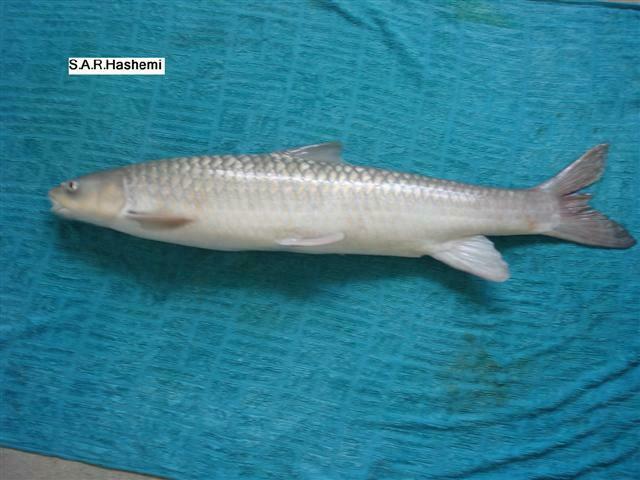
Shabout
Arabibarbus grypus
The shabout (Arabibarbus grypus) is a species of cyprinid fish also called in English, Persian or Arabic by the alternate common names shirbot and variations shabut, shabboot or shabbout, and in local languages by several other common names. It is a large freshwater carp found in Western Asia, where it inhabits the Tigris–Euphrates Basin, as well as Iranian rivers that flow into the Persian Gulf.
This species can grow to a length of up to 1.5 m (4.9 ft) and a weight of 30 kg (66 lb), although there are unconfirmed reports of individuals up to 2 m (6.6 ft) and 100 kg (220 lb), perhaps caused by confusion with the mangar (Luciobarbus esocinus). The shabout supports important fisheries, but has declined because of habitat loss (mostly due to dams, water extraction, drought and pollution) and overfishing.
From the article Shabout on Wikipedia (CC BY-SA), quoted section by section
Range & habitat
The shabout inhabits rivers from upstream tributaries to river mouths. However, it is rather adaptable and can also be found in more stagnant waters like marshes and reservoirs, although this strong swimmer prefers slow to moderately flowing waters and it has relatively high oxygen requirements. Adults prefer relatively cool waters (optimum c. 22 °C [72 °F]), and migrate upstream in the summer when the lower reaches of rivers become warm, but smaller individuals stay in the lower parts year-round. Nevertheless, the species has a wide temperature tolerance with wild individuals living in rivers that range at least from 10.2 to 32.8 °C (50–91 °F), and individuals kept in aquaculture at between 8 and 31 °C (46–88 °F). This is a freshwater fish, but it does tolerate slightly brackish waters in estuaries; however, their growth significantly decreases under such conditions. Shabout breed in the spring and summer. They breed in upstream parts of rivers, generally in places with relatively cool and fast-flowing waters, a depth of no more than 1.5 m (4.9 ft) and a gravel bottom. A female reaches maturity when at least three years old and can lay up to 235,764 eggs, placed among gravel or plants. The species is mostly herbivorous, feeding on a wide range of plant material from algae and macrophytes to fruits and grain. …
Wikipedia: “Habitat and behavior”
Where it lives
Recorded sightings
—
geo-referenced records in GBIF, from museums, herbaria and field observers.
Drag the globe to turn it. Dots are where records exist, not a range map; darker means more records.
In the stacks
Searching the stacks…
Every page naming Arabibarbus grypus in the Biodiversity Heritage Library →
This page is assembled live from iNaturalist, GBIF, Wikipedia, the Source Library and the Internet Archive. It is not yet part of the hand-edited codex. iNaturalist taxon 612535.