 NL·0252
Herbarium of the Nature Library
- Name
- Alligator mississippiensis
- Family
- Alligatoridae
- Native to
- Southeastern United States, from North Carolina to Florida and west to Texas, and up the Mississippi valley into Arkansas and Oklahoma
- Habitat
- Marsh, Swamp, Rivers, Lakes
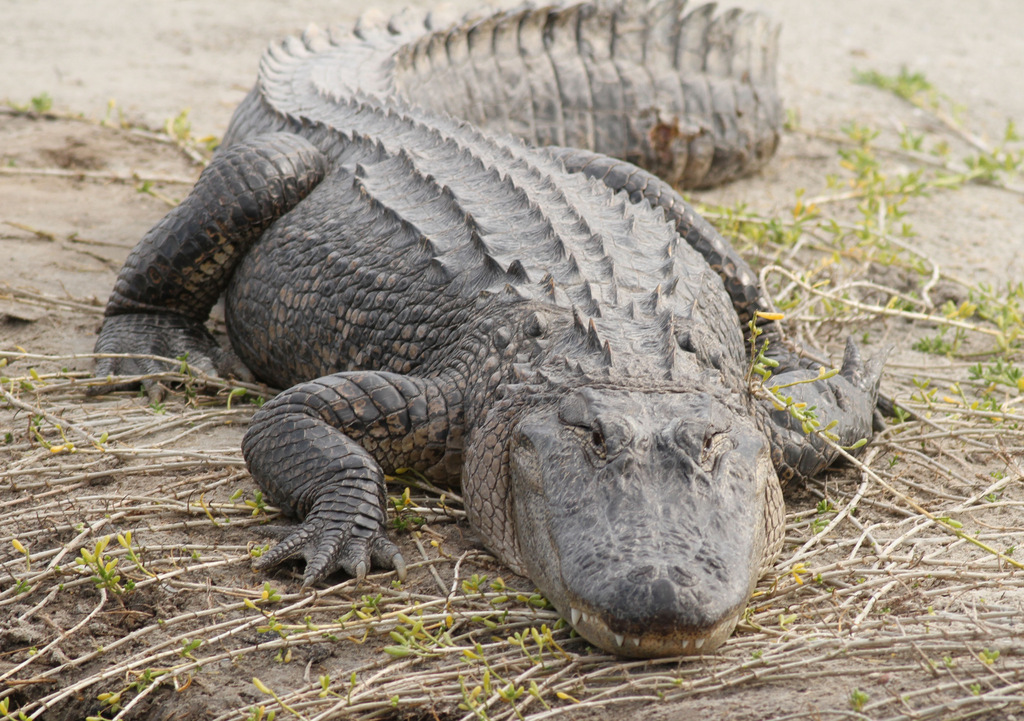
American alligator
Alligator mississippiensis
Also calledGator · Caimán americano / Lagarto (Spanish) · Cocodrie (Louisiana French) · Halpata (Muscogee/Seminole)
A great conservation success: hunted almost to extinction by the mid-20th century, then protected and recovered. It shapes the wetlands of the southeastern US, digging 'gator holes' that hold water and wildlife through the dry season.
The American alligator, sometimes referred to as a common alligator or just gator, is a large crocodilian reptile native to the Southeastern United States. It is one of the two extant species in the genus Alligator, and is larger than the only other living alligator species, the Chinese alligator. Wikipedia
What it can do
- iDigs 'gator holes' that stay wet in the dry season, keeping alive fish, turtles and birds
- iiSurvives freezing weather by keeping only its nostrils above ice ('icing')
- iiiMales bellow and send infrasound that makes water 'dance' on their backs
- ivSex of the young is set by nest temperature
In the field
Field marks
- aBroad, rounded U-shaped snout
- bUpper jaw covers the lower teeth when the mouth is closed
- cDark grey to black; juveniles with yellow bands
- dBony plates on the back
- Not to be confused with
- The American crocodile (Crocodylus acutus), found only in southern Florida in the US, has a narrow, tapered V-shaped snout, a paler grey-green colour, and a visible fourth lower tooth when its mouth is closed. Caimans (introduced in Florida) are smaller with a bony ridge between the eyes.
- Where to see it
- Everglades National Park (Anhinga Trail), Okefenokee Swamp, Louisiana's Atchafalaya Basin, Brazos Bend State Park (Texas)
- When
- Resident; bellowing and courtship April–May; nesting June–July
Life & habits
- Diet
- Fish, turtles, snakes, birds, mammals; young eat insects and crayfish
- Habitat
- Freshwater marshes, swamps, rivers, lakes, and some brackish water
- Size
- Males usually 3.5–4.5 m; females ~2.5–3 m
- Lifespan
- ~35–50 years
Females build mound nests of rotting vegetation, guard them and carry hatchlings to water in their mouths. Hatchlings call from inside the eggs when ready to hatch.
Where it lives
Recorded sightings
—
geo-referenced records in GBIF, from museums, herbaria and field observers.
Native range
Southeastern United States, from North Carolina to Florida and west to Texas, and up the Mississippi valley into Arkansas and Oklahoma
Drag the globe to turn it. Dots are where records exist, not a range map; darker means more records.
In the old herbals & bestiaries
No plate in the Source Library names this exact species, so these show its closest relatives as the old naturalists drew them: same genus, or the same kind of animal. Click a plate to read the page it came from, with translation.


In the stacks
Searching the stacks…
Every page naming Alligator mississippiensis in the Biodiversity Heritage Library →
Marginalia
The name 'alligator' comes from the Spanish el lagarto, 'the lizard'. Listed as endangered in 1967, it was removed from the US endangered list in 1987.
Curiosity
The Chinese alligator (Alligator sinensis) is its only living close relative; the two lineages diverged tens of millions of years ago.
Kinship

Photographs: iNaturalist contributors under the licences shown. Records: GBIF.org. Historical plates: Source Library (CC BY-SA 4.0; originals public domain). Summary text: Nature Library editors and Wikipedia (CC BY-SA). Medicinal and edibility notes are historical and educational, not advice. iNaturalist taxon 26159.