 NL·0648
Herbarium of the Nature Library
- Name
- Amazona vittata
- Family
- Psittacidae
- Native to
- Endemic to Puerto Rico (formerly also Culebra and Vieques); wild populations now in El Yunque, Río Abajo and Maricao
- Habitat
- Tropical montane rainforest, Karst forest
On eBird ↗
Puerto Rican Amazon
Live sightings near you, the range map, bar charts of when it is seen, and Macaulay Library photos and recordings.
Puerto Rican amazon
Amazona vittata
Also calledIguaca (Taíno) · Cotorra puertorriqueña (Spanish) · Puerto Rican parrot (English)
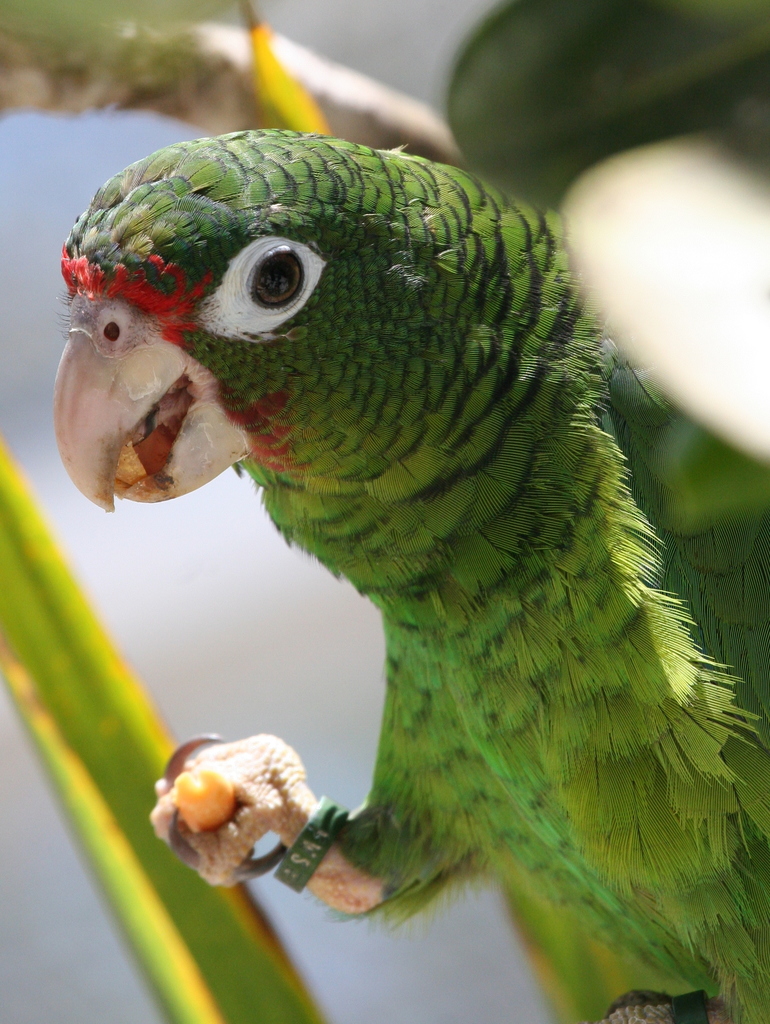
Puerto Rico's only surviving native parrot, a green amazon with a red forehead that fell to just 13 wild birds in 1975. Captive breeding and releases have kept it alive, though hurricanes repeatedly set back the wild flocks.
The Puerto Rican amazon, also known as the Puerto Rican parrot or iguaca (Taíno), is the only extant parrot endemic to Puerto Rico. Measuring 28–30 cm (11.0–11.8 in), the bird is a predominantly green parrot with a red forehead and white rings around the eyes. Belonging to the Neotropical genus Amazona, its closest relatives are believed to be the Cuban amazon and the Hispaniolan amazon. Wikipedia
What it can do
- iNests in deep natural tree cavities, especially in old palo colorado trees
- iiGives loud flight calls that keep pairs and flocks in contact over forest
- iiiFeeds on more than 50 kinds of native fruits, seeds and flowers
In the field
Field marks
- aBright green plumage with darker scaling
- bNarrow red band across the forehead
- cBroad white eye-ring
- dVivid blue primaries visible in flight
- Voice
- A loud, bugling squawk; its Taíno name iguaca imitates the call.
- Not to be confused with
- Hispaniolan Amazon (introduced and established in Puerto Rico) is larger, with a white forehead and a maroon belly patch. Escaped pet parrots also occur in San Juan.
- Where to see it
- Río Abajo State Forest near Arecibo and El Yunque National Forest; the Iguaca Aviary and Río Abajo aviary run breeding programmes.
- When
- Resident year-round
Listen
Looking for field recordings…
Life & habits
- Diet
- Fruits, seeds, flowers and leaves of native forest trees
- Habitat
- Humid upland forest and limestone karst forest
- Size
- About 30 cm; 250–300 g
Pairs stay together year-round and fly side by side, wings almost touching.
Where it lives
Recorded sightings
—
geo-referenced records in GBIF, from museums, herbaria and field observers.
Native range
Endemic to Puerto Rico (formerly also Culebra and Vieques); wild populations now in El Yunque, Río Abajo and Maricao
Drag the globe to turn it. Dots are where records exist, not a range map; darker means more records.
In the old herbals & bestiaries
No plate in the Source Library names this exact species, so these show its closest relatives as the old naturalists drew them: same genus, or the same kind of animal. Click a plate to read the page it came from, with translation.


In the stacks
Searching the stacks…
Every page naming Amazona vittata in the Biodiversity Heritage Library →
Marginalia
Columbus's expeditions found abundant parrots on Puerto Rico, where the Taíno called them iguaca; deforestation reduced a population once estimated at around a million to a handful by the 1970s.
Curiosity
Hurricane Maria in 2017 wiped out most of the wild El Yunque flock, but birds in the Río Abajo population largely survived.
Kinship


Photographs: iNaturalist contributors under the licences shown. Records: GBIF.org. Historical plates: Source Library (CC BY-SA 4.0; originals public domain). Summary text: Nature Library editors and Wikipedia (CC BY-SA). Medicinal and edibility notes are historical and educational, not advice. iNaturalist taxon 19006.