 NL·0505
Herbarium of the Nature Library
- Name
- Carcharodon carcharias
- Family
- Lamnidae
- Native to
- Temperate and subtropical coastal and open waters worldwide; hotspots off South Africa, Australia, New Zealand, California, Guadalupe Island and the north-west Atlantic
- Habitat
- Coastal waters, Open ocean, Continental shelf
Great white shark
Carcharodon carcharias
Also calledMangō-taniwha (Māori) · Tiburón blanco (Spanish) · Hohojirozame (Japanese) · Dàbáishā 大白鲨 (Chinese) · Witdoodshaai (Afrikaans)
The largest predatory fish, a warm-bodied hunter of seals and sea lions in cool coastal seas around the world. Tagging shows these sharks crossing whole ocean basins.
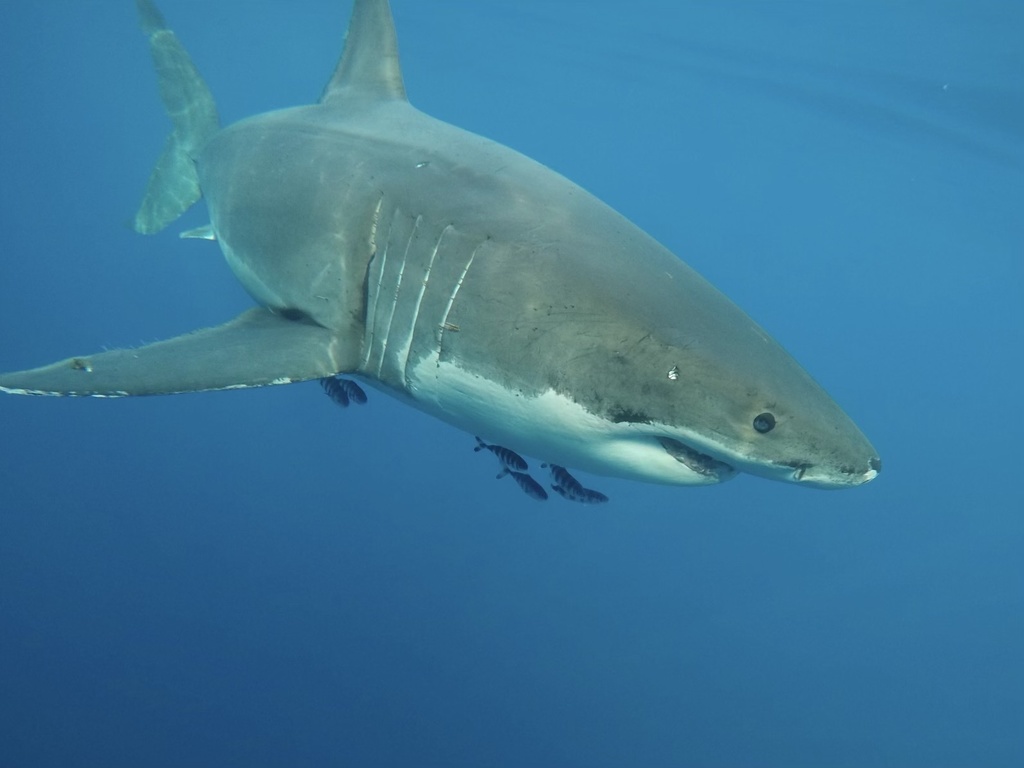
The great white shark, also known as the white shark, white pointer, or great white, is a large shark. It is closely related to the mako sharks, the porbeagle, and the salmon shark. It is a robustly built species with a grayish upperside and a white underside. The white shark is one of the largest living shark and fish species, though it is still smaller than the whale shark and basking shark. It has about 300 triangular, serrated teeth that are continuously replaced. Its massive, fatty liver can reach over a quarter of its body weight, providing buoyancy and storing energy. The species is partially warm-blooded, an adaptation that allows it to remain active in colder waters. Wikipedia
What it can do
- iSenses the faint electric fields of living prey with ampullae of Lorenzini on its snout
- iiKeeps its muscles, eyes and brain warmer than the surrounding water with a heat-exchanging circulation
- iiiLaunches fully out of the water when ambushing seals from below
- ivMigrates across oceans: one female swam from South Africa to Australia and back, about 20,000 km, in nine months
In the field
Field marks
- aLarge, torpedo-shaped shark
- bGrey above, white below with a sharp border
- cBlack tips to the underside of the pectoral fins
- dConical snout and large triangular teeth
- Not to be confused with
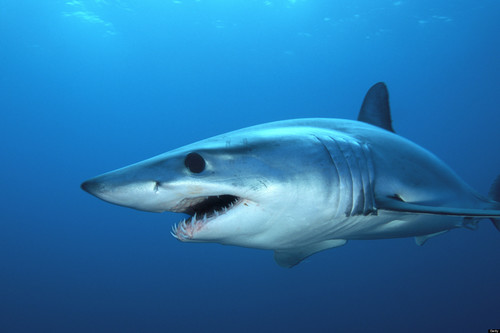
- Shortfin mako is slimmer and more blue, with long curved teeth. Basking shark has huge gill slits and a tiny mouth. Avoid swimming where whites are present.
- Where to see it
- Neptune Islands (South Australia, cage diving), Cape Cod (Massachusetts) and the Farallon Islands (California)
- When
- Cape Cod Jul–Oct; Farallones Sep–Nov; Neptune Islands all year
Life & habits
- Diet
- Carnivore: fish, rays and other sharks when young; seals, sea lions, dolphins and whale carcasses as adults
- Habitat
- Coastal and offshore waters, usually 12–24 °C, from the surface to over 1,000 m
- Size
- Usually 3.5–5 m; large females to ~6 m and over 2 t
- Lifespan
- 70 years or more
California white sharks gather each winter and spring at a mid-Pacific spot nicknamed the 'White Shark Café', between Baja California and Hawaii.
Where it lives
Recorded sightings
—
geo-referenced records in GBIF, from museums, herbaria and field observers.
Native range
Temperate and subtropical coastal and open waters worldwide; hotspots off South Africa, Australia, New Zealand, California, Guadalupe Island and the north-west Atlantic
Drag the globe to turn it. Dots are where records exist, not a range map; darker means more records.
In the old herbals & bestiaries
Woodcuts and engravings matched from the Source Library’s scanned books by name. Plates marked “relative” show a close kin rather than this exact species. Click a plate to read the page it came from, with translation.


In the stacks
Searching the stacks…
Every page naming Carcharodon carcharias in the Biodiversity Heritage Library →
Marginalia
Peter Benchley's novel Jaws (1974) and Spielberg's 1975 film made the great white a figure of fear; Benchley later spent years campaigning for shark conservation. Some Māori coastal tribes honour sharks as kaitiaki (guardians).
Curiosity
Orcas off South Africa have been seen killing great whites to eat their livers, and the sharks then abandon the area for months.
Kinship





Photographs: iNaturalist contributors under the licences shown. Records: GBIF.org. Historical plates: Source Library (CC BY-SA 4.0; originals public domain). Summary text: Nature Library editors and Wikipedia (CC BY-SA). Medicinal and edibility notes are historical and educational, not advice. iNaturalist taxon 50873.