 NL·0353
Herbarium of the Nature Library
- Name
- Ciconia boyciana
- Family
- Ciconiidae
- Native to
- Breeds in the Amur and Ussuri basins of the Russian Far East and NE China; winters mainly in the Yangtze basin, with smaller numbers in Korea, Japan and Taiwan
- Habitat
- Wetland, Farmland
On eBird ↗
Oriental Stork
Live sightings near you, the range map, bar charts of when it is seen, and Macaulay Library photos and recordings.
Oriental stork
Ciconia boyciana
Also calledKounotori コウノトリ (Japanese) · Dōngfāng bái guàn 东方白鹳 (Chinese) · Hwangsae 황새 (Korean)
A large white stork with black flight feathers and a heavy black bill, breeding in the Amur basin and wintering along the Yangtze. It went extinct in the wild in Japan in 1971 and has been brought back through reintroduction at Toyooka.
The Oriental stork is a large, white bird with black-feathered wings in the stork family Ciconiidae. Wikipedia
What it can do
- iMigrates between the Russian Far East and the Yangtze floodplain
- iiNests on tall trees and electricity pylons
- iiiCommunicates by loud bill-clattering, being almost voiceless
In the field
Field marks
- aLarge white stork with black flight feathers
- bHeavy, black bill (red in White stork)
- cRed bare skin around a whitish eye
- dRed legs
- Voice
- Almost silent; loud bill-clattering at the nest
- Not to be confused with
- White stork (Europe, Central Asia) is smaller with a red bill; Black-faced spoonbill and egrets are smaller with different bills.
- Where to see it
- Poyang Lake and Dongting Lake in China in winter; Toyooka, Hyogo Prefecture, Japan year-round
- When
- Winter visitor to the Yangtze (Nov–Mar); summer visitor to the breeding grounds; resident in reintroduced Japanese populations
Listen
Looking for field recordings…
Life & habits
- Diet
- Fish, frogs, snakes, crustaceans and insects
- Habitat
- Wetlands, river floodplains, rice paddies and lake margins
- Size
- About 110–128 cm long; wingspan about 2.1 m
Feeds by walking slowly through shallow water; in Japan, reintroduced storks forage in rice paddies managed without pesticides.
Where it lives
Recorded sightings
—
geo-referenced records in GBIF, from museums, herbaria and field observers.
Native range
Breeds in the Amur and Ussuri basins of the Russian Far East and NE China; winters mainly in the Yangtze basin, with smaller numbers in Korea, Japan and Taiwan
Drag the globe to turn it. Dots are where records exist, not a range map; darker means more records.
In the old herbals & bestiaries
No plate in the Source Library names this exact species, so these show its closest relatives as the old naturalists drew them: same genus, or the same kind of animal. Click a plate to read the page it came from, with translation.

Ulyssis Aldrovandi ... Ornithologiae
Relative · Aldrovandi, Ulisse · 1610 · p.992

Worksop Bestiary
Relative · Anonymous · 1185 · p.57

Valeriano: Hieroglyphica (1575)
Relative · Pierio Valeriano · 1556 · p.262

Bestiary
Relative · Anonymous · 1240 · p.143

Garden of Health
Relative · Jacob Meydenbach · 1491 · p.650

On the Names of Plants
Relative · Hieronymus Bock (Tragus) · 1552 · p.1159

History of Animals, Book I: On Viviparous Quadrupeds
Relative · Conrad Gessner · 1554 · p.448

History of Animals, Book I: On Viviparous Quadrupeds
Relative · Conrad Gessner · 1554 · p.437

Florentine Codex, Vol. 3 (Books 10-12)
Relative · Bernardino de Sahagún · 1577 · p.384

Theater of Earthly Creatures
Relative · Anonymous · 1672 · p.216
In the stacks
Searching the stacks…
Every page naming Ciconia boyciana in the Biodiversity Heritage Library →
Marginalia
In Japan, as in Europe, the stork came to be linked with bringing babies. Toyooka city began releasing captive-bred storks in 2005, promoting 'stork-friendly' pesticide-reduced rice as part of the recovery.
Curiosity
Wild storks bred in Japan again in 2007, the first wild-hatched chick in the country in over four decades.
Kinship
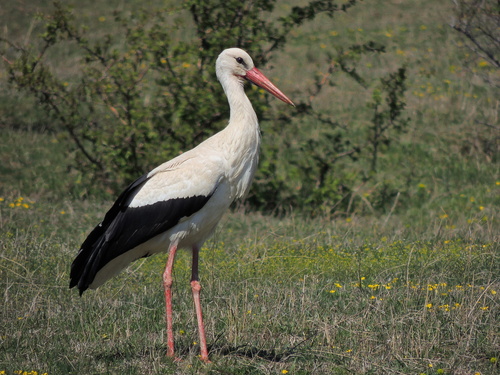
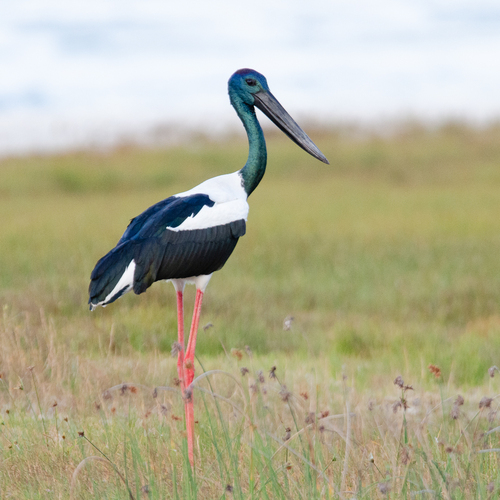
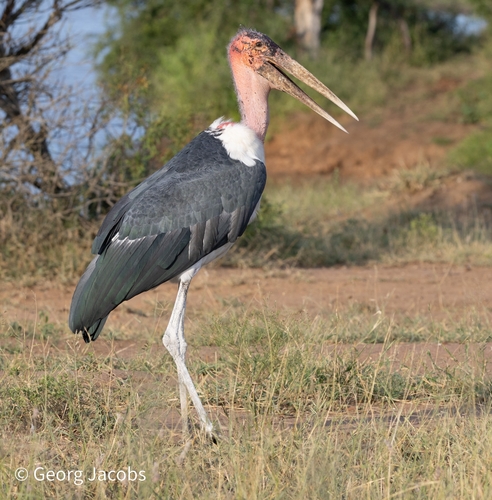
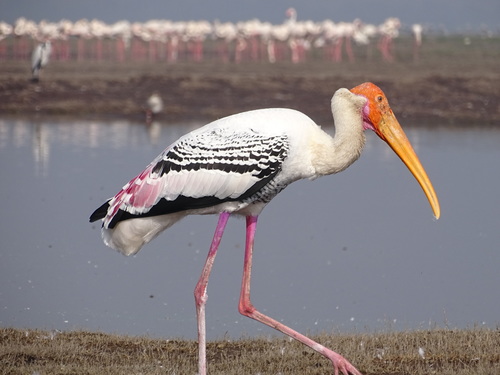


Photographs: iNaturalist contributors under the licences shown. Records: GBIF.org. Historical plates: Source Library (CC BY-SA 4.0; originals public domain). Summary text: Nature Library editors and Wikipedia (CC BY-SA). Medicinal and edibility notes are historical and educational, not advice. iNaturalist taxon 4739.