 NL·0462
Herbarium of the Nature Library
- Name
- Galeocerdo cuvier
- Family
- Galeocerdonidae
- Native to
- Tropical and warm temperate seas worldwide
- Habitat
- Coastal waters, Coral reef, Seagrass, Open ocean (pelagic)
Tiger shark
Galeocerdo cuvier
Also calledTintorera (Spanish) · Itachizame (Japanese) · Niuhi (Hawaiian, man-eating shark) · Requin-tigre (French) · Papa (Swahili, shark)
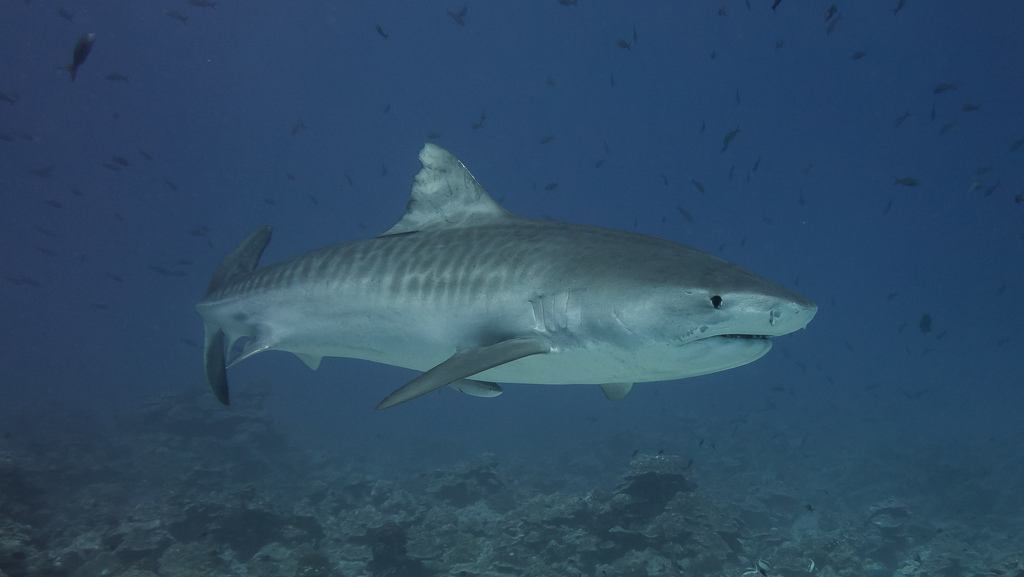
A large, striped generalist predator of warm coasts, famous for eating almost anything, from sea turtles to license plates. Its saw-edged teeth can cut through turtle shell.
The tiger shark is a species of ground shark, and the only extant member of the genus Galeocerdo and family Galeocerdonidae. It is a large predator, with females capable of attaining a length of over 5 m. Populations are found in many tropical and temperate waters, especially around central Pacific islands. Its name derives from the dark stripes down its body, which resemble a tiger's pattern and fade as the shark matures. Wikipedia
What it can do
- iCockscomb-shaped, serrated teeth saw through turtle shells and bones
- iiDiet includes sea turtles, seabirds, dolphins, sea snakes and carrion, plus indigestible rubbish
- iiiUndertakes migrations of thousands of kilometres between islands and coasts
- ivIts presence keeps dugongs and turtles from overgrazing seagrass in Shark Bay, Australia
In the field
Field marks
- aDark vertical bars or spots on the back, strongest in young and fading in large adults
- bVery broad, blunt, nearly square snout
- cLong upper tail lobe with a pointed tip
- dLarge, serrated cockscomb teeth
- eSpiracle behind the eye
- Not to be confused with
- Sand tiger (Carcharias taurus) has ragged protruding teeth and a pointed snout; bull shark lacks stripes and has a shorter tail lobe.
- Where to see it
- Tiger Beach, Bahamas; Fuvahmulah, Maldives; Aliwal Shoal, South Africa; Shark Bay, Western Australia
- When
- Tiger Beach Oct–Jan; Fuvahmulah year-round
Life & habits
- Diet
- Sea turtles, fish, rays, seabirds, marine mammals, sea snakes, carrion
- Habitat
- Coastal and reef waters, river mouths and open ocean to over 350 m
- Size
- Commonly 3–4 m; up to 5.5 m and over 600 kg
- Lifespan
- Up to about 27–50 years
Mostly nocturnal hunter that arrives at predictable feasts, such as fledgling albatrosses at Hawaii's French Frigate Shoals each summer.
Where it lives
Recorded sightings
—
geo-referenced records in GBIF, from museums, herbaria and field observers.
Native range
Tropical and warm temperate seas worldwide
Drag the globe to turn it. Dots are where records exist, not a range map; darker means more records.
In the old herbals & bestiaries
Woodcuts and engravings matched from the Source Library’s scanned books by name. Plates marked “relative” show a close kin rather than this exact species. Click a plate to read the page it came from, with translation.

In the stacks
Searching the stacks…
Every page naming Galeocerdo cuvier in the Biodiversity Heritage Library →
Marginalia
In Native Hawaiian tradition some sharks were ʻaumākua, ancestral guardians, while the man-eating niuhi was hunted by chiefs as a test of prowess.
Curiosity
Tiger shark stomachs have contained license plates, tyres, tin cans and other rubbish.
Kinship



Photographs: iNaturalist contributors under the licences shown. Records: GBIF.org. Historical plates: Source Library (CC BY-SA 4.0; originals public domain). Summary text: Nature Library editors and Wikipedia (CC BY-SA). Medicinal and edibility notes are historical and educational, not advice. iNaturalist taxon 52299.