 NL·0525
Herbarium of the Nature Library
- Name
- Malurus cyaneus
- Family
- Maluridae
- Native to
- South-eastern Australia and Tasmania
- Habitat
- Shrubland, Open woodland, Gardens
On eBird ↗
Superb Fairywren
Live sightings near you, the range map, bar charts of when it is seen, and Macaulay Library photos and recordings.
Superb fairywren
Malurus cyaneus
Also calledBlue wren (Australian English) · Mérion superbe (French)
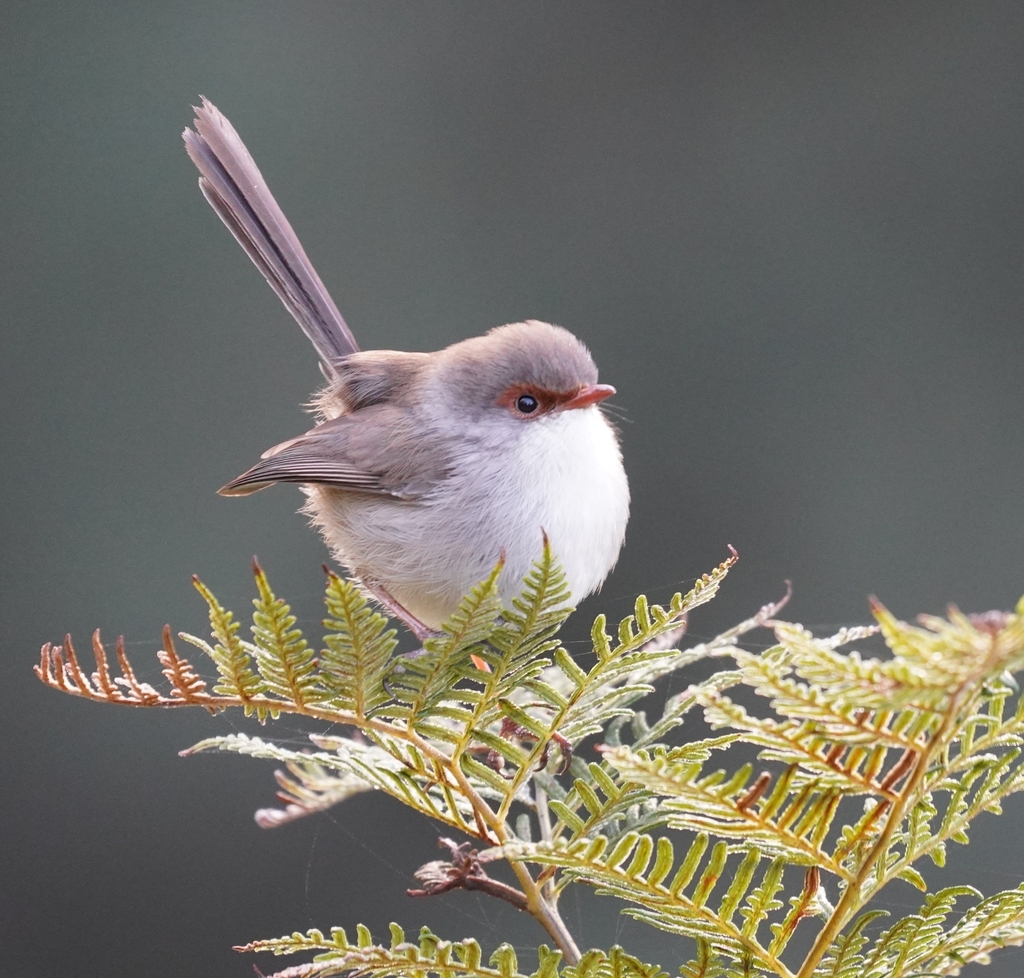
A tiny, cocked-tailed bird whose breeding males glow electric blue. Its family life is famous for cooperative breeding and very high rates of extra-pair mating.
The superb fairywren is a passerine bird in the Australasian wren family, Maluridae, and is common and familiar across south-eastern Australia. It is a sedentary and territorial species, also exhibiting a high degree of sexual dimorphism; the male in breeding plumage has a striking bright blue forehead, ear coverts, mantle, and tail, with a black mask and black or dark blue throat. Non-breeding males, females and juveniles are predominantly grey-brown in colour; this gave the early impression that males were polygamous, as all dull-coloured birds were taken for females. Six subspecies groups are recognized: three larger and darker forms from Tasmania, Flinders and King Island respectively, and three smaller and paler forms from mainland Australia and Kangaroo Island. Wikipedia
What it can do
- iCooperative breeding, with helpers raising the young
- iiMothers teach embryos a 'password' call in the egg
- iiiMales pluck yellow petals and display them to females
In the field
Field marks
- aBreeding males: bright blue crown, cheeks and mantle
- bBlack throat and eye-stripe
- cLong, cocked tail
- dFemales and non-breeding males brown with orange-red around the eye
- Voice
- A high, rapid, reeling trill.
- Not to be confused with
- Splendid fairywren males are blue all over. Variegated fairywren has chestnut shoulders. Females of other fairywrens differ in eye patches and tail colour.
- Where to see it
- Gardens and parks in Melbourne, Canberra, Sydney, Hobart; Royal Botanic Gardens
- When
- Resident
Listen
Looking for field recordings…
Life & habits
- Diet
- Insects and other small invertebrates
- Habitat
- Dense shrubs and grassland edges, gardens
- Size
- About 14 cm; 8–13 g
- Lifespan
- Usually 5 years, can exceed 10
Mothers call to eggs before hatching, and chicks incorporate a unique 'password' into their begging calls.
Where it lives
Recorded sightings
—
geo-referenced records in GBIF, from museums, herbaria and field observers.
Native range
South-eastern Australia and Tasmania
Drag the globe to turn it. Dots are where records exist, not a range map; darker means more records.
In the stacks
Searching the stacks…
Every page naming Malurus cyaneus in the Biodiversity Heritage Library →
Marginalia
Known to generations of Australians as the 'blue wren', it is a fixture of suburban gardens; a 2012 study showing that mothers teach their embryos a 'password' call drew worldwide attention.
Curiosity
Despite living in pairs, most chicks in a superb fairywren nest are fathered by males outside the pair.
Kinship
Photographs: iNaturalist contributors under the licences shown. Records: GBIF.org. Historical plates: Source Library (CC BY-SA 4.0; originals public domain). Summary text: Nature Library editors and Wikipedia (CC BY-SA). Medicinal and edibility notes are historical and educational, not advice. iNaturalist taxon 12065.