 NL·0587
Herbarium of the Nature Library
- Name
- Panurus biarmicus
- Family
- Panuridae
- Native to
- Reedbeds patchily from Britain and Spain across Europe, Turkey and the Middle East to Central Asia, Mongolia and northeastern China
- Habitat
- Reedbed, Wetland
On eBird ↗
Bearded Reedling
Live sightings near you, the range map, bar charts of when it is seen, and Macaulay Library photos and recordings.
Bearded reedling
Panurus biarmicus
Also calledBıyıklı baştankara (Turkish) · Bartmeise (German) · Panure à moustaches (French) · Bigotudo (Spanish) · Baardman (Dutch)
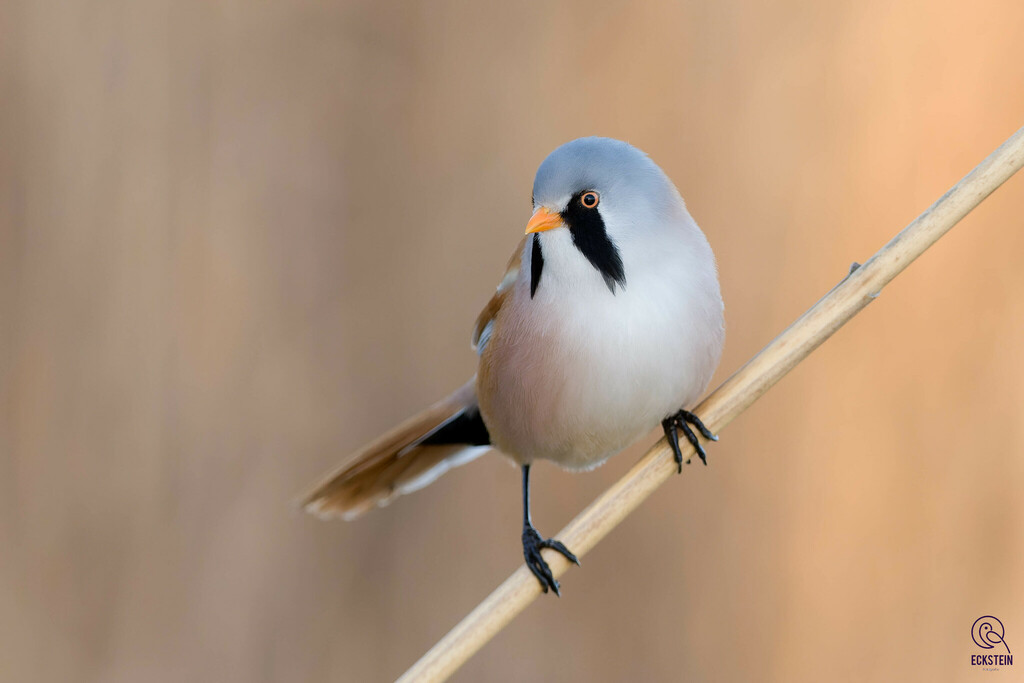
A tawny, long-tailed bird of reedbeds whose males sport a black drooping 'moustache'. Despite its old name 'bearded tit', it is the only member of its own family.
The bearded reedling is a small, long-tailed passerine bird found in reed beds near water in the temperate zone of Eurasia. It is frequently known as the bearded tit or occasionally as bearded parrotbill, as historically it was believed to be closely related to either the tits or parrotbills. Today it is known to lack close relatives and it is the only species in the family Panuridae. Wikipedia
What it can do
- iSwitches diet from insects in summer to reed seeds in winter
- iiChanges its gizzard structure seasonally and swallows grit to grind seeds
- iiiClings to reed stems with legs straddled between two stalks
- ivSole member of the family Panuridae
In the field
Field marks
- aTawny-orange body and very long, graduated tail
- bMale: blue-grey head and broad black moustache
- cYellow-orange bill and eye
- dWhirring flight just above the reed tops
- Voice
- A ringing, metallic 'ping' or 'tching', often the first clue to its presence.
- Not to be confused with
- Long-tailed tit is smaller with a pink, black and white pattern and lives in woodland. Reed warblers are brown with short tails.
- Where to see it
- Minsmere and the Norfolk Broads (England), Oostvaardersplassen (Netherlands), the Danube Delta, Lake Neusiedl (Austria/Hungary).
- When
- Resident; mass movements Sep–Nov
Listen
Looking for field recordings…
Life & habits
- Diet
- Insects and spiders in summer; reed seeds in autumn and winter
- Habitat
- Extensive reedbeds by lakes, rivers and estuaries
- Size
- 14.5–17 cm including tail; 12–18 g
- Lifespan
- Typically 2–3 years
Flocks erupt from reedbeds in autumn, flying high and calling before moving to new marshes.
Where it lives
Recorded sightings
—
geo-referenced records in GBIF, from museums, herbaria and field observers.
Native range
Reedbeds patchily from Britain and Spain across Europe, Turkey and the Middle East to Central Asia, Mongolia and northeastern China
Drag the globe to turn it. Dots are where records exist, not a range map; darker means more records.
In the stacks
Searching the stacks…
Every page naming Panurus biarmicus in the Biodiversity Heritage Library →
Marginalia
The species name 'biarmicus' refers to Biarmia, an old name for the region around the White Sea, although the bird does not live there.
Curiosity
Severe winters can wipe out local populations, which then recover in a few years thanks to multiple broods.
Kinship

Photographs: iNaturalist contributors under the licences shown. Records: GBIF.org. Historical plates: Source Library (CC BY-SA 4.0; originals public domain). Summary text: Nature Library editors and Wikipedia (CC BY-SA). Medicinal and edibility notes are historical and educational, not advice. iNaturalist taxon 117000.