 NL·0627
Herbarium of the Nature Library
- Name
- Physeter macrocephalus
- Family
- Physeteridae
- Native to
- Deep waters of all oceans; females and young in tropical and subtropical seas, adult males ranging to polar waters
- Habitat
- Open ocean, Deep sea, Continental slope
Sperm whale
Physeter macrocephalus
Also calledCachalote (Spanish/Portuguese) · Cachalot (French) · Parāoa (Māori) · Makkō-kujira (Japanese) · Mǒxiāngjīng 抹香鲸, 'ambergris whale' (Chinese)
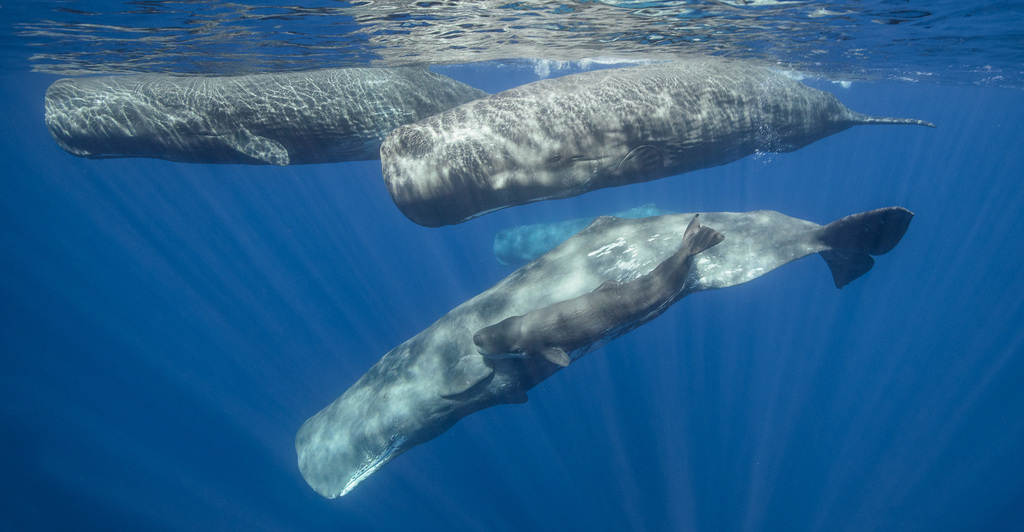
The largest toothed predator and owner of the largest brain of any animal, which dives into the deep ocean to hunt squid. Its huge, square head holds the spermaceti organ, which focuses the loudest sounds made by any animal.
The sperm whale or cachalot is the largest of the toothed whales and the largest toothed predator. It is the only living member of the genus Physeter and one of three extant species in the sperm whale superfamily Physeteroidea, along with the pygmy sperm whale and dwarf sperm whale of the genus Kogia. Wikipedia
What it can do
- iMakes echolocation clicks of up to ~230 dB, the loudest sounds known from any animal
- iiDives to over 2,000 m and stays down for an hour or more
- iiiHas a brain of up to ~8–9 kg, the largest known
- ivFamilies share 'codas', click patterns that identify vocal clans and are now studied for structure
- vProduces ambergris, a waxy gut secretion formed around indigestible squid beaks
In the field
Field marks
- aHuge, square head
- bAngled, bushy blow to the left
- cWrinkled skin
- dLow hump instead of a dorsal fin
- Voice
- Loud clicks
- Not to be confused with
- Humpback whales have long flippers and a different blow.
- Where to see it
- Kaikōura (New Zealand), Andenes (Norway) and Dominica
- When
- Kaikōura year-round; Andenes May–Sep
Listen
Looking for field recordings…
Life & habits
- Diet
- Carnivore: mainly deep-sea squid, including giant squid; also fish
- Habitat
- Deep open ocean, especially over canyons and slopes
- Size
- Males 16–20 m and up to ~45–57 t; females ~11 m and ~15 t
- Lifespan
- 70 years or more
Groups sleep for short periods hanging vertically just below the surface. Females form lifelong family units that babysit each other's calves while mothers dive.
Where it lives
Recorded sightings
—
geo-referenced records in GBIF, from museums, herbaria and field observers.
Native range
Deep waters of all oceans; females and young in tropical and subtropical seas, adult males ranging to polar waters
Drag the globe to turn it. Dots are where records exist, not a range map; darker means more records.
In the old herbals & bestiaries
Woodcuts and engravings matched from the Source Library’s scanned books by name. Plates marked “relative” show a close kin rather than this exact species. Click a plate to read the page it came from, with translation.


In the stacks
Searching the stacks…
Every page naming Physeter macrocephalus in the Biodiversity Heritage Library →
Marginalia
In 1820 a sperm whale rammed and sank the Nantucket whaleship Essex, the event that inspired Herman Melville's Moby-Dick (1851). Ambergris, called ʿanbar in Arabic, was prized in medieval Islamic and European perfumery and medicine.
Curiosity
Whalers named it after the waxy spermaceti in its head, which they mistook for sperm.
Kinship




Photographs: iNaturalist contributors under the licences shown. Records: GBIF.org. Historical plates: Source Library (CC BY-SA 4.0; originals public domain). Summary text: Nature Library editors and Wikipedia (CC BY-SA). Medicinal and edibility notes are historical and educational, not advice. iNaturalist taxon 74890.