 NL·0637
Herbarium of the Nature Library
- Name
- Ploceus philippinus
- Family
- Ploceidae
- Native to
- Pakistan, India, Sri Lanka, Nepal and Bangladesh through Myanmar and Thailand to Sumatra and Java
- Habitat
- Farmland, Grassland, Wetland
On eBird ↗
Baya Weaver
Live sightings near you, the range map, bar charts of when it is seen, and Macaulay Library photos and recordings.
Baya weaver
Ploceus philippinus
Also calledBaya (Hindi/Urdu) · Babui (Bengali) · Huáng xiōng zhī què 黄胸织雀 (Chinese)
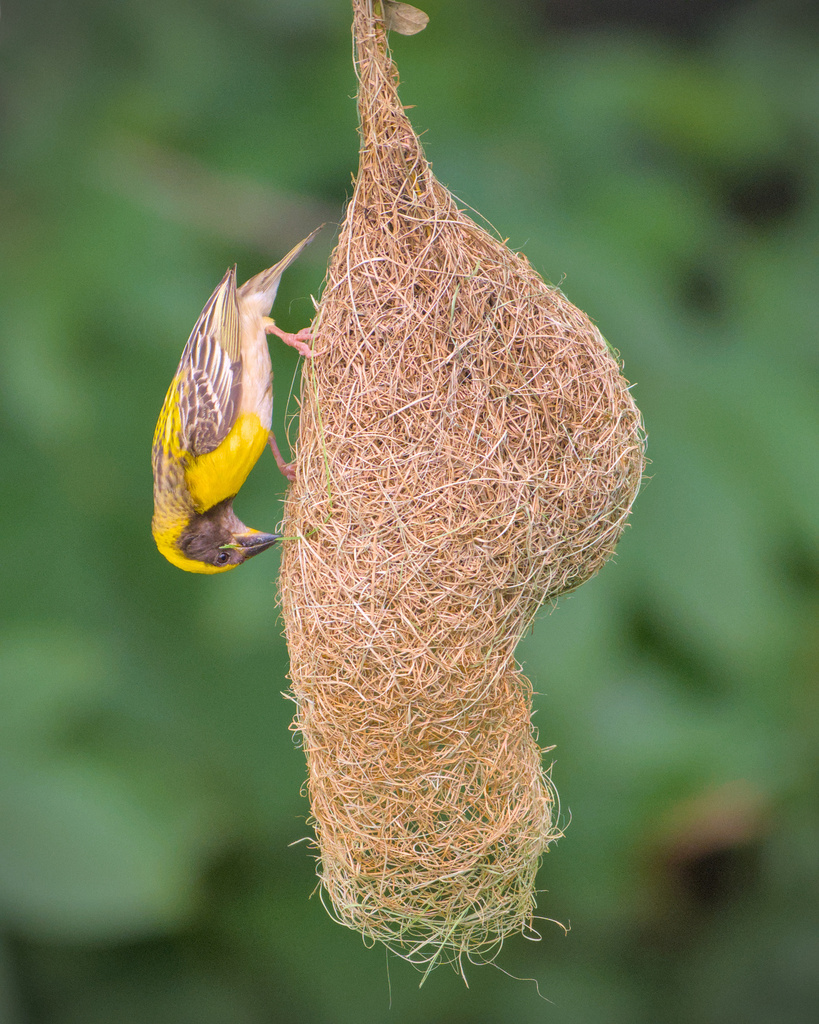
A sparrow-sized weaver whose breeding males stitch long, retort-shaped hanging nests from strips of green grass and palm leaf, often over water. Females inspect the half-built nests and choose a mate by the quality of his work.
The baya weaver is a weaverbird found across the Indian subcontinent and Southeast Asia. Flocks are found in grasslands, cultivated areas, scrub and secondary growth. They are known for their hanging retort shaped nests woven from leaves, usually found on thorny trees or palm fronds, near or hanging over water where predators cannot easily reach. They are widespread and common within their range and are prone to local, seasonal movements in response to rain and food availability. Wikipedia
What it can do
- iWeaves nests with knots and loops from strips of grass torn from living leaves
- iiBuilds a long entrance tube that deters snakes and other predators
- iiiMales build several nests in a season and court females at each
- ivPresses blobs of mud inside the nest chamber, possibly to balance it in wind
In the field
Field marks
- aBreeding male: bright yellow crown and breast patch, dark brown face mask and throat
- bFemale and non-breeding male: streaked brown, sparrow-like, with a buff eyebrow
- cHeavy conical bill
- dHanging retort-shaped nest is the easiest sign of the species
- Voice
- Chattering 'chit-chit' calls and a wheezy, sizzling song from males at the nest
- Not to be confused with
- Black-breasted weaver has a black breast band; Streaked weaver has a heavily streaked breast; female resembles a House sparrow but has a heavier bill and streaked crown.
- Where to see it
- Rice and sugarcane country across Punjab, Sindh and India; nests easily seen at Keoladeo and in Kerala and Sri Lankan paddy-lands
- When
- Resident; colonies active during the monsoon (May–Sep)
Listen
Looking for field recordings…
Life & habits
- Diet
- Seeds and grain, especially rice; insects for nestlings
- Habitat
- Cultivation, grassland and scrub with palms, acacias or trees near water
- Size
- About 15 cm long
Colonies of nests hang from date and palmyra palms, thorny acacias and telephone wires; males flutter their wings and call at nests to attract females.
Where it lives
Recorded sightings
—
geo-referenced records in GBIF, from museums, herbaria and field observers.
Native range
Pakistan, India, Sri Lanka, Nepal and Bangladesh through Myanmar and Thailand to Sumatra and Java
Drag the globe to turn it. Dots are where records exist, not a range map; darker means more records.
In the old herbals & bestiaries
No plate in the Source Library names this exact species, so these show its closest relatives as the old naturalists drew them: same genus, or the same kind of animal. Click a plate to read the page it came from, with translation.

Commentaries on the Six Books of Dioscorides
Relative · Pietro Andrea Mattioli · 1560 · p.307

Commentaries on the Six Books of Dioscorides on Medical Matter
Relative · Pietro Andrea Mattioli · 1563 · p.292

Commentaries on the Six Books of Pedanius Dioscorides on Medical Matter
Relative · Pietro Andrea Mattioli · 1565 · p.491
In the stacks
Searching the stacks…
Every page naming Ploceus philippinus in the Biodiversity Heritage Library →
Marginalia
The Bengali poet Rajanikanta Sen's poem 'Swadhinatar Sukh' contrasts the babui weaver in its handmade nest with a sparrow sheltering in a borrowed house, a poem learned by schoolchildren in Bangladesh and West Bengal.
Curiosity
A folk belief holds that the bird sticks fireflies into the mud inside its nest to light it; the mud blobs are real, but the fireflies are not.
Kinship
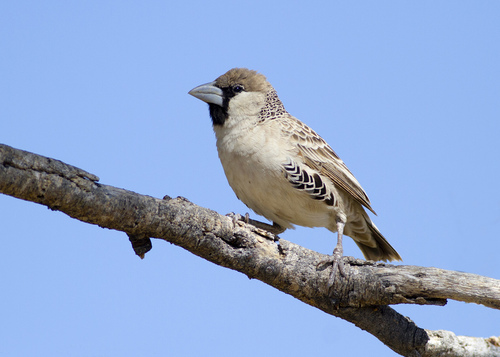
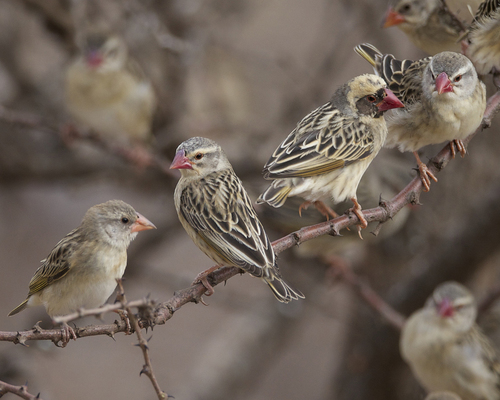




Photographs: iNaturalist contributors under the licences shown. Records: GBIF.org. Historical plates: Source Library (CC BY-SA 4.0; originals public domain). Summary text: Nature Library editors and Wikipedia (CC BY-SA). Medicinal and edibility notes are historical and educational, not advice. iNaturalist taxon 13794.