 NL·0510
Herbarium of the Nature Library
- Name
- Sterna paradisaea
- Family
- Laridae
- Native to
- Breeds around the Arctic and subarctic; winters in Antarctic waters
- Habitat
- Tundra, Coasts, Open ocean, Pack ice
On eBird ↗
Arctic Tern
Live sightings near you, the range map, bar charts of when it is seen, and Macaulay Library photos and recordings.
Arctic tern
Sterna paradisaea
Also calledImitqutailaq (Inuktitut) · Kría (Icelandic) · Charrán ártico (Spanish) · Küstenseeschwalbe (German) · Sterne arctique (French)
The bird with the longest known migration, flying from Arctic breeding grounds to the Antarctic and back each year. It probably sees more daylight than any other animal.
The Arctic tern is a tern in the family Laridae. This bird has a circumpolar breeding distribution covering the Arctic and subarctic regions of Europe, Asia, and North America. The species is strongly migratory, seeing two summers each year as it migrates along a convoluted route from its northern breeding grounds to the Antarctic coast for the southern summer and back again about six months later. Recent studies have shown average annual round-trip lengths of about 70,900 km (38,300 nmi) for birds nesting in Iceland and Greenland, and about 48,700 km (26,300 nmi) for birds nesting in the Netherlands, while an individual from the Farne Islands in Northumberland with a light level geolocator tag covered a staggering 96,000 km (52,000 nmi) in ten months from the end of one breeding season to the start of the next. These are by far the longest migrations known in the animal kingdom. Wikipedia
What it can do
- iRound-trip migration averaging ~70,000 km a year, up to ~96,000 km
- iiLifetime travel can equal roughly three trips to the Moon and back
- iiiTakes S-shaped routes to ride prevailing winds across oceans
- ivPlunge-dives to catch small fish
- vFiercely mobs intruders, including humans, at nests
In the field
Field marks
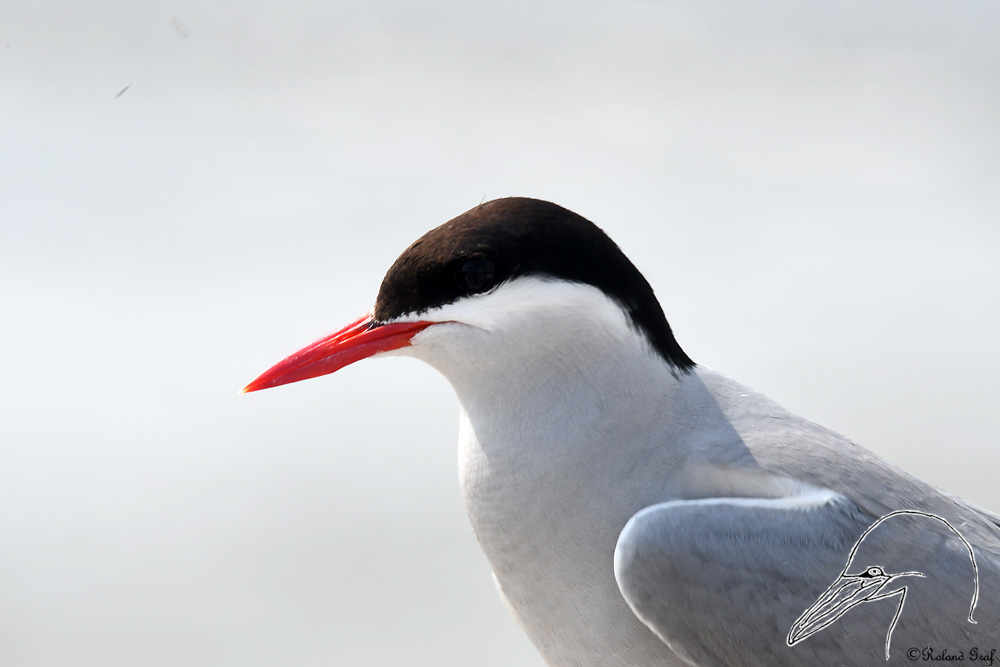
- aSlender grey-and-white tern with a black cap
- bAll-red bill without a dark tip
- cVery short red legs
- dLong tail streamers and translucent flight feathers when seen from below
- Voice
- A harsh, high 'kee-arr' and rattling alarm calls; dive-bombs intruders at colonies
- Not to be confused with
- Common tern has a black-tipped orange-red bill, longer legs, a darker wedge on the outer wing and shorter tail streamers.
- Where to see it
- Farne Islands, Northumberland (wear a hat — the birds strike heads), Iceland and Shetland
- When
- Northern colonies May–Aug; winters in Antarctic waters
Listen
Looking for field recordings…
Life & habits
- Diet
- Small fish and crustaceans
- Habitat
- Coastal tundra, islands and open ocean
- Size
- 33–36 cm; wingspan 76–85 cm
- Lifespan
- Over 30 years
Experiences two summers each year, following the sun from pole to pole.
Where it lives
Recorded sightings
—
geo-referenced records in GBIF, from museums, herbaria and field observers.
Native range
Breeds around the Arctic and subarctic; winters in Antarctic waters
Drag the globe to turn it. Dots are where records exist, not a range map; darker means more records.
In the old herbals & bestiaries
No plate in the Source Library names this exact species, so these show its closest relatives as the old naturalists drew them: same genus, or the same kind of animal. Click a plate to read the page it came from, with translation.

In the stacks
Searching the stacks…
Every page naming Sterna paradisaea in the Biodiversity Heritage Library →
Marginalia
Tracking by Carsten Egevang and colleagues in 2010 with geolocators weighing 1.4 g first mapped its full migration. In Iceland and Greenland its eggs were traditionally gathered.
Curiosity
A tern ringed as a chick in Britain was found in Australia, over 22,000 km away, within months.
Kinship




Photographs: iNaturalist contributors under the licences shown. Records: GBIF.org. Historical plates: Source Library (CC BY-SA 4.0; originals public domain). Summary text: Nature Library editors and Wikipedia (CC BY-SA). Medicinal and edibility notes are historical and educational, not advice. iNaturalist taxon 4449.