 NL·0384
Herbarium of the Nature Library
- Name
- Urocissa ornata
- Family
- Corvidae
- Native to
- Endemic to the wet zone and central hills of Sri Lanka
- Habitat
- Tropical rainforest, Montane forest
On eBird ↗
Sri Lanka Blue-Magpie
Live sightings near you, the range map, bar charts of when it is seen, and Macaulay Library photos and recordings.
Sri Lanka blue magpie
Urocissa ornata
Also calledKehibella (Sinhala) · Ceylon blue magpie
A vivid magpie of Sri Lanka's wet-zone rainforests with an ultramarine body, chestnut head and wings, and a long white-tipped tail. It lives in family groups that raise young cooperatively.
The Sri Lanka blue magpie or Ceylon magpie is a brightly coloured member of the family Corvidae, found exclusively in Sri Lanka. This species is adapted to hunting in the dense canopy, where it is highly active and nimble. Its flight is rather weak, though, and is rarely used to cover great distances. In spite of its ability to adapt to the presence of humans, it is classified as vulnerable to extinction due to the fragmentation and destruction of its habitat of dense primary forest in the wet zone of southern Sri Lanka. Wikipedia
What it can do
- iBreeds cooperatively, with helpers assisting the breeding pair
- iiJoins mixed-species foraging flocks in the rainforest
- iiiHunts large insects, frogs and lizards in the canopy
In the field
Field marks
- aBright cobalt-blue body and long blue tail with white tips
- bRich chestnut head, wings and neck
- cBright red bill, legs and eye-ring
- dLong, graduated tail
- Voice
- Loud, varied calls including a ringing 'chink-chink' and harsh, rasping notes
- Not to be confused with
- No similar bird in Sri Lanka; Red-billed blue magpie of the Himalaya has a black head and does not occur on the island.
- Where to see it
- Sinharaja Forest Reserve, Horton Plains and Kitulgala, Sri Lanka
- When
- Resident year-round
Listen
Looking for field recordings…
Life & habits
- Diet
- Insects, frogs, small lizards and fruit
- Habitat
- Undisturbed wet evergreen forest, from lowlands to about 2,100 m
- Size
- About 42–47 cm long including the tail
Groups move noisily through the mid-canopy; at Sinharaja they can be approached quite closely along forest trails.
Where it lives
Recorded sightings
—
geo-referenced records in GBIF, from museums, herbaria and field observers.
Native range
Endemic to the wet zone and central hills of Sri Lanka
Drag the globe to turn it. Dots are where records exist, not a range map; darker means more records.
In the old herbals & bestiaries
No plate in the Source Library names this exact species, so these show its closest relatives as the old naturalists drew them: same genus, or the same kind of animal. Click a plate to read the page it came from, with translation.

Theater of Earthly Creatures
Relative · Anonymous · 1672 · p.230

History of Animals, Book I: On Viviparous Quadrupeds
Relative · Conrad Gessner · 1554 · p.853

Historiae Animalium Liber III: De Avium Natura
Relative · Conrad Gesner · 1555 · p.708

Ornithology
Relative · Ulisse Aldrovandi · 1599 · p.822

History of the Northern Peoples
Relative · Olaus Magnus · 1555 · p.769

Historiae Animalium Liber III: De Avium Natura
Relative · Conrad Gesner · 1555 · p.808

Ornithology: The History of Birds
Relative · Ulisse Aldrovandi · 1599 · p.818

Ornithology: The History of Birds
Relative · Ulisse Aldrovandi · 1599 · p.819

Ornithologiae: de avibus historiae libri XII
Relative · Ulisse Aldrovandi · 1599 · p.804

Ornithology
Relative · Ulisse Aldrovandi · 1599 · p.820
In the stacks
Searching the stacks…
Every page naming Urocissa ornata in the Biodiversity Heritage Library →
Marginalia
It is one of Sri Lanka's most sought-after endemic birds for visiting birdwatchers, and Sinharaja's mixed feeding flocks, often led by its calls, are a classic of tropical ornithology.
Curiosity
Surveys in 2004–2006 estimated only about 10,000–20,000 individuals left.
Kinship
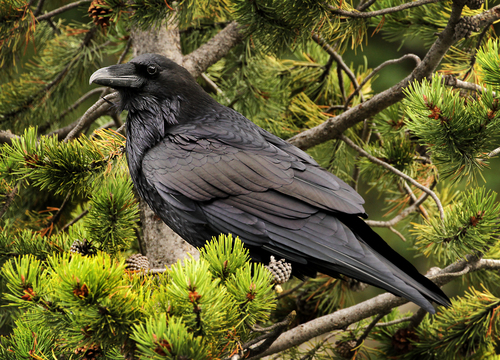

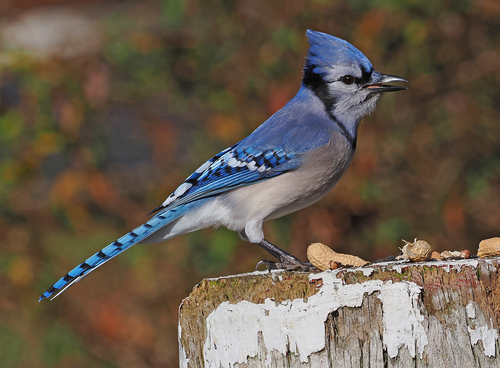
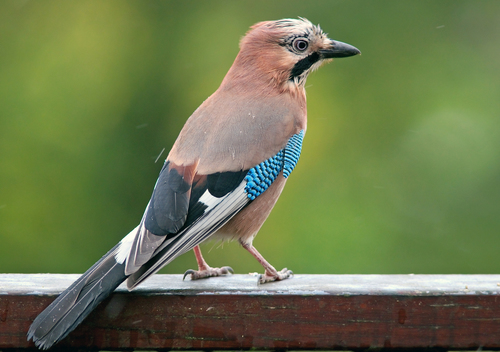
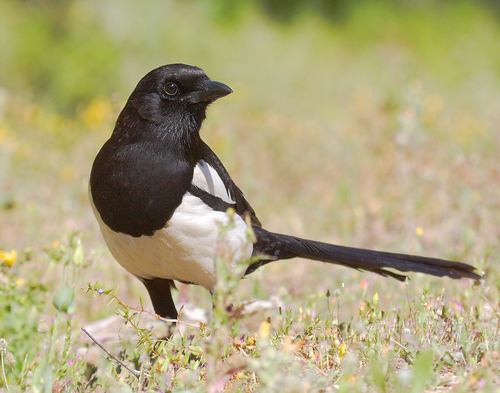
Photographs: iNaturalist contributors under the licences shown. Records: GBIF.org. Historical plates: Source Library (CC BY-SA 4.0; originals public domain). Summary text: Nature Library editors and Wikipedia (CC BY-SA). Medicinal and edibility notes are historical and educational, not advice. iNaturalist taxon 8414.