 NL·0778
Herbarium of the Nature Library
- Name
- Varanus bengalensis
- Family
- Varanidae
- Native to
- Iran and Afghanistan through Pakistan, India, Nepal, Bangladesh and Sri Lanka to Myanmar
- Habitat
- Tropical dry forest, Farmland, Scrub, Semi-desert
Bengal monitor
Varanus bengalensis
Also calledIndian monitor · Goh (Hindi, Urdu) · Udumbu (Tamil, Malayalam) · Ghorpad (Marathi) · Thalagoya (Sinhala) · Gui sap (Bengali)
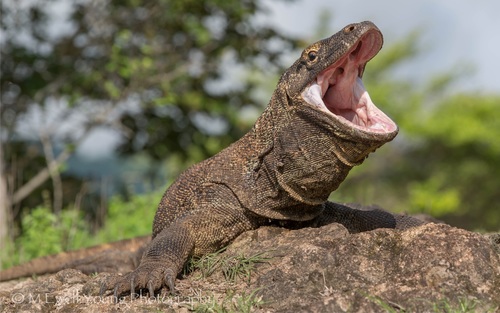
A large, ground-dwelling monitor of South Asia's plains and forests. It digs out insects, scorpions and eggs with its claws and tracks food with its forked tongue. It is hunted for meat, skins and a fake 'magical root'.
The Bengal monitor, also called the common Indian monitor, is a species of monitor lizard distributed widely in the Indian subcontinent and parts of Southeast Asia and West Asia. Wikipedia
What it can do
- iDigs out prey with strong claws and can climb trees
- iiCan run fast on land and swim
- iiiTracks food with its forked tongue
- ivLives close to farms and villages without depending on water
In the field
Field marks
- aLarge monitor, grey-brown to yellowish with dark speckles; juveniles banded
- bSlit-like nostrils placed midway between the eye and snout tip
- cLong neck and forked tongue
- dLaterally flattened tail
- Not to be confused with
- The water monitor (V. salvator) is darker with yellow spots or bands and has round nostrils near the snout tip; it lives near water. The yellow monitor (V. flavescens) of the Gangetic plain has bold yellow bands and a short snout.
- Where to see it
- Common in Ranthambore, Keoladeo, Kanha, Bandipur (India) and Yala and Wilpattu (Sri Lanka)
- When
- Resident; inactive in cold winters in the north
Life & habits
- Diet
- Beetles, scorpions, snails, frogs, eggs, small mammals, carrion
- Habitat
- Forest, farmland, scrub and semi-desert; often in burrows or tree hollows
- Size
- Usually 60–175 cm including tail
- Lifespan
- ~20 years
Active by day, digging for prey in leaf litter and termite mounds. Males wrestle while standing on their hind legs during the breeding season.
Where it lives
Recorded sightings
—
geo-referenced records in GBIF, from museums, herbaria and field observers.
Native range
Iran and Afghanistan through Pakistan, India, Nepal, Bangladesh and Sri Lanka to Myanmar
Drag the globe to turn it. Dots are where records exist, not a range map; darker means more records.
In the old herbals & bestiaries
No plate in the Source Library names this exact species, so these show its closest relatives as the old naturalists drew them: same genus, or the same kind of animal. Click a plate to read the page it came from, with translation.

In the stacks
Searching the stacks…
Every page naming Varanus bengalensis in the Biodiversity Heritage Library →
Marginalia
Legend says the Maratha general Tanaji Malusare used a monitor, Yashwanti, to scale the walls of Kondhana (Sinhagad) fort in 1670. Dried monitor hemipenes are sold illegally as 'hatha jodi', a supposedly lucky root.
Curiosity
Most 'hatha jodi' seized in Indian markets have turned out to be the dried genitals of male monitor lizards.
Kinship
- kingdomAnimalia
- ›phylumChordata
- ›subphylumVertebrata
- ›classReptilia
- ›orderSquamata
- ›suborderSauria
- ›infraorderAnguimorpha
- ›familyVaranidae
- ›genusVaranus
- ›subgenusEmpagusia
Neighbours on the shelf
Photographs: iNaturalist contributors under the licences shown. Records: GBIF.org. Historical plates: Source Library (CC BY-SA 4.0; originals public domain). Summary text: Nature Library editors and Wikipedia (CC BY-SA). Medicinal and edibility notes are historical and educational, not advice. iNaturalist taxon 39415.