- Animals
- ›Chordates
- ›Vertebrates
- ›Ray-finned Fishes
- ›Spiny-rayed fishes
- ›Cichlids and Allies
- ›Cichlids
- ›South and Central American Cichlids
- ›Herichthys
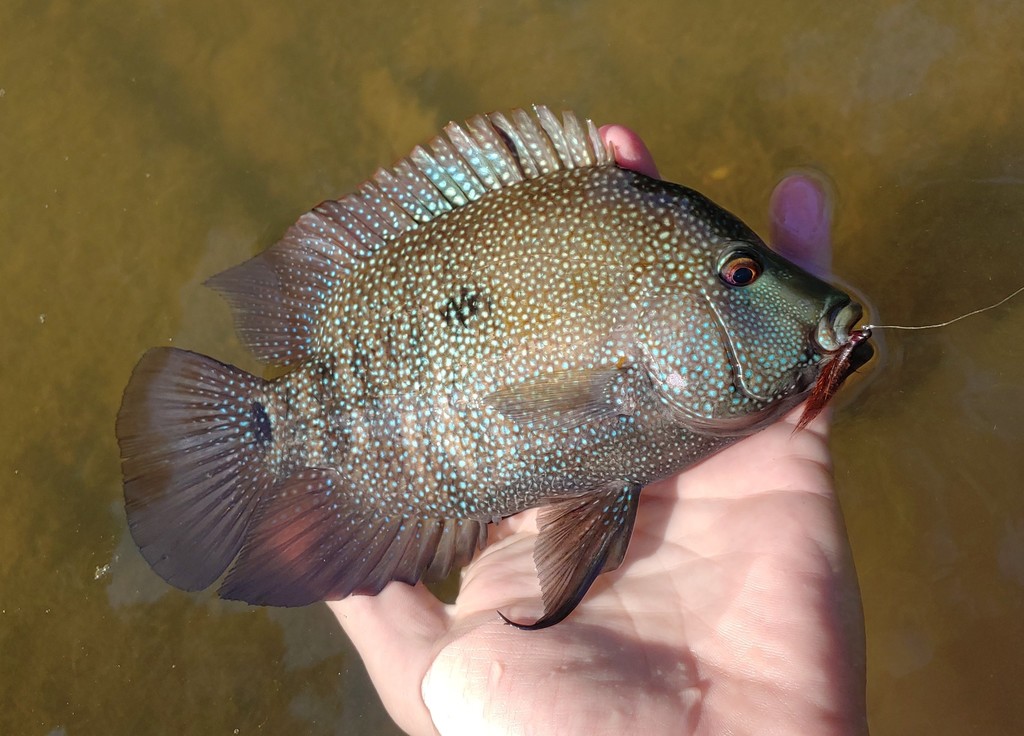
Texas Cichlid
Herichthys cyanoguttatus
The Texas cichlid (Herichthys cyanoguttatus), also known as the Rio Grande cichlid, is a freshwater fish of the cichlid family and the only cichlid species native to the United States. It is found in the lower Rio Grande drainage in Texas near Brownsville and northeastern Mexico, but some populations have been established in river drainages of Central Texas' Edwards Plateau, including the San Marcos, Guadalupe, San Antonio, and Colorado Rivers.
From the article Texas cichlid on Wikipedia (CC BY-SA), quoted section by section
Description
Herichthys cyanoguttatus can grow to be over 13 in (33 cm) and is differentiated by its distinctive characteristics and specific habitat needs. This cichlid is recognized by its cream and turquoise spots. Adult males also develop a nuchal hump on their heads. This cichlid also prefers the water temperature to be between 68 and 82 °F (20–28 °C) and are negatively affected by rapid changes in temperature.
What it does
The cichlid's omnivorous diet consists of vegetable matter or detritus, often feeding on plants, insects, and smaller fish, as well as fish eggs. The cichlid, in certain situations, can also be described as an "opportunistic carnivore", feeding on small vertebrates and invertebrates, including small frogs and water snakes. The cichlid is a "deliberate hunter", and it depends on the camouflage of its skin to sneak up on its prey.
Wikipedia: “Diet”
At the table
Texas cichlids have been deliberately and accidentally introduced into the wild throughout the subtropical southern United States from Texas to Florida (where water temperatures rarely dip below 48 °F (9 °C), where they have flourished and are often caught incidentally when fishing for sunfish and other panfish. Most anglers outside South and Central Texas do not recognize the fish, so they are released, but these fish are considered invasives and should be destroyed if caught outside their natural range. They are regularly targeted in both South Texas, where they are known as "Rio Grande cichlid" and northern Mexico, where they are known as mojarra de norte. Lake Guerrero, Tamaulipas, is recognized for its excellent largemouth bass fishing (another often-invasive species); there, the locals consider the Texas cichlid to be the best-eating fish in the lake. Texas cichlids taste similar to commercially raised tilapia, an African cichlid species to which they are distantly related. The fish is caught on light tackle with small hooks (#4 to #8) like those used for other panfish, with live crickets making excellent bait, but they strike a wide variety of baits. They fight similarly to bluegill sunfish, making tight circles and then darting off in a broadsided run. Average size of adult fish in the wild is 5–6 inches, and 1 pound, with 2 pounds not being uncommon.
Wikipedia: “As a sportfish and foodfish”
Where it lives
Recorded sightings
—
geo-referenced records in GBIF, from museums, herbaria and field observers.
Drag the globe to turn it. Dots are where records exist, not a range map; darker means more records.
In the stacks
Searching the stacks…
Every page naming Herichthys cyanoguttatus in the Biodiversity Heritage Library →
This page is assembled live from iNaturalist, GBIF, Wikipedia, the Source Library and the Internet Archive. It is not yet part of the hand-edited codex. iNaturalist taxon 102649.