- Animals
- ›Chordates
- ›Vertebrates
- ›Ray-finned Fishes
- ›Carps, Characins, Catfishes and Allies
- ›Minnows, Suckers, Carps, and Loaches
- ›Carps and Minnows
- ›Cyprinids
- ›Mahseers, Yellowfishes and Allies
- ›Labeobarbus
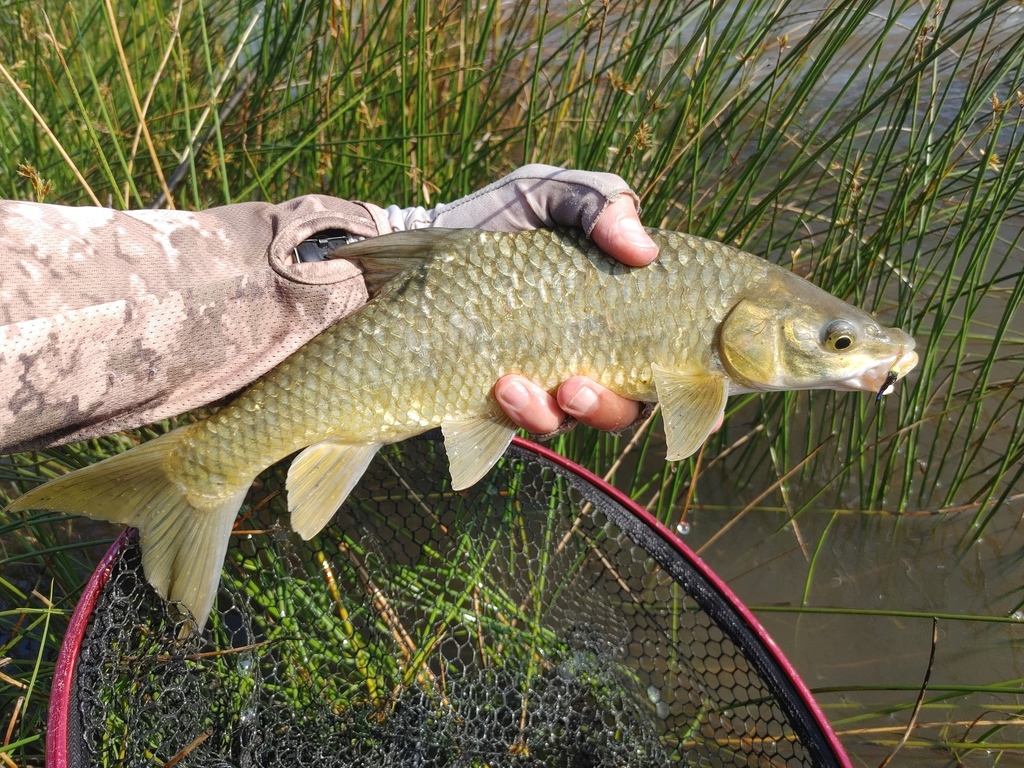
Smallmouth Yellowfish
Labeobarbus aeneus
The smallmouth yellowfish (Labeobarbus aeneus) is a species of ray-finned fish in the genus Labeobarbus. It has become an invasive species in rivers of the Eastern Cape, South Africa, such as the Mbhashe River.
From the article Smallmouth yellowfish on Wikipedia (CC BY-SA), quoted section by section
Range & habitat
The Orange-Vaal river system, also translocated to Gouritz, Great Fish and Kei river systems as well as the Limpopo river and Kyle dam in Zimbabwe.
Wikipedia: “Distribution”
What it does
The smallmouth yellowfish is a hardy and adaptable species that is widespread across its natural distribution range. It has the ability to inhabit smaller streams owing to its smaller size. Attaining a mass of around 9 kg it is an opportunistic feeder, eating a variety of food types ranging from plant material to aquatic insects, crabs, shrimps and small fish. The smallmouth yellowfish is a slow-growing species with a low egg-to-mass ratio (fecundity), only becoming sexually active at a fork length of 30 cm when it is almost seven years old. During the spawning season the skin of the male fish is covered in sensory papillae, giving it a rough feel to the touch. This is also found in females but to a lesser extent, therefore always wet your hands before handling fish as dry hands can remove this critical mucous layer that protects the skin and scales. When water temperatures exceed 19 °C in Spring, small shoals of fish migrate to shallow rocky areas to spawn and may do so intermittently from October to February. The long spawning season is an adaptation to the food-driven river and ensures that yellowfish will be able to lay eggs whenever favourable conditions occur. …
Wikipedia: “Biology and ecology”
Where it lives
Recorded sightings
—
geo-referenced records in GBIF, from museums, herbaria and field observers.
Drag the globe to turn it. Dots are where records exist, not a range map; darker means more records.
In the stacks
Searching the stacks…
Every page naming Labeobarbus aeneus in the Biodiversity Heritage Library →
This page is assembled live from iNaturalist, GBIF, Wikipedia, the Source Library and the Internet Archive. It is not yet part of the hand-edited codex. iNaturalist taxon 103829.