- Animals
- ›Chordates
- ›Vertebrates
- ›Cartilaginous Fishes
- ›Sharks and Rays
- ›Sharks
- ›Galean Sharks
- ›Ground Sharks
- ›Requiem Sharks
- ›Rhizoprionodon
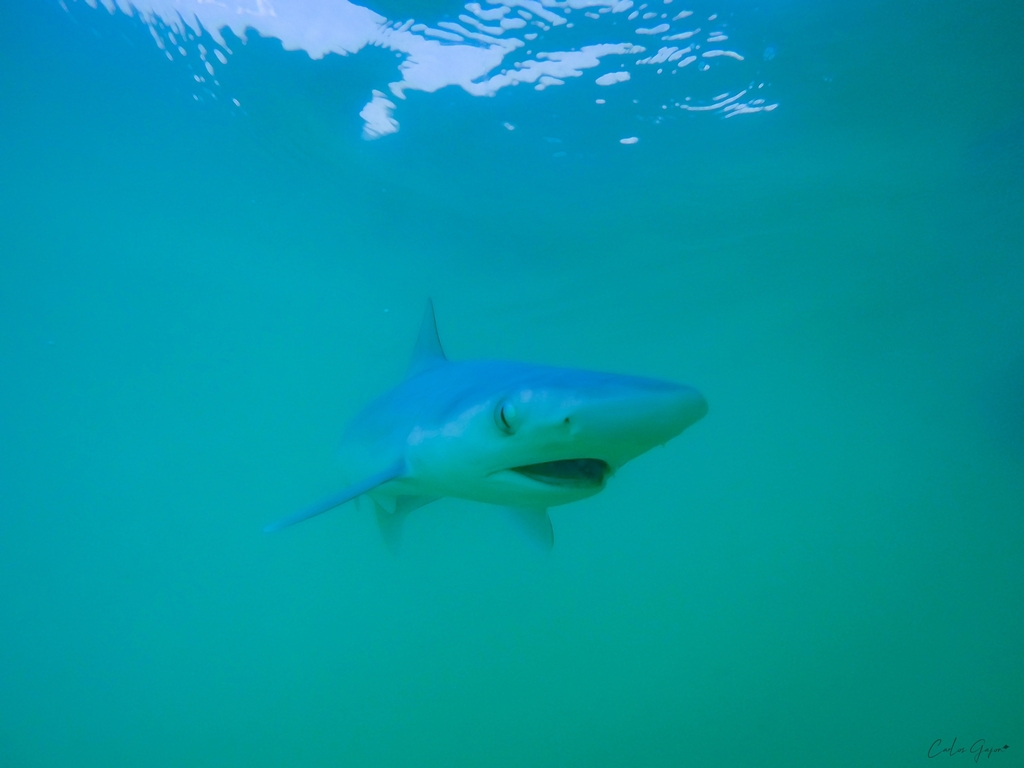
Pacific Sharpnose Shark
Rhizoprionodon longurio
The Pacific sharpnose shark (Rhizoprionodon longurio) often migrates along the Pacific coast of Mexico. They are most commonly caught in the artisanal fishery of Mazatlán. When a large sample of Pacific sharpnose sharks were observed scientists concluded that this type of shark was a "viviparous shark of small size which is born at an average length of 31 cm." Their gestation period is between ten and eleven months.
There was found to be no statistical relationship between the number of embryos to the average length as a result of scientific research. Specialists David Corro, Leonardo Castillo Geniz and J. Fernando Marquez-Farias, found that the sex ratio of this specific Shark is one to one with the average number of embryos per female, being around 7.4.
From the article Pacific sharpnose shark on Wikipedia (CC BY-SA), quoted section by section
Range & habitat
The Pacific sharpnose shark inhabits the coastal waters of the eastern tropical Pacific Ocean. They can be found from southern California to all the way to Peru (Compagno, 1984). The shark is fished commercially in the Pacific Ocean off Mexico from the Gulf of California to Puerto Madero, Chiapas. The Pacific sharpnose likes muddy bottom areas, however it is not known whether it utilizes coastal lagoons as nursery areas or if it utilizes only open waters.
Wikipedia: “Habitat and location”
What it does
There are reports of nurseries in the Upper Gulf of California. The reproductive season goes from March to June with a peak in April. It is estimated that the gestation period of Pacific sharpnose is 10-12 months. However, due to the great migratory movements of the species, this estimation was taken without the complete cycle of embryonic growth being observed.
Wikipedia: “Reproduction”
Where it lives
Recorded sightings
—
geo-referenced records in GBIF, from museums, herbaria and field observers.
Drag the globe to turn it. Dots are where records exist, not a range map; darker means more records.
In the stacks
Searching the stacks…
Every page naming Rhizoprionodon longurio in the Biodiversity Heritage Library →
This page is assembled live from iNaturalist, GBIF, Wikipedia, the Source Library and the Internet Archive. It is not yet part of the hand-edited codex. iNaturalist taxon 111748.