- Animals
- ›Chordates
- ›Vertebrates
- ›Ray-finned Fishes
- ›Spiny-rayed fishes
- ›Perches, Scorpionfishes, Sticklebacks, and Allies
- ›Scorpionfishes and Allies
- ›Scorpionfishes
- ›Rockfishes
- ›Sebastes
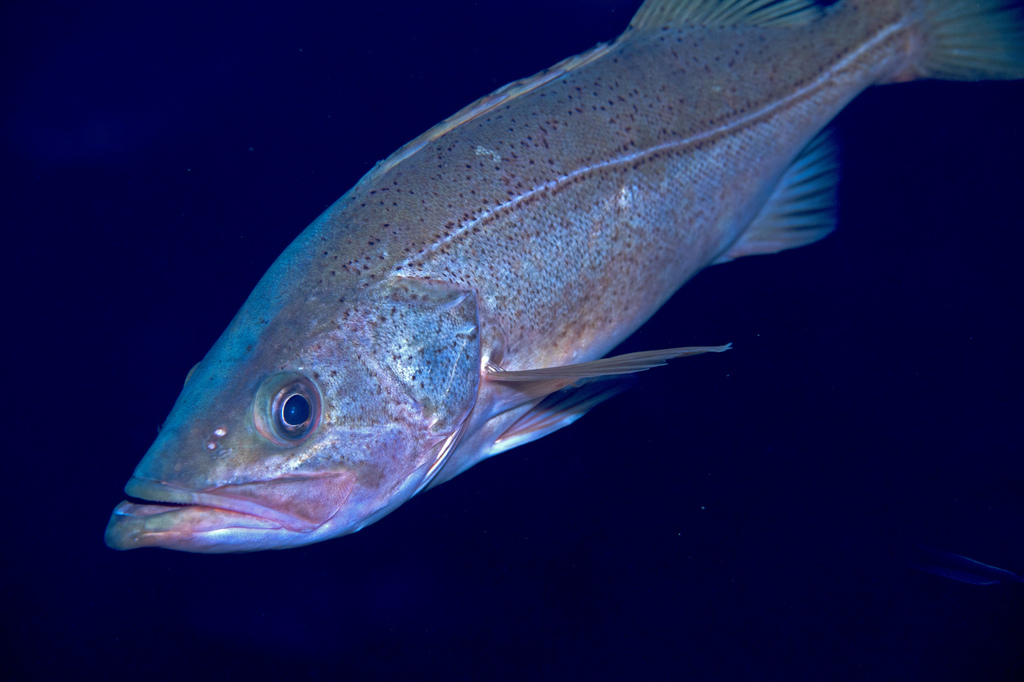
Bocaccio
Sebastes paucispinis
The bocaccio rockfish (Sebastes paucispinis) is a species of marine ray-finned fish belonging to the subfamily Sebastinae, the rockfishes, part of the family Scorpaenidae, It is found in the northeast Pacific Ocean. It is also known as rock salmon, salmon grouper, rockcod, Pacific red snapper, or simply bocaccio.
From the article Bocaccio rockfish on Wikipedia (CC BY-SA), quoted section by section
Range & habitat
Bocaccio can be found from Stepovak Bay, Alaska to central Baja California, but is mostly abundant from Oregon to northern Baja California. They have been spotted from various depths from the surface to 1,568 feet (478 m); most live between 150–1,000 feet (46–305 m). Juveniles stay in shallower water because of the protection provided by floating kelp mats or driftwood. Shallow water kelp forests and oil platforms also help these fish avoid danger, as they can use them to dodge and hide from predators. As the fish get older, they to move into deeper, colder water. The Monterey submarine canyon is an ideal place for many marine organisms to inhabit or migrate through, and bocaccio in this canyon can consume multiple marine species such as shellfish (pelagic shrimp and crabs), anchovies, sardines, other small rockfishes, and squid. Adult bocaccio are known to prefer fish, while the juveniles are more opportunistic, and feed on zooplankton like copepods.
The bocaccio is one of the larger rockfish and can grow up to 3 feet (0.91 m) in length, 27.9 lb (12.7 kg) in weight, and live to at least 50 years. A bocaccio that is 12 inches (30 cm) long is around 3–4 years old and a 2-foot (0.61 m) long fish is 7–8 years old. Females grow faster than males and also live longer. There is a difference in maturity rates from north to south. …
Wikipedia: “Distribution and biology”
In human culture
The bocaccio rockfish was first formally described in 1854 by the American zoologist William Orville Ayres with the type locality given as California. Some authorities place this species in the subgenus Sebastodes, of which it is the type species. The specific name paucispinis is a compound of paucis meaning "poor", "few" or "insufficient" and spinus meaning "spine" a reference to the smaller number of and weaker spines on head in comparison to the China rockfish (S. nebulosus) which Ayres described in the same paper.
Wikipedia: “Taxonomy and etymology”
Where it lives
Recorded sightings
—
geo-referenced records in GBIF, from museums, herbaria and field observers.
Drag the globe to turn it. Dots are where records exist, not a range map; darker means more records.
In the stacks
Searching the stacks…
Every page naming Sebastes paucispinis in the Biodiversity Heritage Library →
This page is assembled live from iNaturalist, GBIF, Wikipedia, the Source Library and the Internet Archive. It is not yet part of the hand-edited codex. iNaturalist taxon 112421.