- Animals
- ›Echinoderms
- ›Sea Stars and Brittle Stars
- ›Sea Stars
- ›Forcipulatacean Sea Stars
- ›Forcipulatidan Sea Stars
- ›Asteriid Sea Stars
- ›Aphelasterias
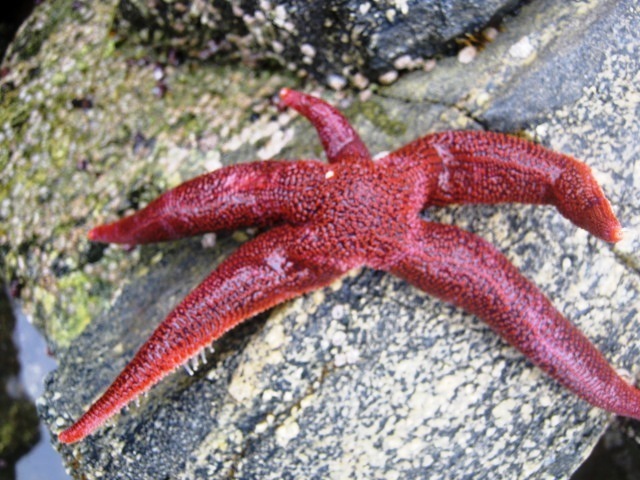
Aphelasterias japonica
Aphelasterias japonica is a species of sea star in the family Asteriidae that is native to the northwestern Pacific Ocean. It is found in coastal marine environments in Japan and surrounding regions, where it acts as a benthic predator and is associated with a variety of substrates and habitats.
The species has been studied for its reproductive biology, immune system, and production of bioactive compounds.
From the article Aphelasterias japonica on Wikipedia (CC BY-SA), quoted section by section
Description
Aphelasterias japonica is a medium sized sea star that has five elongated arms extending from a small central disc. Individuals can reach approximately 20-30 cm in diameter. The aboral (upper) surface is reddish to pink, while the oral surface is lighter in color. The body surface contains small spines and pedicellariae, which are structures found in sea stars and are used for protection and cleaning the body surface. It uses tube feet (podia), located along ambulacral grooves, for movement and feeding.
Range & habitat
Aphelasterias japonica is native to the northwestern Pacific Ocean and has been recorded along the coastal waters of Japan and the Russian Far East. It occurs across a broad range, from intertidal and subtidal zones to depths of up to 300m, but is most found around 5-20 meters within water temperatures of 10-25 °C. The species inhabits a wide range of habitats, including rocky, sandy and muddy substrates, as well as gravel beds. It is also found in more complex habitats like kelp forests, coralline algae beds, and shellfish reefs.
Wikipedia: “Distribution and habitat”
What it does
Aphelasterias japonica is a mobile benthic predator that feeds mainly on mollusks and other echinoderms such as clams, sea cucumbers, and sea urchins. Like other sea stars, it captures prey using its tube feet and digests food externally by everting its cardiac stomach. This allows it to break down and consume organisms with hard shells that would otherwise be difficult to eat. The ability of A. japonica to move through different substrates allows it to take advantage of patchy food resources and find a variety of prey species. It contributes to trophic interactions between predator and prey populations within its coastal marine ecosystems. In addition to direct predation, A. japonica produces bioactive chemical compounds known as asterosaponins, which function as part of its chemical defense system. These compounds have been shown to cause toxic effects on marine organisms under experimental conditions, including embryotoxic and cardiotoxic effects in fish models. These results suggest that the ecological impact of A. japonica is not only based on its feeding behavior. Its chemical defenses may also influence how it interacts with other organisms and its surrounding environment. …
Wikipedia: “Ecology and behavior”
Where it lives
Recorded sightings
—
geo-referenced records in GBIF, from museums, herbaria and field observers.
Drag the globe to turn it. Dots are where records exist, not a range map; darker means more records.
In the stacks
Searching the stacks…
Every page naming Aphelasterias japonica in the Biodiversity Heritage Library →
This page is assembled live from iNaturalist, GBIF, Wikipedia, the Source Library and the Internet Archive. It is not yet part of the hand-edited codex. iNaturalist taxon 1144770.