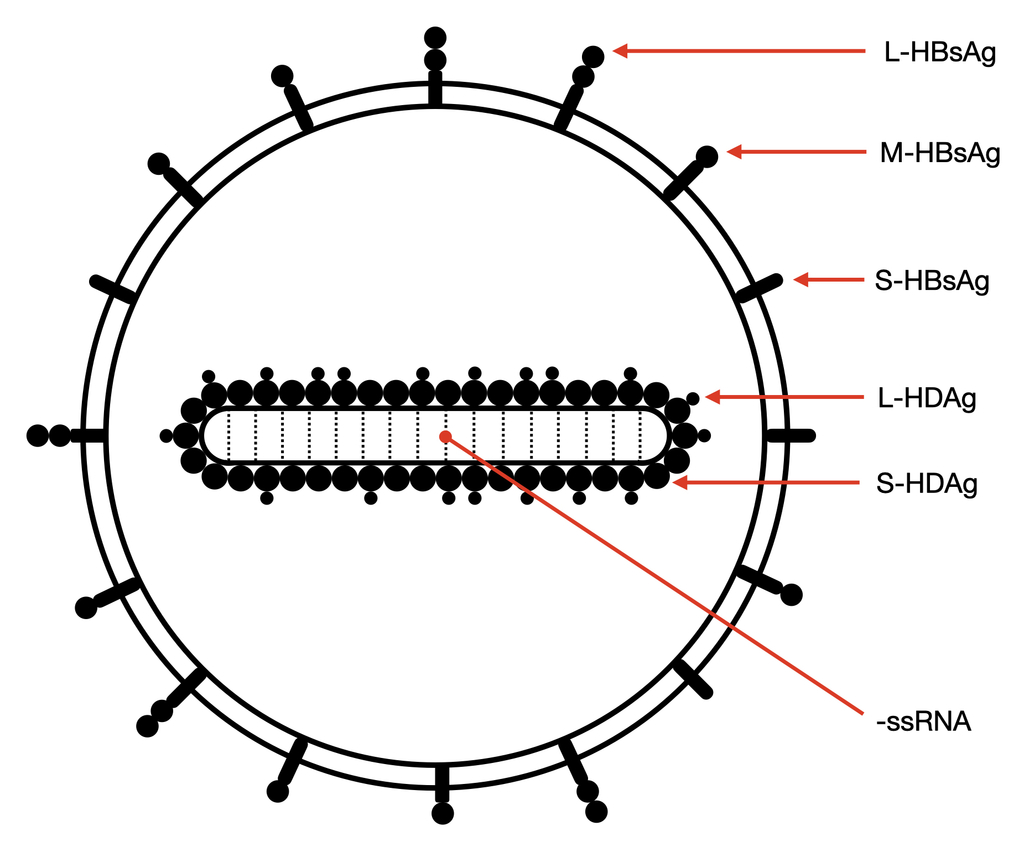
Deltavirus
Hepatitis D is a type of viral hepatitis caused by the hepatitis delta virus (HDV). HDV is one of five known hepatitis viruses: A, B, C, D, and E. HDV is considered to be a satellite (a type of subviral agent) because it can propagate only in the presence of the hepatitis B virus (HBV). Transmission of HDV can occur either via simultaneous infection with HBV (coinfection) or superimposed on chronic hepatitis B or hepatitis B carrier state (superinfection).
HDV infecting a person with chronic hepatitis B (superinfection) is considered the most serious type of viral hepatitis due to its severity of complications. These complications include a greater likelihood of experiencing liver failure in acute infections and a rapid progression to liver cirrhosis, with an increased risk of developing liver cancer in chronic infections. In combination with hepatitis B virus, hepatitis D has the highest fatality rate of all the hepatitis infections, at 20%. A recent estimate from 2020 suggests that currently 48 million people are infected with this virus.
8 branches of this genus, most-observed first
Deltavirus italiense
speciesDeltavirus italiense
Deltavirus japanense
speciesDeltavirus japanense
Deltavirus peruense
speciesDeltavirus peruense
Deltavirus senegalense
speciesDeltavirus senegalense
Deltavirus taiwanense
speciesDeltavirus taiwanense
Deltavirus togense
speciesDeltavirus togense
Deltavirus cameroonense
speciesDeltavirus cameroonense
Deltavirus carense
speciesDeltavirus carense
Where it lives
Recorded sightings
—
geo-referenced records in GBIF, from museums, herbaria and field observers.
Drag the globe to turn it. Dots are where records exist, not a range map; darker means more records.
In the stacks
Searching the stacks…
Every page naming Deltavirus in the Biodiversity Heritage Library →
This page is assembled live from iNaturalist, GBIF, Wikipedia, the Source Library and the Internet Archive. It is not yet part of the hand-edited codex. iNaturalist taxon 1145546.