- Animals
- ›Chordates
- ›Vertebrates
- ›Reptiles
- ›Snakes and Lizards
- ›Lizards
- ›Geckos
- ›Typical Geckos
- ›Gekko
- ›Ptychozoon
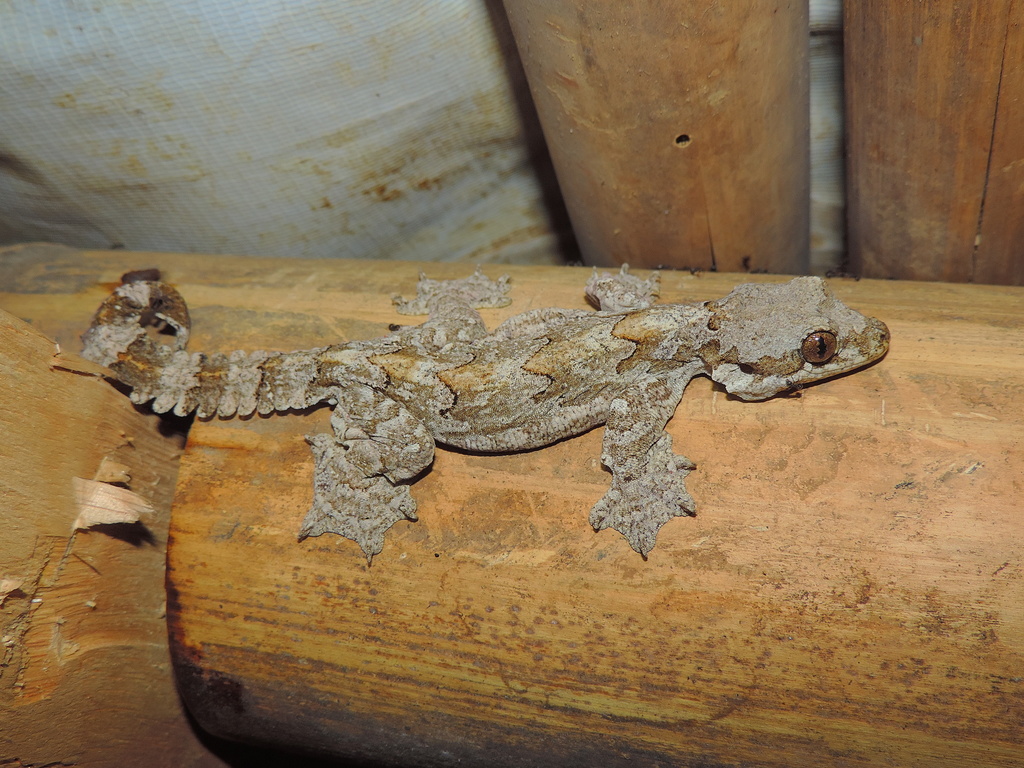
Kuhl's Flying Gecko
Gekko kuhli
Gekko kuhli, commonly known as Kuhl's flying gecko, Kuhl's parachute gecko, or the gliding gecko, is a species of lizard in the family Gekkonidae. The species is found in Southeast Asia.
From the article Gekko kuhli on Wikipedia (CC BY-SA), quoted section by section
Description
G. kuhli has adaptations to its skin, including flaps on either side of its body, webbed feet, and a flattened tail to allow it to glide over short distances. This gecko has a remarkable camouflage. The flaps of skin along its sides help it blend with tree bark. Often, its eyes are the only way to distinguish it from its surroundings. This use of camouflage by G. kuhli has caused need for some other adaptions to protect it from the increased UV exposure. Despite being nocturnal, it is considered heliothermic because of the extended sun exposure it receives while resting during the day. This increased UV exposure has led to the adaption of pigmented internal organs to protect the lizard's more important organs from UV damage. Kuhl's flying gecko, like many other gecko species, has evolved intricate toe pads with microscopic hairs that can adhere to nearly any surface, including glass.
Range & habitat
G. kuhli is found in the Malay Peninsula (southern Thailand, Malaysia, Singapore) and many adjacent islands and in the Greater Sunda Islands, including the larger islands (Sumatra, Java, Borneo, and Sulawesi) and many smaller ones. Its presence in Myanmar and the Nicobar Islands (India) is unconfirmed.
Wikipedia: “Geographic range”
Where it lives
Recorded sightings
—
geo-referenced records in GBIF, from museums, herbaria and field observers.
Drag the globe to turn it. Dots are where records exist, not a range map; darker means more records.
In the stacks
Searching the stacks…
Every page naming Gekko kuhli in the Biodiversity Heritage Library →
This page is assembled live from iNaturalist, GBIF, Wikipedia, the Source Library and the Internet Archive. It is not yet part of the hand-edited codex. iNaturalist taxon 1148926.